PSEG Long Island Permission to Operate: Switching Solar On
The panels are up, the inspection has passed, and the system is still dark. Permission to operate is the utility approval that ends that wait, and it is worth understanding why it exists.
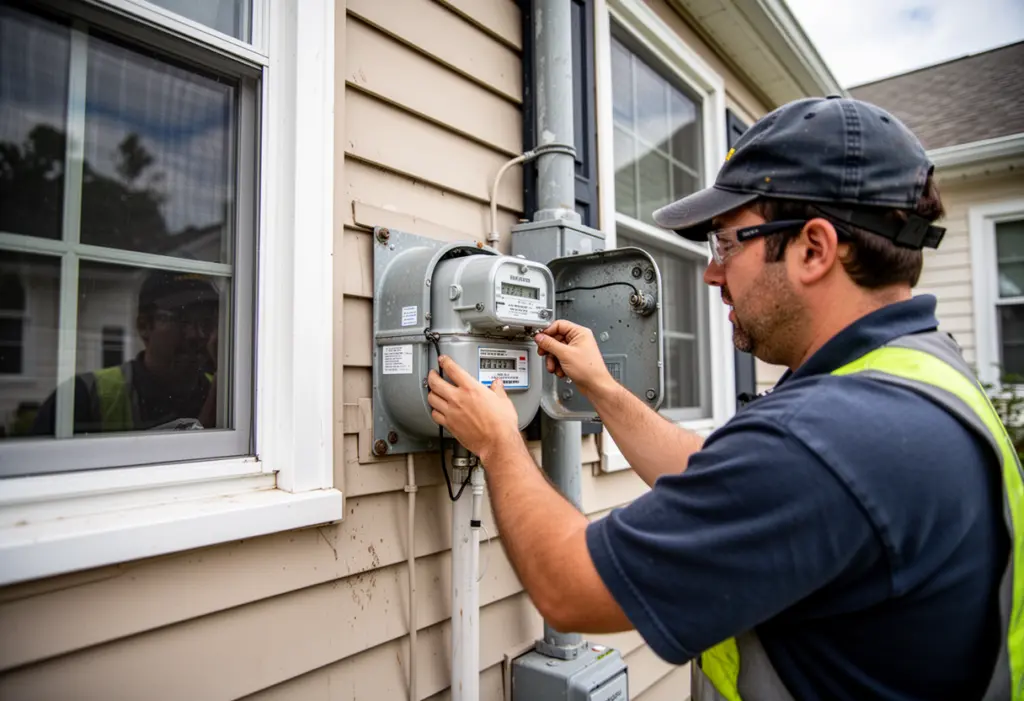
Permission to operate is the notice from PSEG Long Island that your solar array may be energised and connected in parallel with the grid. Until it arrives, the system stays off, even though it is fully installed and has passed inspection. That gap frustrates people, and it is worth understanding rather than arguing with.
Why the utility has the last word
An array pushing power into a distribution circuit is a safety matter for the line crews who work on that circuit. The utility confirms that the equipment matches what was approved in the interconnection review, that the inspection paperwork is in hand, and that the metering arrangement is correct. Only then does it authorise parallel operation.
The sequence, in order
- Installation is completed.
- The municipal building inspection and the electrical inspection are passed, and the inspection certificate is issued.
- Your installer sends the completion documentation and the certificate to the utility.
- The utility reviews it against the approved interconnection application.
- A meter change is made where one is required.
- Permission to operate is issued, and the system is commissioned and switched on.
Steps three and four are where projects sit. The usual cause is a missing document rather than a queue, which is why the single most useful thing a homeowner can do is ask precisely which item is outstanding and who holds it.
Do not switch it on early
An installer who suggests running the array before permission to operate is offering you their convenience at your risk. Production before authorisation is not credited, and unauthorised parallel operation can put your interconnection and your net metering enrolment in question. There is no version of this where a few weeks of unmetered generation is worth that. If the crew has left the disconnect closed and the system is producing, ask for it to be shut down until the notice arrives.
What the notice starts, and why you keep it
Interconnection begins your 20-year Phase One net metering term, under which exports credit at the full retail rate. It also begins the Customer Benefit Contribution for systems interconnected on or after 1 January 2022, charged on DC capacity every month regardless of production. At the 2026 LIPA and PSEG Long Island residential rate of $1.13 per kW-month, a 6 kW array pays 6 x $1.13 = $6.78 a month, about $81.36 a year, and a 12 kW array pays $13.56 a month, about $162.72. Ask for the interconnection date in writing, because it is the start of the twenty years and it is not necessarily the day the panels went up. Keep the notice with your project file alongside the final invoice and the inspection certificate.
When it stalls, ask these five things
- What is the interconnection reference number for my project?
- Which document is outstanding, and is it with the installer, the inspector or the utility?
- Has the electrical inspection certificate been received, and by whom?
- Is a meter change required, and has it been scheduled?
- What is the current turnaround being seen on similar projects?
Ask for the answers by email. A written record turns a vague wait into a specific one, and it is the only thing that helps if the delay later becomes a contractual argument.
Households this page does not apply to
If your electricity comes from the Village of Freeport, the Village of Rockville Centre, the Village of Greenport or the Fishers Island system, you are a municipal electric customer. Municipal utilities are outside Public Service Commission jurisdiction, so the state interconnection process, PSC net metering and the Customer Benefit Contribution do not apply, and the authorisation to energise comes from that utility on its own terms. Ask them directly and confirm the utility name from your bill. In the other direction, a Rockaway Peninsula address is on this system rather than Con Edison, so a Rockaway homeowner waits for a PSEG Long Island notice, not a Con Edison one.
What to do the week after it arrives
- Confirm the monitoring is reporting and note the date of first production, then keep a first-year baseline to compare later years against.
- Check the first bill for the capacity charge and for the export credits, and query anything that does not match your contract in the first cycle rather than the sixth.
- File your paperwork: Form IT-255 for the New York State credit of 25% capped at $5,000 at a principal residence, and form RP-487 with your assessor for the 15-year property tax exemption on the added value, which requires that your town, your county and your school district have each not opted out.
On timing language, note the distinction that trips people up. For the state credit, placed in service is the operative concept and your tax preparer will want the commissioning date. For the dead federal credit under section 25D, the test was when the original installation was completed, and it no longer matters for a 2026 buyer because the credit was terminated for expenditures made after 31 December 2025. Rates and programme terms change annually, so check the current position with NYSERDA, the Department of Taxation and Finance and PSEG Long Island rather than relying on last year’s summary.
Frequently Asked Questions
How long does permission to operate take on Long Island?
There is no fixed timeline, and the usual cause of a long wait is a missing document rather than a queue. Ask which specific item is outstanding and whether it sits with the installer, the inspector or the utility.
Can I run the system before permission to operate?
No. Production before authorisation is not credited and unauthorised parallel operation can jeopardise your interconnection and net metering enrolment. If the array is running, ask for it to be shut down until the notice arrives.
What date does my 20 year net metering term run from?
From interconnection, which is not necessarily the day the panels went up. Ask for that date in writing and keep the notice with your project file.
Does this apply if my village runs its own electric utility?
No. Freeport, Rockville Centre, Greenport and Fishers Island are municipal electric systems outside Public Service Commission jurisdiction, so authorisation and export terms come from that utility on its own terms.
This article is general information, not tax, legal or financial advice. Incentive amounts, eligibility rules and deadlines change and depend on your utility, your tax situation and your property. Confirm current terms with NYSERDA, your utility and a qualified tax professional before making a decision.
NY Solar Incentives
Independent New York solar research. We summarise NYSERDA, NY-Sun and federal programme rules from published sources and state plainly when a figure is an estimate. We are not a government agency and do not sell equipment.
Run the arithmetic on your own system
Check the dated program table and your arrangement before counting an incentive. Standard residential NY-Sun blocks are closed; Long Island Affordable Solar has a conditional income-verification route. The NY credit depends on qualified costs and tax liability, while the NYC abatement reduces future property-tax bills. The estimator keeps those timings separate.