Your PSEG Long Island Solar Bill, Line by Line
The first bill after an array is switched on is where most Long Island solar disappointment starts, and almost always because of what stays on it rather than what leaves.
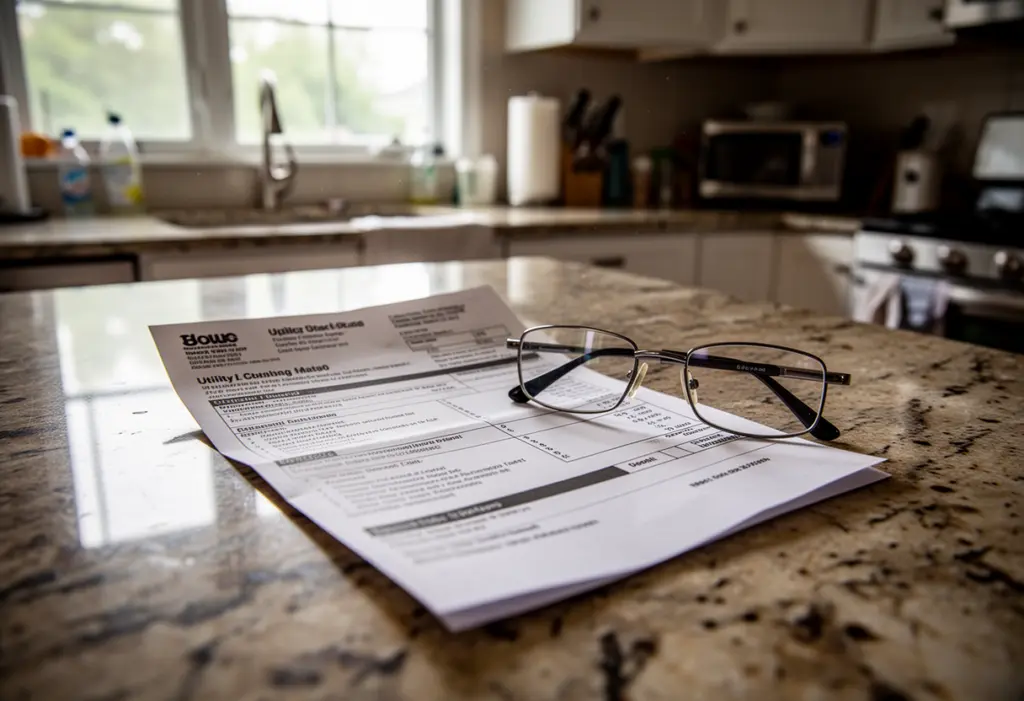
Most complaints about a solar bill on Long Island are not about production. They are about a bill that still exists. Understanding which lines an array can remove, which it cannot, and which one it adds is the difference between thinking the system underperformed and knowing what it actually did.
What solar can remove, and what it cannot
Under Phase One net metering, exports are credited at the full retail rate, and a system interconnected today holds that structure for 20 years. What that offsets is the energy you did not take from the grid. It does not offset the charges that exist because you are connected at all.
So expect a bill even in a strong production month. A customer charge, delivery-side items, taxes and surcharges do not disappear because a roof produced well in June. Ask PSEG Long Island, or read the bill definitions on your statement, to identify which lines on your particular bill are fixed and which vary with consumption. Labels change over time; the distinction does not.
Where the credit shows up
Net metering credits are carried in kilowatt-hours rather than as a cash refund. In months when the array produces more than the house consumes, the surplus banks; in months when it produces less, the bank draws down. That is why a fair reading of a solar bill is annual rather than monthly, and why a July statement tells you very little on its own.
- Find the kWh delivered and the kWh received as separate figures, and check them against the inverter monitoring for the same period.
- Find the credit balance carried forward, and ask how and when it is reconciled.
- Check the meter read type. An estimated read followed by an actual read produces a swing that looks like a fault and is not one.
- Compare like with like. Bills covering different numbers of days are not comparable, and billing periods vary.
The line an array adds
The Customer Benefit Contribution is charged on the DC size of the system rather than on what it produces, on systems interconnected on or after 1 January 2022. On LIPA and PSEG Long Island the 2026 residential rate is $1.13 per kW-month, so a 7.5 kW array pays 7.5 x $1.13 = $8.48 a month, a little over $101 a year, in a dark February exactly as in a bright June. Rates are recalculated annually and are not locked in at interconnection.
Two consequences follow. An array sized larger than the household needs raises this charge permanently while banking credits that may never be consumed, so oversizing has a monthly cost as well as a capital one. And a community solar subscription is a different animal entirely: subscribers pay no Customer Benefit Contribution at all, because the charge applies to net metered systems behind your own meter rather than to front-of-the-meter projects.
Check that this is your utility at all
PSEG Long Island operates the LIPA system across Nassau, Suffolk and the Rockaways — which means a Rockaway Peninsula address in Queens is not a Con Edison customer, a distinction that sends people to the wrong interconnection process every year. It also does not cover everyone on the Island: Freeport and Rockville Centre in Nassau, Greenport in Suffolk and Fishers Island run municipal electric utilities, and a municipal customer is outside Public Service Commission jurisdiction altogether — no PSC net metering, no Customer Benefit Contribution, no state interconnection process, and terms set by that utility instead. Read the utility name printed on your own bill before applying any of this.
When the bill looks wrong
Work in this order before calling anyone. Compare the inverter monitoring total against the kWh received on the statement for the same dates. Check whether the read was actual or estimated. Check the billing period length. Then check whether household consumption changed — a new heat pump, an EV charger or a second refrigerator moves a bill far more than a few percent of production ever will.
If production itself is the problem, look at the months rather than the annual figure. Snow cover, a shading assumption made from imagery rather than on site, and a soiled or partially failed string all show as a specific seasonal shape rather than as a uniform shortfall.
The incentive position behind those numbers
Nothing federal is available to a residential buyer in 2026. Section 25D was terminated for expenditures made after 31 December 2025, with an expenditure treated as made when the original installation is completed, so a proposal or a savings model that still carries a 30 percent federal line is describing money that will not arrive. New York’s own credit is untouched by any of it. It is worth 25 percent of qualifying expenditure up to a $5,000 ceiling, claimed on Form IT-255 for equipment at your principal residence in the state, and because it is not refundable it can only wipe out New York tax you actually owe, with anything left over carried into the next five years. Leases and power purchase agreements of ten years or more reach it too, the ten-year floor applying to the lease exactly as it does to the PPA. The state sales tax exemption covers residential equipment, and RPTL 487 exempts the added value from property tax for 15 years, on systems constructed before 1 January 2030, where the town or village, the county and the school district have each not opted out — three checks, not one. NY-Sun does not add to this: NYSERDA’s last residential NY-Sun block for PSEG Long Island closed in April 2016, andas of September 2026 NYSERDA has no open NY-Sun block for homes in any utility territory; check NYSERDA’s NY-Sun dashboard for a new one. Opt-outs are local and rates move annually, so confirm with your assessor and with NYSERDA rather than with a sales sheet.
Frequently Asked Questions
Why do I still get a bill from PSEG Long Island after going solar?
Net metering offsets the energy you did not take from the grid, not the charges that exist because you are connected. A customer charge, delivery-side items, taxes and surcharges remain even in a strong production month.
Where are my net metering credits on the bill?
They are carried in kilowatt-hours rather than as a cash refund. Find the kWh delivered and the kWh received as separate figures, then the credit balance carried forward, and ask how and when it is reconciled.
What is the extra monthly charge on my solar account?
The Customer Benefit Contribution, billed on DC array size for systems interconnected on or after 1 January 2022. On LIPA and PSEG Long Island the 2026 residential rate is $1.13 per kW-month, so a 7.5 kW array pays about $8.48 a month.
Does PSEG Long Island serve the whole Island?
No. Freeport and Rockville Centre in Nassau, Greenport in Suffolk and Fishers Island run municipal electric utilities and sit outside Public Service Commission jurisdiction. It does cover the Rockaways in Queens, which are not Con Edison.
This article is general information, not tax, legal or financial advice. Incentive amounts, eligibility rules and deadlines change and depend on your utility, your tax situation and your property. Confirm current terms with NYSERDA, your utility and a qualified tax professional before making a decision.
NY Solar Incentives
Independent New York solar research. We summarise NYSERDA, NY-Sun and federal programme rules from published sources and state plainly when a figure is an estimate. We are not a government agency and do not sell equipment.
Run the arithmetic on your own system
Check the dated program table and your arrangement before counting an incentive. Standard residential NY-Sun blocks are closed; Long Island Affordable Solar has a conditional income-verification route. The NY credit depends on qualified costs and tax liability, while the NYC abatement reduces future property-tax bills. The estimator keeps those timings separate.