Did the Federal Solar Tax Credit End Before 2026
The residential clean energy credit is over, and the date that decides your case is not the one most proposals use. Here is the operative test, in plain terms.
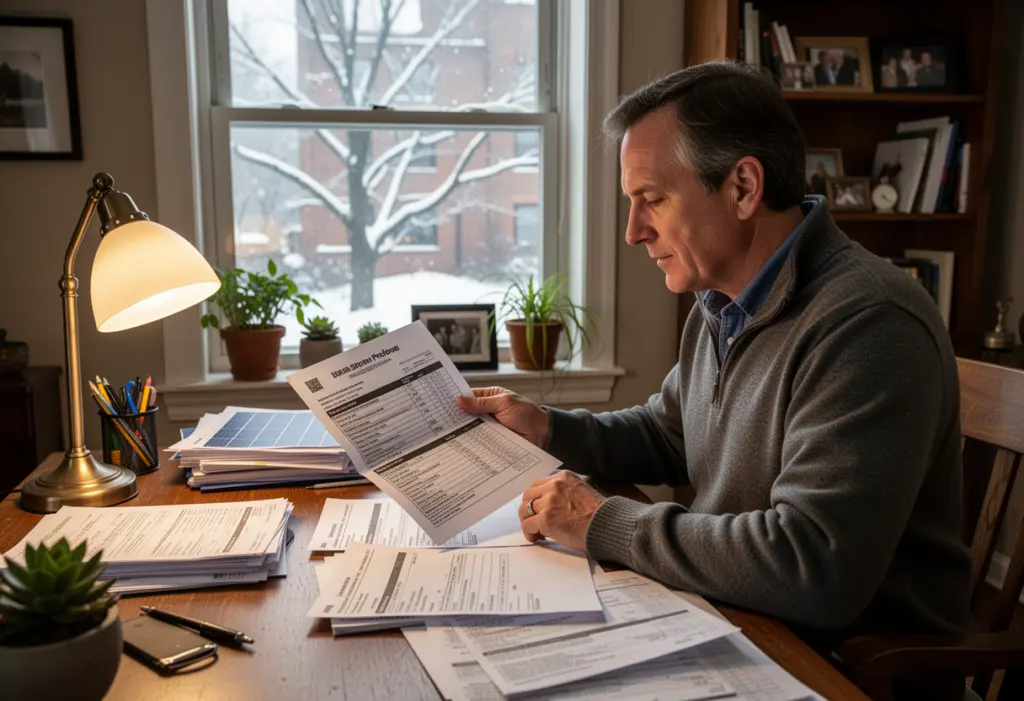
Yes. The 30% residential clean energy credit under section 25D of the Internal Revenue Code was terminated by the One Big Beautiful Bill Act, signed on 4 July 2025, for expenditures made after 31 December 2025. A New York homeowner who buys a system in 2026 claims nothing federally. There is no phase-down, no transition rule, and no carryover of a credit that was never earned.
The operative test is completion, not switch-on
This is the part that decides real cases, and it is the part most commonly stated wrongly. Section 25D(e)(8)(A) treats an expenditure as made when the original installation of the item is completed. It is not the placed in service test that applies elsewhere in the tax code.
The two tests disagree for exactly the people who care most. A system whose installation was finished in December 2025 but which was not energised until January 2026 still qualifies, because the expenditure was made when the installation was completed. In New York the gap between mechanical completion and permission to operate is routinely weeks, so this is a common situation rather than an edge case. A homeowner told the wrong rule walks away from a credit they are actually owed.
One caution worth carrying to your preparer: the general IRS landing page still describes the credit in placed in service language and as running through 31 December 2025 without the completion nuance. That page is the pre-legislation summary. The current guidance is the IRS FAQ issued for the modifications made by Public Law 119-21.
The exception that reverses the answer on a new build
Subparagraph (A) opens with the words except as provided in subparagraph (B), and subparagraph (B) is not a footnote. Where the expenditure is in connection with the construction or reconstruction of a structure, it is treated as made when the taxpayer’s original use of that structure begins.
So panels installed in December 2025 on a house first occupied in January 2026 do not qualify, even though the installation was finished in 2025. If you bought new construction, or completed a substantial reconstruction, the completion test is not your test. Take the closing documents and the certificate of occupancy to your preparer rather than reasoning from the general rule.
What actually survives
The business-side credit survives, and it is claimed by the company that owns a leased or power purchase agreement system. That single asymmetry explains most of what you will see in the New York market in 2026: third party offers still price in an incentive, and the incentive is real, but it belongs to the owner of the equipment rather than to the household on whose roof it sits.
The practical consequence is that the federal tax advantage in 2026 tilts toward lease, power purchase agreement and community solar rather than toward buying — which does not automatically make those the better deal, only the ones with a federal benefit somewhere inside them. Business and farm projects fall under a different provision entirely; never reason from section 25D to a barn or a business roof, and send that question to your accountant.
If a 2026 proposal still shows a 30% federal line
It is materially wrong, and the arithmetic beneath it is wrong too. Do four things:
- Ask for the proposal reissued with the federal line removed, so you can see the real net cost.
- Recheck the payback period, which was almost certainly calculated with the credit inside it.
- Recheck the loan schedule. Many solar loans assume a large voluntary principal payment in the first eighteen months, historically funded by that credit. Without it the payment steps up, and you need to know to what.
- Treat the error as information. A seller still quoting a repealed federal credit in 2026 is either not current or not careful, and both matter over a twenty-five year asset.
What New York still gives you
The state programmes were not touched by the federal repeal. New York’s 25% solar energy system equipment credit, capped at $5,000, is claimed on Form IT-255 for equipment at your principal residence in New York. It is not refundable, it is limited by your actual state tax liability, and unused amounts carry forward up to five years. It also reaches leases and power purchase agreements of at least ten years, which the dead federal credit never did.
Alongside it: the state sales tax exemption on residential solar equipment, and RPTL 487, the 15-year property tax exemption on added value available where your municipality, your county and your school district have each not opted out, for systems constructed before 1 January 2030. NY-Sun, the NYSERDA incentive your contractor used to apply as a price reduction rather than pay to you, is not available to homes at present, and neither is its income-qualified Affordable Solar rate. As of September 2026 NYSERDA has no open NY-Sun block for homes in any utility territory; check NYSERDA’s NY-Sun dashboard for a new one. Phase One net metering still credits exports at the full retail rate and holds for 20 years from interconnection.
Set against those, the ongoing cost of capacity: a 5 kW array in Con Edison territory pays a Customer Benefit Contribution of 5 x $1.29, about $6.45 a month or $77 a year, charged on DC size regardless of production. Rates are recalculated annually. Verify each of these at irs.gov, tax.ny.gov and nyserda.ny.gov before you rely on them, because this is a year in which the rules moved.
Frequently Asked Questions
Did the federal solar tax credit end?
Yes. Section 25D was terminated for expenditures made after 31 December 2025 by the One Big Beautiful Bill Act. A homeowner buying in 2026 claims nothing federally, with no phase-down and no transition rule.
My system was finished in 2025 but turned on in 2026. Do I qualify?
Generally yes. The operative test is when the original installation was completed, not when the system was placed in service, so a December 2025 completion energised in January 2026 still counts. Take the completion evidence to your preparer.
Does that also apply to a newly built house?
No. Where the expenditure is in connection with the construction or reconstruction of a structure, it is treated as made when your original use of the structure begins. Panels finished in 2025 on a house first occupied in 2026 do not qualify.
Is any federal solar credit left?
The business-side credit survives and is claimed by the company that owns a leased or PPA system, not by the household. Business and farm projects fall under a different provision and should go to an accountant.
This article is general information, not tax, legal or financial advice. Incentive amounts, eligibility rules and deadlines change and depend on your utility, your tax situation and your property. Confirm current terms with NYSERDA, your utility and a qualified tax professional before making a decision.
NY Solar Incentives
Independent New York solar research. We summarise NYSERDA, NY-Sun and federal programme rules from published sources and state plainly when a figure is an estimate. We are not a government agency and do not sell equipment.
Run the arithmetic on your own system
Check the dated program table and your arrangement before counting an incentive. Standard residential NY-Sun blocks are closed; Long Island Affordable Solar has a conditional income-verification route. The NY credit depends on qualified costs and tax liability, while the NYC abatement reduces future property-tax bills. The estimator keeps those timings separate.