The PSEG Long Island Solar Interconnection Application
The interconnection application is filed with PSEG Long Island and the building permit is filed with your town or village. They run in parallel, and only one of them controls when you can switch on.
On this page 7 sections
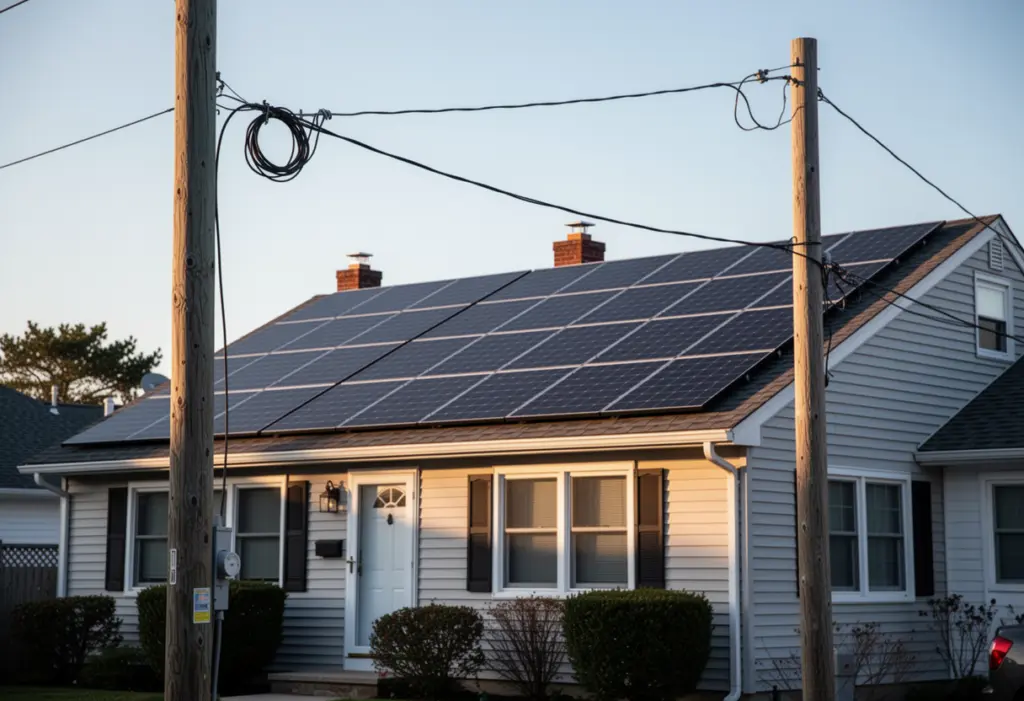
Two separate approvals sit between a Long Island homeowner and a working solar array, and confusing them is the most common reason a project feels stuck. The building permit comes from your town or your incorporated village. The interconnection application goes to PSEG Long Island, which operates the LIPA system. They start at about the same time, they are reviewed by different people, and neither waits for the other.
Who is actually a PSEG Long Island customer
PSEG Long Island operates the electric system serving Nassau, Suffolk and the Rockaways. Two exceptions matter enough to check before anything is filed:
- Four municipal systems are outside it. Freeport and Rockville Centre in Nassau, Greenport in Suffolk, and Fishers Island run their own electric utilities. Municipal utilities are outside Public Service Commission jurisdiction, so there is no state interconnection process, no PSC net metering and no Customer Benefit Contribution for those customers. Their terms come from the municipal utility directly.
- The Rockaway Peninsula is on this system, not Con Edison. The New York Department of Public Service county table lists two electric utilities for Queens, and a Rockaway address interconnects and net meters through PSEG Long Island. A Con Edison sequence sends that homeowner to the wrong utility.
Confirm from the utility name on your own bill. It takes a minute and it prevents a filing to the wrong place.
What the application is and who files it
Your installer normally prepares and submits it. It describes the proposed system, its DC size, the inverter and the point of connection, and it lets the utility review the effect on the local distribution circuit. Ask your installer for a copy of what was submitted and for the reference number. Homeowners who hold that number can ask about their own project instead of relaying questions through a sales representative.
The permit side, which is genuinely local here
On Long Island the permit authority is the town for unincorporated areas and the incorporated village where there is one, so two neighbours in different jurisdictions can face different checklists. Ask which authority is issuing yours and whether it has adopted the NYS Unified Solar Permit, the standardised application for systems of 25 kW DC and under which has been adopted by more than 300 authorities across the state.
Two local conditions worth raising early. Much of the south shore sits in mapped flood zones, and the building department will have a view on where electrical equipment can be mounted and at what height, so ask where the inverter and disconnect are going before the crew arrives. And older Long Island housing stock frequently has 100 amp service, which a solar breaker plus a future EV charger or heat pump can outgrow; a service upgrade is a real cost that belongs in the quote rather than in a surprise.
What interconnection starts
Interconnection is the event that starts two clocks. It begins the 20 years of Phase One net metering, which credits exports at the full retail rate, and it begins the Customer Benefit Contribution for systems interconnected on or after 1 January 2022. On the LIPA and PSEG Long Island residential schedule the 2026 rate is $1.13 per kW-month, so an 8.5 kW array pays 8.5 x $1.13 = $9.61 a month, roughly $115.26 a year, billed on DC capacity whether the array is producing or not. The rate is recalculated annually rather than fixed at interconnection.
Note also that mass-market LIPA projects cannot opt into the Value Stack, so Phase One net metering is the residential path here and there is no alternative crediting mechanism to weigh against it.
A short checklist for the homeowner
- Get the interconnection reference number and a copy of the submitted application.
- Confirm the DC size on the application matches the DC size on your contract. That number drives your monthly charge for the life of the system.
- Ask which authority issues the building permit and whether any zoning, architectural or historic review applies.
- Ask who pays a re-inspection fee if the first electrical inspection fails.
- Ask, in writing, what the current turnaround is on both tracks. There is no fixed statutory timeline and honest installers will tell you their recent experience rather than a promise.
The incentives that ride alongside the paperwork
NY-Sun offers nothing to a Long Island home at present: NYSERDA’s last residential block for PSEG Long Island territory closed on 17 April 2016, and no income-qualified Affordable Solar block is open either. As of September 2026 NYSERDA has no open NY-Sun block for homes in any utility territory; check NYSERDA’s NY-Sun dashboard for a new one. If a Long Island quote still shows a NY-Sun line, ask the contractor which open block it comes from. The state 25% credit capped at $5,000 on Form IT-255 needs the system at your principal residence in New York. RPTL 487 exempts the added value from property tax for 15 years where your town, your county and your school district have each not opted out, which on Long Island means checking with a school district as well as the town, and construction must be before 1 January 2030. Nothing federal is available to a residential buyer any more: section 25D was terminated for expenditures made after 31 December 2025, an expenditure being treated as made when the original installation is completed, so a proposal showing a 30% federal line is materially wrong. Confirm all of it with NYSERDA and PSEG Long Island before signing.
Frequently Asked Questions
Who submits the PSEG Long Island interconnection application?
Your installer normally prepares and submits it, but ask for a copy and for the reference number so you can follow the project yourself rather than through a sales representative.
Does the interconnection wait for the building permit?
No. The utility review and the town or village permit run in parallel and are handled by different people. Knowing which one is holding up your project is most of the value in asking.
Is everyone on Long Island a PSEG Long Island customer?
No. Freeport, Rockville Centre, Greenport and Fishers Island run their own municipal electric utilities and sit outside the state interconnection process entirely. The Rockaway Peninsula, however, is on this system rather than Con Edison.
What does interconnection start?
The 20-year Phase One net metering term and the monthly Customer Benefit Contribution, which for 2026 is $1.13 per kW of DC capacity per month on the residential schedule, billed regardless of production.
This article is general information, not tax, legal or financial advice. Incentive amounts, eligibility rules and deadlines change and depend on your utility, your tax situation and your property. Confirm current terms with NYSERDA, your utility and a qualified tax professional before making a decision.
NY Solar Incentives
Independent New York solar research. We summarise NYSERDA, NY-Sun and federal programme rules from published sources and state plainly when a figure is an estimate. We are not a government agency and do not sell equipment.
Run the arithmetic on your own system
Check the dated program table and your arrangement before counting an incentive. Standard residential NY-Sun blocks are closed; Long Island Affordable Solar has a conditional income-verification route. The NY credit depends on qualified costs and tax liability, while the NYC abatement reduces future property-tax bills. The estimator keeps those timings separate.