Permission to Operate on Central Hudson
In the mid-Hudson the wait after installation is real — but the delay that actually costs you time usually happened before anyone touched the roof.
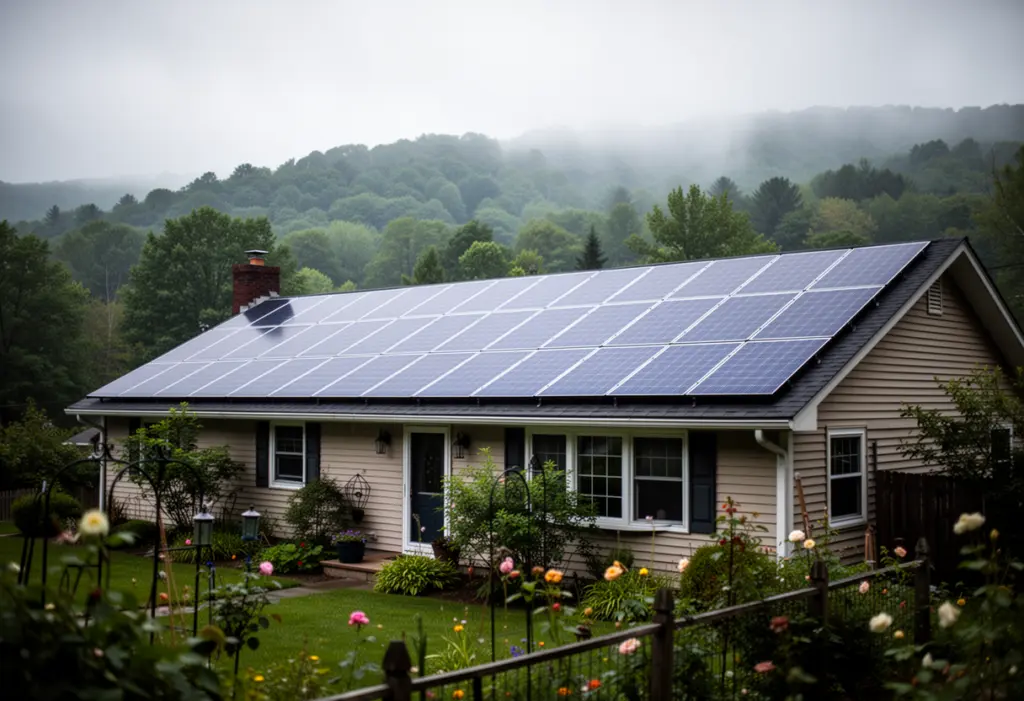
The panels are mounted, the inverter is on the wall, and the system is switched off. In Central Hudson territory that wait is real — but if a project here has taken a long time, the cause is usually further upstream than most homeowners realise.
What permission to operate is
PTO is Central Hudson’s formal authorisation to energise your system and export onto its network. Until it is granted the system stays off.
Two earlier approvals get mistaken for it. Approval to install comes before installation and permits construction only. The electrical inspection certificate is your municipality’s confirmation that the work is safe. PTO is the third, and only Central Hudson can issue it.
The sequence
- Installation completed.
- Municipal electrical inspection, and any re-inspection after a correction.
- Certificate filed with Central Hudson — the step most often quietly delayed, because it depends on your installer’s paperwork rather than on a queue.
- Meter exchange or reprogramming.
- PTO issued. The system may run.
Do not switch it on early. Exporting without authorisation risks the interconnection agreement and the net-metering arrangement, and production during the wait is simply lost.
The mid-Hudson delay that happens first
This is what distinguishes Central Hudson territory. Kingston, Rhinebeck, New Paltz, Hyde Park, Red Hook, Millbrook, Catskill and a good many villages carry historic districts with architectural review — and that review sits at the front of the process, before the building permit, months before anything reaches the utility.
Boards frequently meet monthly, so a missed submission deadline is a month. A homeowner who experiences a nine-month project here often had a utility step measured in weeks and a review step measured in months.
So the useful question is not only how long PTO is taking, but whether review applies to my address, when that board meets, and what the submission deadline is. Ask it before signing.
What else causes long waits
- Paperwork that was never filed. The commonest cause anywhere: the inspection passed, the certificate exists, nobody sent it.
- A failed inspection and its re-inspection cycle.
- A meter needing a field visit, and in rural parts of the territory that means scheduling and travel.
- An address or account mismatch against Central Hudson’s records, which can leave a file unresolved with nobody flagging it.
- Seasonal volume. Autumn is the peak.
What you can reasonably do
Ask your installer for a copy of the electrical inspection certificate and the date it was submitted. That single request surfaces the stalled projects where nothing was sent. Confirm your account number and service address exactly as Central Hudson holds them. Keep a written record of each milestone date.
What you have at the end
Phase One net metering, crediting exports at the full retail rate, held for 20 years from interconnection.
And the Customer Benefit Contribution: $1.67 per kW-month of DC system size for 2026, the highest residential rate in New York — about $13.36 a month on an 8 kW system, roughly $160 a year, against $93 in National Grid territory. Billed on capacity regardless of production and recalculated annually rather than fixed.
One timing consequence worth knowing
A project delayed across a year boundary can lose more than patience. The 30% federal residential credit ended for expenditures made after 31 December 2025 — the statute treating an expenditure as made when the original installation is completed — and projects held in review over that boundary lost it. Programme terms move; a delay is not always cost-free.
Frequently Asked Questions
Why do Central Hudson solar projects take so long?
Frequently the delay is not the utility. Kingston, Rhinebeck, New Paltz, Hyde Park, Red Hook, Millbrook and many villages have architectural review that sits at the front of the process, before the building permit — and boards often meet monthly, so a missed deadline costs a month.
Can I run my system before Central Hudson grants PTO?
No. Exporting without authorisation risks the interconnection agreement and the net-metering arrangement, and puts power onto a network whose operator has no record of your system. Production during the wait is lost.
What is the most common cause of a PTO delay?
An electrical inspection certificate that passed and was never submitted to the utility. Asking your installer for a copy and the date it was filed resolves a surprising proportion of stalled projects.
What does Central Hudson charge once the system is running?
The Customer Benefit Contribution at $1.67 per kW-month of DC system size for 2026, the highest residential rate in New York — about $13.36 a month on an 8 kW system, roughly $160 a year.
This article is general information, not tax, legal or financial advice. Incentive amounts, eligibility rules and deadlines change and depend on your utility, your tax situation and your property. Confirm current terms with NYSERDA, your utility and a qualified tax professional before making a decision.
NY Solar Incentives
Independent New York solar research. We summarise NYSERDA, NY-Sun and federal programme rules from published sources and state plainly when a figure is an estimate. We are not a government agency and do not sell equipment.
Run the arithmetic on your own system
Check the dated program table and your arrangement before counting an incentive. Standard residential NY-Sun blocks are closed; Long Island Affordable Solar has a conditional income-verification route. The NY credit depends on qualified costs and tax liability, while the NYC abatement reduces future property-tax bills. The estimator keeps those timings separate.