Reading a National Grid Bill After Solar
The first National Grid bill after solar rarely matches expectations. Here is what each line means and why the bill has a floor.
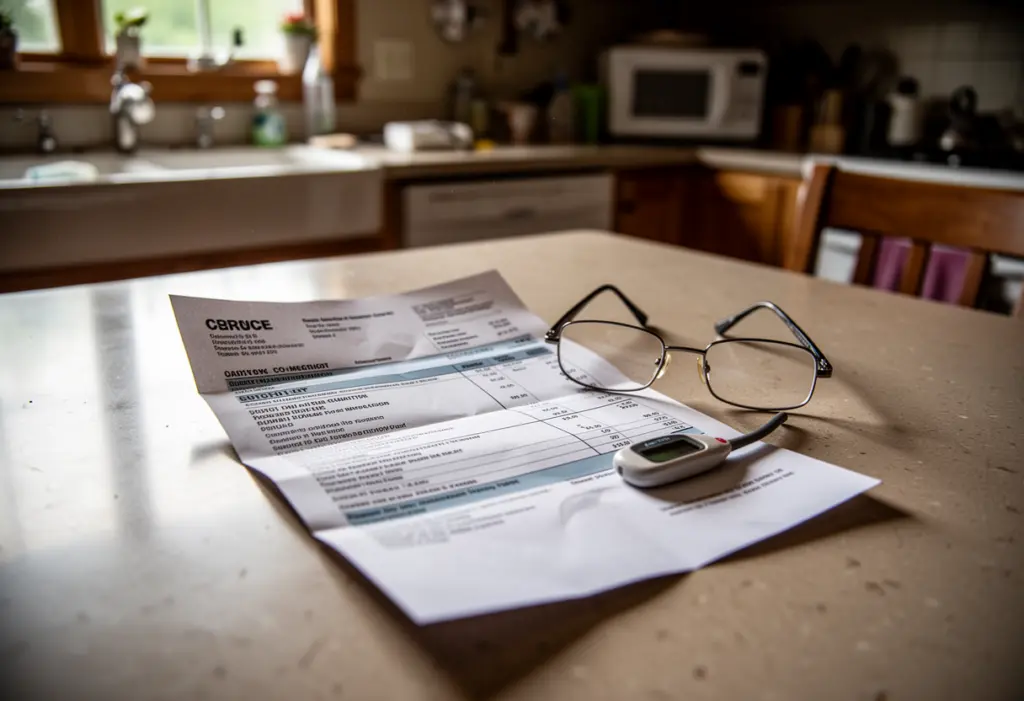
The first National Grid bill after a solar system is switched on is where expectations meet the tariff. It is almost never zero, and most of the confusion comes from one structural fact: the bill has two halves and solar only fully attacks one of them.
Supply and delivery
Supply is the electricity itself. If you buy from National Grid, this is National Grid’s supply charge; if you use an ESCO, it is that company’s charge appearing on the same bill.
Delivery is the cost of moving it to your house over poles, wires and substations, and of maintaining all of that. It is National Grid’s regardless of who supplies your electricity.
Solar reduces the kilowatt-hours you buy. That directly reduces supply and the volumetric part of delivery. It does not reduce the fixed part of delivery, and it does not reduce the basic service charge at all.
Line by line
- Basic service charge. A fixed monthly amount for being connected. Solar does not change it. This alone means your bill has a floor.
- Delivery, per kWh. Falls with the electricity you draw from the grid.
- Supply, per kWh. Falls with the electricity you draw from the grid.
- System benefit and similar public policy charges. Volumetric, so these fall too — which is exactly the shortfall the CBC exists to restore.
- Customer Benefit Contribution. New since your system was interconnected. Calculated on the DC size of the system at $0.97 per kW-month on National Grid for 2026, so an 8 kW system adds $7.76 a month. It does not vary with production, and it is recalculated annually rather than fixed.
- Sales tax, applied as before.
- Credit balance. Where your banked exports appear. This is the line worth learning to find.
How the credit balance behaves upstate
This matters more on National Grid than almost anywhere in the state, because the upstate seasonal swing is severe. From roughly March to September your exports exceed your imports and a dollar credit accrues. Through the winter, when the array cannot cover the house, the balance is drawn down.
So read the bill across a year, not month by month. Watch the credit balance rise from spring, peak in late summer, and fall through winter. If it reaches zero in January rather than March, the system is undersized for the house — which is information worth having before a second winter.
Why the bill is not zero
- The basic service charge and the fixed portion of delivery do not move.
- The Customer Benefit Contribution is a new charge that did not exist before.
- Unless the system covers 100% of annual consumption — and many are deliberately sized below that, because the economics of the last few kilowatts are weakest — you are still buying some electricity.
A small bill is the correct outcome. If you were told it would be zero, compare that promise against these three lines.
The first bill is usually strange
The billing cycle rarely aligns with your permission-to-operate date, so the first statement often covers a period that is part pre-solar and part post-solar. It is a poor basis for judging anything. The second full cycle is the first honest one, and the first full year is the only one that really answers the question.
What to check on the first full bill
- That the CBC line matches your system’s DC size × $0.97. If it does not, the size on file may be wrong.
- That exports are actually being recorded — a meter never properly exchanged or reprogrammed shows consumption only.
- That the account is on the correct rate and the net-metering arrangement is in place.
If exports are missing, raise it immediately rather than waiting a quarter. Retroactive correction is possible but far easier when the gap is one cycle rather than six.
Frequently Asked Questions
Why is my National Grid bill not zero after solar?
The basic service charge and the fixed portion of delivery do not change with consumption, the Customer Benefit Contribution is a new charge based on system size, and most systems are not sized to cover 100% of annual usage. A small bill is the correct expectation.
Where does the solar credit appear on a National Grid bill?
As a credit balance on the account. It accrues from roughly March to September and is drawn down through winter, so it should be read across a year rather than month by month.
What does it mean if my credit balance runs out in January?
That the system is undersized for the house. Upstate seasonal swing is severe, so a well-sized system should still have balance left in February or March. It is worth knowing before a second winter.
What is the new charge on my bill since installing solar?
The Customer Benefit Contribution, at $0.97 per kW-month of DC system size on National Grid for 2026 — about $7.76 a month on an 8 kW system. It does not vary with production and is recalculated annually.
This article is general information, not tax, legal or financial advice. Incentive amounts, eligibility rules and deadlines change and depend on your utility, your tax situation and your property. Confirm current terms with NYSERDA, your utility and a qualified tax professional before making a decision.
NY Solar Incentives
Independent New York solar research. We summarise NYSERDA, NY-Sun and federal programme rules from published sources and state plainly when a figure is an estimate. We are not a government agency and do not sell equipment.
Run the arithmetic on your own system
Check the dated program table and your arrangement before counting an incentive. Standard residential NY-Sun blocks are closed; Long Island Affordable Solar has a conditional income-verification route. The NY credit depends on qualified costs and tax liability, while the NYC abatement reduces future property-tax bills. The estimator keeps those timings separate.