Battery Storage Incentives in New York
New York supports home battery storage separately from solar, with its own rules and budget. What a battery does to a net-metered bill, and when it earns its cost.
On this page 8 sections
- 01NY solar battery rebates are administered separately from solar
- 02How a storage incentive is usually structured
- 03What a battery actually does to a net-metered bill
- 04Backup is the value that is easiest to justify
- 05Which reason applies to your household
- 06Tax treatment, and what changed for 2026
- 07Sizing, siting and the practical constraints
- 08Frequently asked questions
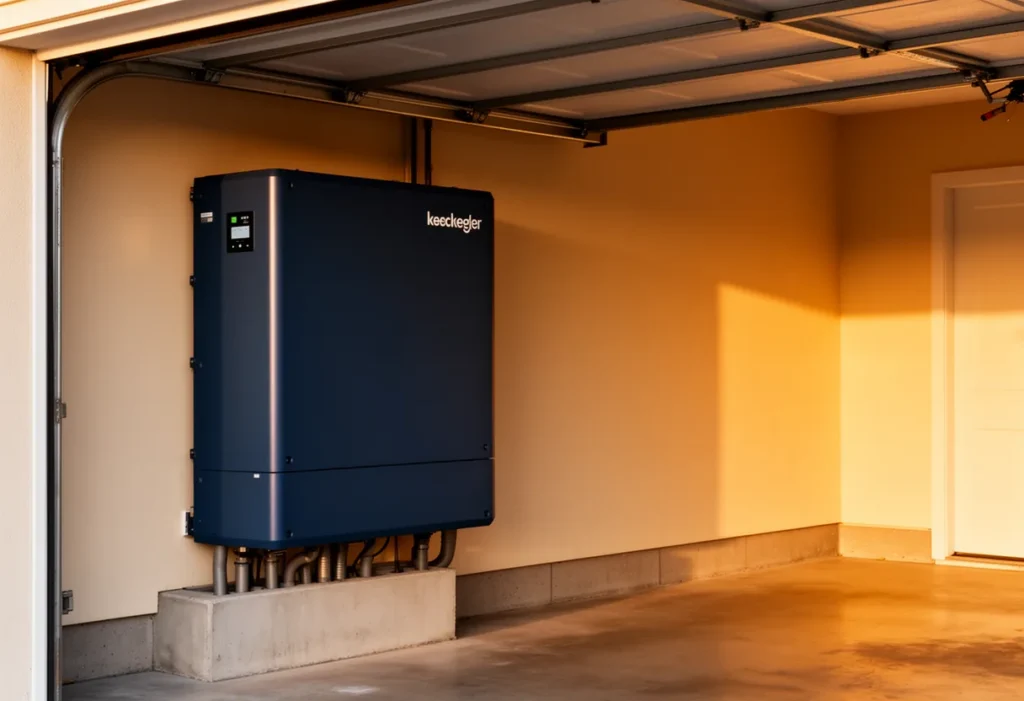
Batteries appear on more New York solar quotes than they used to, and they are among the least well understood items on one. Adding one roughly changes the shape of the project rather than just its price.
The support available is real, but it runs on a separate track from the solar incentive, and the economic case rests on different things than most quotes imply.
NY solar battery rebates are administered separately from solar
Storage is not part of the NY-Sun per-watt figure. New York supports residential energy storage through its own incentive structure, with its own eligibility rules and its own allocated budget, and some utilities run additional programs of their own within their service territories.
The delivery mechanism will look familiar. As with the solar incentive, the amount is normally claimed by the installer and shown as a reduction in the contract price, rather than being applied for and received by the household.
Because the two programs are separate, a quote that shows a single combined incentive line is hiding the split. Ask for the solar incentive and the storage incentive as distinct entries. The NY-Sun page covers what the solar side should look like on its own.
How a storage incentive is usually structured
Storage incentives are typically expressed against the capacity of the battery rather than the price of it, which is why two quotes for the same battery model should carry a similar incentive amount.
Capacity can be described in two ways and they are not interchangeable. Power, in kilowatts, is how much the battery can deliver at one moment, which determines what it can run. Energy, in kilowatt-hours, is how much it holds, which determines for how long. A quote should state both, along with usable capacity as distinct from nameplate capacity.
Availability is also finite and allocated, so eligibility and amounts move over time and by region. Treat any figure you read as needing confirmation against the administrator’s current terms.
Usable capacity is not nameplate capacity
Manufacturers publish a headline kilowatt-hour figure, but a battery is normally not discharged to zero, and reserve settings for backup reduce what is available day to day. Ask what usable capacity the quote assumes and what reserve is being held for outages. Savings estimates built on nameplate figures overstate the result.
What a battery actually does to a net-metered bill
This is the part that gets skipped in sales conversations. Under a full retail net metering arrangement, exported electricity earns credit at a rate close to what you pay for imports, which means the grid is already acting as an efficient store of value.
In that situation a battery adds relatively little to the bill savings. It moves energy you would have exported for credit into energy you consume directly, which is a smaller gain than the difference between two different prices.
The picture changes where the credit for exports is worth less than the price of imports, or where a time-of-use rate charges more in the late afternoon and evening than overnight. Then charging cheaply and discharging expensively has genuine value. Which arrangement applies to your account is the determining factor, and how net metering works in New York explains why it varies by interconnection date and rate class.
Backup is the value that is easiest to justify
The most defensible reason to buy a battery in New York is that a solar array alone shuts down in an outage. Standard grid-tied inverters disconnect for the safety of line workers, so a house with panels and no storage sits in the dark alongside its neighbours.
A battery with the right equipment keeps selected circuits running. That is a concrete benefit with a value each household can weigh for itself: what an outage costs you in spoiled food, lost work, a sump pump that stops or a medical device that needs power.
It is worth being precise about scope. Whole-home backup and essential-circuit backup are different installations at different prices. Ask which one is quoted and which circuits are on the backup panel.
Which reason applies to your household
| Reason for adding storage | What determines the value | How reliably it can be estimated |
|---|---|---|
| Backup during outages | Outage frequency, and what you need to keep running | Reasonably, from your own experience of local outages |
| Time-of-use rate shifting | The spread between peak and off-peak rates on your tariff | Well, if you are actually on a time-of-use rate |
| Using more of your own generation | How your export credit compares with your import price | Modest value where full retail net metering applies |
| Utility or grid-service programs | Program availability in your territory and enrolment terms | Only against the program’s published terms, not a sales estimate |
Tax treatment, and what changed for 2026
Homeowners who bought storage in recent years often did so partly because a federal residential credit covered qualifying battery costs. That credit, under section 25D of the Internal Revenue Code, terminated on 31 December 2025 following the One Big Beautiful Bill Act signed on 4 July 2025.
A household buying a battery whose installation was completed in 2026 or later claims nothing on its federal return, whether it paid cash or borrowed. Systems whose installation was completed in 2025 fell under the previous rules and unused credit can generally be carried forward.
On the state side, whether battery costs form part of qualified expenditure for New York’s solar energy system equipment credit depends on how the equipment is classified and on the current Form IT-255 instructions. Do not assume they do. Ask the installer to itemize the battery separately from the array so that a preparer can make that determination on real figures.
Five questions for a storage quote
What is the usable capacity in kilowatt-hours, and the continuous output in kilowatts? Which circuits will be backed up? What reserve is held for outages? What is the storage incentive, shown separately from the solar incentive? And what does the warranty guarantee after ten years, in retained capacity rather than in years alone?
Sizing, siting and the practical constraints
Batteries have physical requirements that affect cost. They need a location within temperature limits, adequate clearance, and in many cases a specific mounting arrangement, and local code and fire officials have views on where they may be installed.
Retrofitting storage to an existing solar array is also not always straightforward. Some inverters accommodate a battery readily and some require replacement, which changes the economics enough to be worth confirming before a battery is priced.
Because storage adds a second system with its own commissioning and warranty, the installer’s competence matters more than for panels alone. The questions in choosing an installer apply with more force where a battery is involved, and the total should be weighed against overall system cost in New York rather than treated as an optional extra of unexamined value.
Frequently asked questions
Is the battery incentive part of the NY-Sun solar incentive?
No. Energy storage is supported through a separate mechanism with its own rules and budget, and some utilities run additional programs in their own territories. Both are typically claimed by the installer and shown as price reductions, so ask for them as two distinct lines on the quote rather than one combined figure.
Will a battery make my electricity bill zero?
No. Fixed service charges continue regardless of how much energy you draw, and a battery shifts when you use energy rather than eliminating the account. Where full retail net metering applies, the additional bill savings from storage are usually modest, because exported energy already earns credit at a similar rate.
Can I claim a tax credit on a home battery in 2026?
Not federally. The residential clean energy credit under section 25D ended on 31 December 2025, so a battery whose installation was completed in 2026 or later produces no federal credit for the homeowner. Whether battery costs count towards New York’s state equipment credit depends on classification and the current Form IT-255 instructions, so have the battery itemized separately and ask a preparer.
Do I need a battery to keep power during an outage?
Yes, if you want your solar to be usable during one. Standard grid-tied inverters shut down when the grid goes down, for the safety of utility crews, so panels alone provide nothing in an outage. Storage with the appropriate equipment keeps selected circuits running, and the quote should state which circuits those are.
Verify the current figures
Storage incentive amounts, eligibility rules and utility program terms change and vary by service territory. Confirm current details with NYSERDA and with your own utility before relying on them, and confirm any tax treatment with the New York State Department of Taxation and Finance or a qualified preparer.
NY Solar Incentives
Independent New York solar research. We summarise NYSERDA, NY-Sun and federal programme rules from published sources and state plainly when a figure is an estimate. We are not a government agency and do not sell equipment.
Run the arithmetic on your own system
Check the dated program table and your arrangement before counting an incentive. Standard residential NY-Sun blocks are closed; Long Island Affordable Solar has a conditional income-verification route. The NY credit depends on qualified costs and tax liability, while the NYC abatement reduces future property-tax bills. The estimator keeps those timings separate.