How to Vet a Solar Installer in New York
Most of the difference between a good solar outcome and a bad one in New York comes down to who installs the system. Here is what to check before signing, and which quote patterns are worth walking away from.
On this page 8 sections
- 01Start with the two registrations that are not optional
- 02Ask who is actually on the roof
- 03Understand what the company is really selling you
- 04The tax story is a competence test
- 05Read the production estimate as a document, not a number
- 06The quote patterns worth walking away from
- 07Check what survives the company
- 08Frequently asked questions
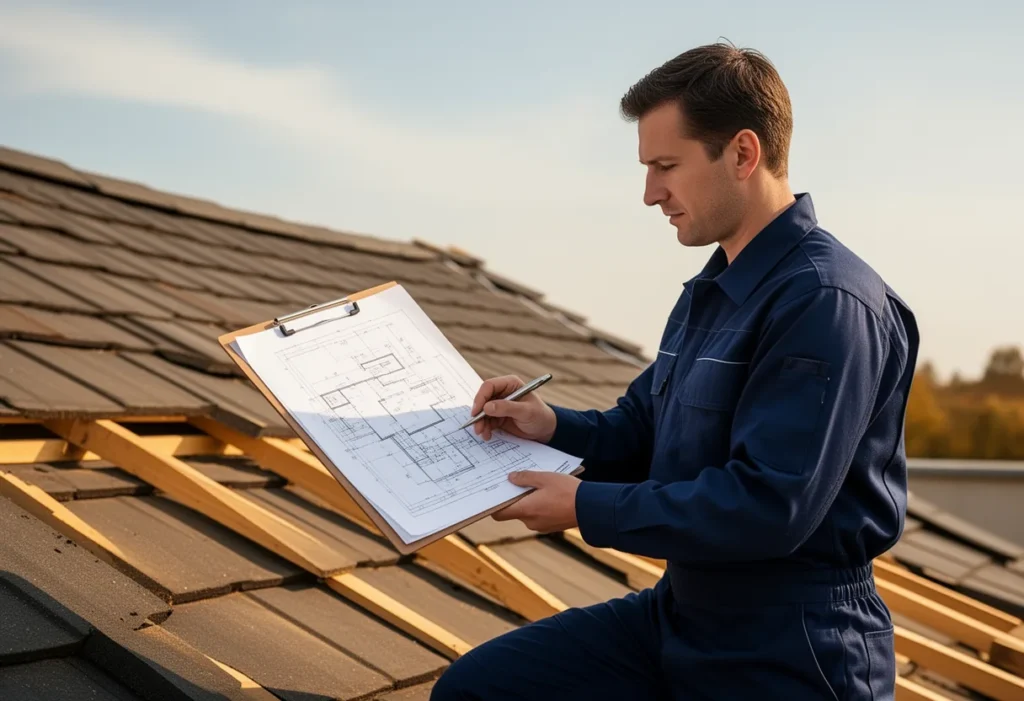
The panels on a New York roof are, for the most part, commodity hardware. Two homeowners on the same block can buy nearly identical equipment and end up with very different experiences over twenty years. The difference is usually the company that designed the array, pulled the permits, handled the utility interconnection, and answers the phone when an inverter faults in February.
That makes vetting the contractor the highest-leverage thing a homeowner does. There are a lot of solar installers NYC residents can call, and the marketing copy across them is close to identical. The useful checks are boring and documentary: who is licensed, who is registered with the programme, what the contract actually obligates them to, and what happens if they are not around later.
Start with the two registrations that are not optional
Two things should be verified before a sales conversation goes any further.
The first is NYSERDA participation. To claim the NY-Sun per-watt incentive on a homeowner’s behalf, a contractor has to be a participating contractor in the programme. If a company cannot be found on NYSERDA’s participating contractor list, the NY-Sun incentive cannot flow through them. That is a hard structural fact, not a preference. We cover what that status does and does not signal in what a NYSERDA-qualified contractor actually is.
The second is licensing and permitting authority in the jurisdiction where the work happens. In New York City, electrical work is performed under a licensed electrician, and the installation needs Department of Buildings approval and an electrical permit. Outside the city, the local building department sets the requirements. A company that is vague about who is pulling the permit is telling you something.
Verify registration yourself
Do not accept a screenshot or a logo on a brochure as proof of NYSERDA participation. Look the company up on NYSERDA’s own participating contractor list, and check the licence directly with the licensing authority. Sales material is not a registry.
Ask who is actually on the roof
A significant share of residential solar in New York is sold by one company and installed by another. That is not automatically a problem — subcontracting is normal in construction — but it changes who you call when something goes wrong, and it changes who the workmanship warranty runs against.
The question to ask directly: is the crew that installs this system employed by the company on the contract, or by a subcontractor? And if it is a subcontractor, which entity’s name is on the workmanship warranty?
The related question is about the sales channel. Some lead-generation firms sell a homeowner’s contact details to several installers. If the first contact came from a comparison site or a door-knock, the company doing the work may be several steps removed from the entity that made the first promise.
Understand what the company is really selling you
There are three broadly different transactions sold under the same word.
In a cash or loan purchase, the homeowner owns the system. In a lease or a power purchase agreement, a third party owns it and the homeowner pays for the equipment or the power it produces. In community solar, nothing is installed on the roof at all and the homeowner subscribes to a share of an offsite array.
These are not variations on a theme. They have different tax consequences, different implications when the house is sold, and different failure modes. Our comparison of leasing versus buying in New York goes through the trade-offs, and the community solar guide covers the no-installation route.
| Check | What to ask for | Why it matters |
|---|---|---|
| NYSERDA participation | Company name as listed on NYSERDA’s participating contractor list | Required for the NY-Sun incentive to be applied to the job |
| Electrical licence | Licence number and the jurisdiction it is held in | Permits and inspection sign-off depend on it |
| Insurance | Certificate of general liability and workers’ compensation | Determines who carries the risk of an on-site injury or damage |
| Installer of record | The legal entity whose crew does the work | Identifies who the workmanship warranty runs against |
| Interconnection experience | Number of jobs completed with your specific utility | Con Edison, National Grid and NYSEG each have their own process |
| Production estimate basis | The modelling tool used and the shading assumptions | Makes the kWh figure checkable rather than a claim |
The tax story is a competence test
How a salesperson describes incentives is one of the fastest ways to gauge whether the company is current.
New York’s state credit for solar energy system equipment is a percentage of system cost subject to a statutory cap, claimed by the homeowner on Form IT-255 with their state return. That structure has been stable and a competent installer should describe it accurately. Details are in our walkthrough of the state credit form.
The federal picture has changed, and this is where outdated sales material shows. The 30% federal residential clean energy credit under section 25D of the Internal Revenue Code was terminated for expenditures made after 31 December 2025 by the One Big Beautiful Bill Act, signed 4 July 2025. An expenditure counts as made when the original installation is completed, so a system finished in December 2025 but switched on in January 2026 still falls under the old rules. A New York homeowner who buys a system now, with cash or a loan, and whose installation is completed in 2026 claims nothing federally on their own return. There is no phase-down and no transition rule for purchasers.
A system whose installation was completed in 2025 falls under the old rules, and unused credit from that year can generally be carried forward on later returns.
Separately, a business-side federal credit still applies to the company that owns a leased or PPA system. That is a real incentive, but it belongs to the owner, not the resident. If a salesperson describes it as “your 30% federal credit” on a lease or PPA, they are either confused or being deliberately loose.
A precise question that reveals a lot
Ask: “On this specific contract, which entity claims which federal credit, and what do I file?” A company that answers cleanly — naming the state credit, naming Form IT-255, and correctly saying that a purchaser gets no federal credit on a 2026 placement — is keeping up. One that talks about “the 30% federal” without qualification is working from stale material.
Read the production estimate as a document, not a number
Every proposal contains an annual production figure in kilowatt-hours. On its own it means very little, because two installers can generate very different numbers for the same roof depending on their assumptions.
What makes the figure meaningful is the reasoning behind it: the modelling tool, the assumed tilt and azimuth, the shading analysis, the annual degradation rate applied to the panels, and whether snow losses were modelled for a New York winter.
An installer who has actually surveyed the roof can show a shade study. One who quoted from satellite imagery alone will describe the array in generic terms. Neither is disqualifying by itself, but the difference should be known before signing.
Compare estimates the way you would compare bids for any construction work — side by side, on the same fields. Our guide to comparing quotes lays out which fields actually make two proposals comparable.
The quote patterns worth walking away from
Some sales behaviours are common enough in New York to name specifically.
A price that expires today. Solar equipment pricing does not move hour to hour. A deadline attached to a discount is a closing technique, not a supply constraint.
An incentive described as a discount off the sticker. NY-Sun paid a per-watt incentive that stepped down as regional megawatt blocks filled, applied by the participating contractor and reflected in the price. As of September 2026 NYSERDA has no open NY-Sun block for homes in any utility territory, so a home quote showing a NY-Sun discount needs checking against NYSERDA’s NY-Sun dashboard. Any real reduction should appear as a named, itemised line, not as a vague “we got you approved for a special rate”.
A refusal to leave the contract overnight. Any legitimate contractor will let a homeowner read a twenty-year agreement without a salesperson in the room.
Pressure to sign before a site visit. A proposal built entirely from aerial imagery is a starting point, not a final design, and a company willing to sign one without seeing the roof has not priced the risk of what they find.
Specific dollar savings promised over decades. Future savings depend on utility rates, on net metering and billing rules that change, and on how much power the household actually uses. Nobody can know those numbers. A careful installer explains what determines savings rather than asserting a total. The mechanics behind that are in our net metering explainer.
Get three quotes, and let each know
Three proposals from participating contractors, on the same roof, with the same usage history, is enough to see the spread in price per watt and in production assumptions. Telling each company you are getting three tends to shorten the sales theatre considerably.
Check what survives the company
Residential solar has meaningful business turnover. Some New York homeowners are already on their second or third service relationship for a system installed less than a decade ago.
That is why it matters which warranties are backed by the manufacturer and which by the installer. Panel and inverter warranties generally follow the hardware and are honoured by the manufacturer regardless of who installed it. The workmanship warranty — covering roof penetrations, mounting, wiring and labour — is the installer’s own obligation, and it is worth exactly as much as the company’s continued existence.
Ask how long the entity on the contract has been operating under that name, and whether the workmanship coverage is backed by any third-party warranty product. Our warranties guide covers what each type actually covers.
Frequently asked questions
Does a company have to be NYSERDA-qualified to install solar in New York?
No. Any appropriately licensed contractor can legally install a system. Only a NYSERDA participating contractor can apply a NY-Sun per-watt incentive to a job, but as of September 2026 NYSERDA has no open NY-Sun block for homes in any utility territory, so for a home that is not a price difference today. Verify participation on NYSERDA’s own list rather than relying on the company’s marketing material.
Can a New York homeowner buying solar in 2026 still claim the 30% federal tax credit?
No. The federal residential clean energy credit under section 25D was terminated for expenditures made after 31 December 2025 under the One Big Beautiful Bill Act. A purchaser whose installation is completed in 2026 receives no federal credit on their own return, with no phase-down. New York’s state credit on Form IT-255 is unaffected by that change, and a separate business-side credit may still apply to a company that owns a leased or PPA system.
How many quotes should I get before choosing an installer?
Three is a practical number. It is enough to see the range in price per watt, equipment selection and production assumptions without the process dragging on for months. Give each company the same twelve months of utility bills so the estimates are built on identical usage.
What should I ask about the crew that installs the system?
Ask whether the installation crew is employed by the company on the contract or by a subcontractor, and which legal entity the workmanship warranty runs against. Subcontracting is normal, but it determines who is responsible for a roof leak or a wiring fault years later. Get the answer in writing before signing.
Verify current figures before you sign
Incentive amounts, megawatt block status and credit caps change. Confirm NY-Sun incentive levels and participating contractor status with NYSERDA, state credit rules with the New York State Department of Taxation and Finance, and permitting requirements with your local building department or the NYC Department of Buildings. This site is independent and is not affiliated with NYSERDA or any government agency.
NY Solar Incentives
Independent New York solar research. We summarise NYSERDA, NY-Sun and federal programme rules from published sources and state plainly when a figure is an estimate. We are not a government agency and do not sell equipment.
Run the arithmetic on your own system
Check the dated program table and your arrangement before counting an incentive. Standard residential NY-Sun blocks are closed; Long Island Affordable Solar has a conditional income-verification route. The NY credit depends on qualified costs and tax liability, while the NYC abatement reduces future property-tax bills. The estimator keeps those timings separate.