Net Metering in New York: How Credits Work
A rooftop system rarely produces exactly what the house is using. Net metering is the accounting rule that decides what happens to the difference, and it is not the same for every system.
On this page 9 sections
- 01Netting is a billing calculation, not storage
- 02Two compensation regimes exist side by side
- 03What the solar energy New York homeowners export is actually worth
- 04The customer benefit contribution is a charge, not a credit
- 05Credits do not offset every line on the bill
- 06Leftover credits and the annual reconciliation
- 07Community solar credits work through a different route
- 08What net metering means for the financing decision
- 09Frequently asked questions
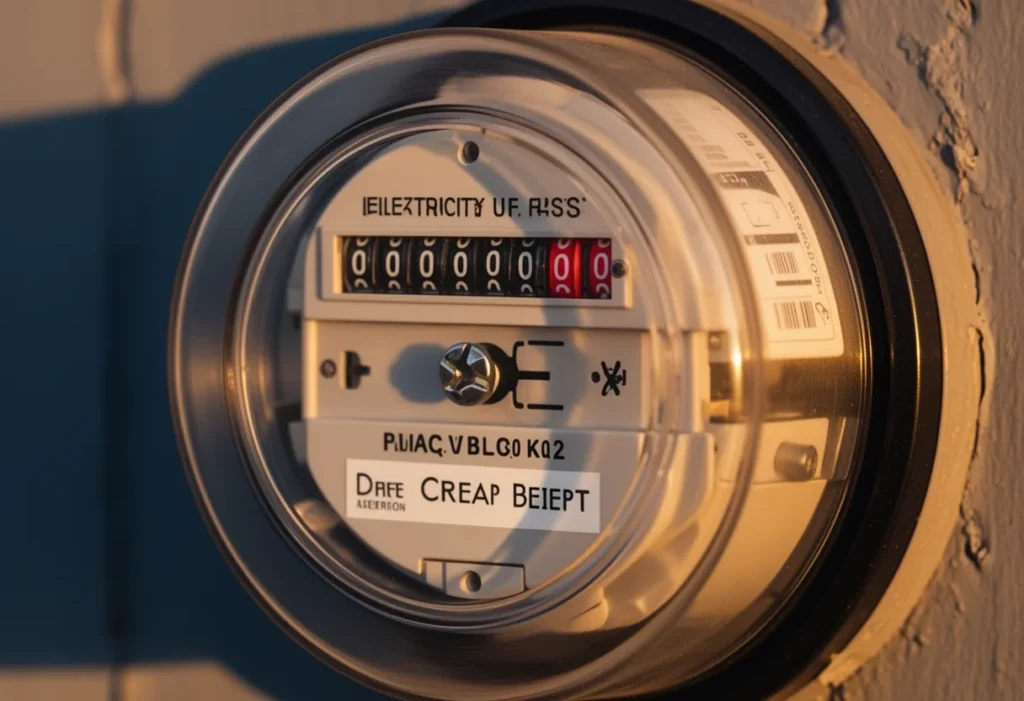
A rooftop array almost never produces exactly what the house is consuming at that moment. Net metering is the accounting rule that decides what happens to the difference, in both directions.
The rules governing solar energy New York households export have been rewritten more than once in recent years, and which version applies to a given system depends on the utility, the system size and the date the system was interconnected. Those three facts, not the size of the array, set the value of an exported kilowatt-hour.
Netting is a billing calculation, not storage
Without a battery, surplus production goes onto the grid the moment it is made. It is not held anywhere for later use by the house that generated it.
What the meter records is the net flow in each direction. Under a net metering arrangement, the utility nets consumption against export over the billing period and bills for the difference, so on-site consumption and export are treated as equivalent within that period.
This is why a system that appears to cover annual usage on paper can still produce monthly bills. Summer surplus and winter deficit are reconciled through credit rules, not by a physical reserve.
Two compensation regimes exist side by side
Residential rooftop systems in New York generally sit on the mass-market net metering tariff created by the Public Service Commission’s net metering successor order, sometimes called Phase One net energy metering. Under it, exports are credited on a volumetric basis so that netted kilowatt-hours are effectively valued at the retail rate for the billing period.
The alternative is the Value of Distributed Energy Resources framework, usually shortened to VDER or the value stack. Instead of a single retail-rate credit, it assigns a monetary value made up of separate components: energy value, capacity value, environmental value, demand reduction value, and locational system relief value where it applies.
Larger projects and community solar are compensated through the value stack. Mass-market residential customers can generally elect it, but doing so replaces a simple retail-rate offset with a monetary credit whose components vary, so it is rarely the default choice for a household.
What the solar energy New York homeowners export is actually worth
Under retail-rate netting, an exported kilowatt-hour is worth the same as one not bought, which is the most favourable outcome available to a residential system. That value therefore moves with the utility’s rates rather than being fixed at installation.
Under the value stack, the components are published and updated on schedules set by the Commission and the utilities, and the environmental and capacity elements are not constant. A project’s value is calculated from those components rather than from a retail rate.
Neither route pays a household in cash for surplus in the ordinary course. Both produce credits against future bills, which is a significant distinction when a system has been sized to generate more than the property uses.
| Mechanism | Who it typically applies to | How exports are valued | What to check |
|---|---|---|---|
| Mass-market net metering | Residential rooftop systems within the size limits | Volumetric netting, effectively at the retail rate | The customer benefit contribution charge and the annual reconciliation rule |
| VDER value stack | Larger projects, community solar, and residential customers who elect it | A monetary credit built from separate published components | Which components apply at your location and how often they are updated |
| Community solar credit | Subscribers with no system at their own property | A bill credit from the project’s value stack compensation | The subscription discount and the notice period to cancel |
The customer benefit contribution is a charge, not a credit
Residential net-metered systems interconnected after a date set by the Public Service Commission are subject to a customer benefit contribution: a monthly charge calculated on the system’s installed capacity, intended to recover a share of the fixed costs that a net-metered customer would otherwise avoid.
It is small relative to a bill, but it is permanent, it scales with system size, and the rate differs by utility. It is also frequently missing from savings projections, which is why the figure is worth confirming with your own utility rather than accepting from a proposal.
Older systems interconnected before the relevant date are generally not subject to it. That is one of several reasons a neighbour’s arrangement is not a reliable guide to your own.
Ask which tariff your quote assumes
Ask the installer, in writing, which compensation mechanism the savings figures assume, whether the customer benefit contribution has been included, and which utility rate schedule was used. A projection built on a rate class you are not on, or with the contribution left out, is not a projection of your bill.
Credits do not offset every line on the bill
A New York electricity bill separates supply from delivery, and adds fixed charges that do not vary with consumption. The basic service charge remains payable regardless of how much a system produces.
This is the single most common surprise for new solar owners. A system can offset essentially all volumetric usage and the bill still arrives with a figure on it, because the fixed portion was never something solar could displace.
How much of a bill is fixed differs by utility and rate class. Reading a recent bill line by line before signing anything is a more reliable exercise than reading a savings estimate, and it feeds directly into the arithmetic covered in how solar payback periods are calculated in New York.
Leftover credits and the annual reconciliation
Surplus in a given month carries forward as a credit against future bills, which is what allows a summer surplus to cover part of a winter deficit.
What happens to a balance still outstanding at the annual anniversary depends on the utility’s tariff. Some carry it forward; where any cash settlement is available it is made at a rate well below retail, not at the retail credit value. This is a per-utility question and the answer should come from your own utility’s tariff rather than from general guidance.
New York has six investor-owned utilities plus separate arrangements on Long Island and in municipal territories, and their tariffs are not identical. Confirm yours by name.
Size the system to the house, not to the roof
Because surplus is credited rather than paid, and because leftover balances are settled at less than retail if they are settled at all, a system sized well beyond annual consumption converts high-value offset into low-value credit. Bring twelve months of actual kilowatt-hour usage to every conversation and ask each installer to size against it explicitly.
Community solar credits work through a different route
A community solar subscriber has no equipment at their address. The project is compensated through the value stack, and the subscriber receives a credit on their utility bill, purchased from the project operator at a discount to its face value.
That makes community solar a subscription rather than an investment in hardware, with correspondingly shorter commitments and no interconnection of your own to manage. The arrangement is set out in our guide to community solar in New York.
For renters, apartment residents, and households with shaded or structurally unsuitable roofs, this is the only route to a solar bill credit, and it is unaffected by the net metering rules that govern rooftop systems.
What net metering means for the financing decision
Because net metering determines the value of production, it determines the value of the asset that a loan, lease or PPA is priced against. A change in tariff design changes the economics of every arrangement built on top of it.
Owned systems absorb that risk directly. Under a PPA, the household is buying kilowatt-hours at a contracted rate regardless of what the utility credits exports at, which shifts the exposure in a different direction rather than removing it. That trade-off is set out in lease versus buy in New York.
NY-Sun incentives interact with none of this directly. They were paid per watt through the installer and stepped down as regional megawatt blocks filled, as described in the NY-Sun incentive programme, and they were unaffected by how exports are later credited. As of September 2026 NYSERDA has no open NY-Sun block for homes in any utility territory.
Frequently asked questions
Does New York still have net metering?
Yes, for residential rooftop systems within the applicable size limits, under the mass-market tariff created by the Public Service Commission’s net metering successor order. Exports are netted volumetrically so that credits effectively track the retail rate, but systems interconnected after a set date also pay a monthly customer benefit contribution based on installed capacity. Larger projects and community solar are compensated through the VDER value stack instead.
Will my utility pay me for surplus electricity?
Not in the ordinary course. Surplus produces a credit that carries forward against future bills rather than a payment, and where any annual cash settlement exists it is made at a rate well below the retail credit value. How a leftover balance is handled at the anniversary is set in each utility’s tariff, so confirm the treatment with your own utility by name.
Why do I still get an electricity bill after installing solar?
A New York electricity bill includes fixed charges, including the basic service charge, that do not vary with how much energy you use or export. Solar can offset volumetric usage but not those fixed elements, and the customer benefit contribution adds a further monthly charge for newer systems. A bill of some size is therefore normal even for a well-sized system.
Should I choose the value stack instead of net metering?
For most residential rooftop customers, retail-rate netting is simpler and is the default for good reason: it values an exported kilowatt-hour the same as one not purchased. The value stack builds a monetary credit from separate components whose values change on published schedules, which suits larger projects and community solar better than a single home. If an installer proposes electing it, ask them to show the calculation against your own consumption pattern.
Confirm the current tariff with your utility
Compensation rules, value stack component values and the customer benefit contribution rate change over time and differ between utilities. Confirm the current position with your own utility and with the New York State Public Service Commission, and confirm incentive levels with NYSERDA. This site is independent and is not a utility, NYSERDA or a state agency.
NY Solar Incentives
Independent New York solar research. We summarise NYSERDA, NY-Sun and federal programme rules from published sources and state plainly when a figure is an estimate. We are not a government agency and do not sell equipment.
Run the arithmetic on your own system
Check the dated program table and your arrangement before counting an incentive. Standard residential NY-Sun blocks are closed; Long Island Affordable Solar has a conditional income-verification route. The NY credit depends on qualified costs and tax liability, while the NYC abatement reduces future property-tax bills. The estimator keeps those timings separate.