NYSERDA Solar Projects: How the Programs Actually Work
NYSERDA runs several distinct solar programs, not one. Here is what each covers, who qualifies, and how to check what is currently active before you rely on any number.
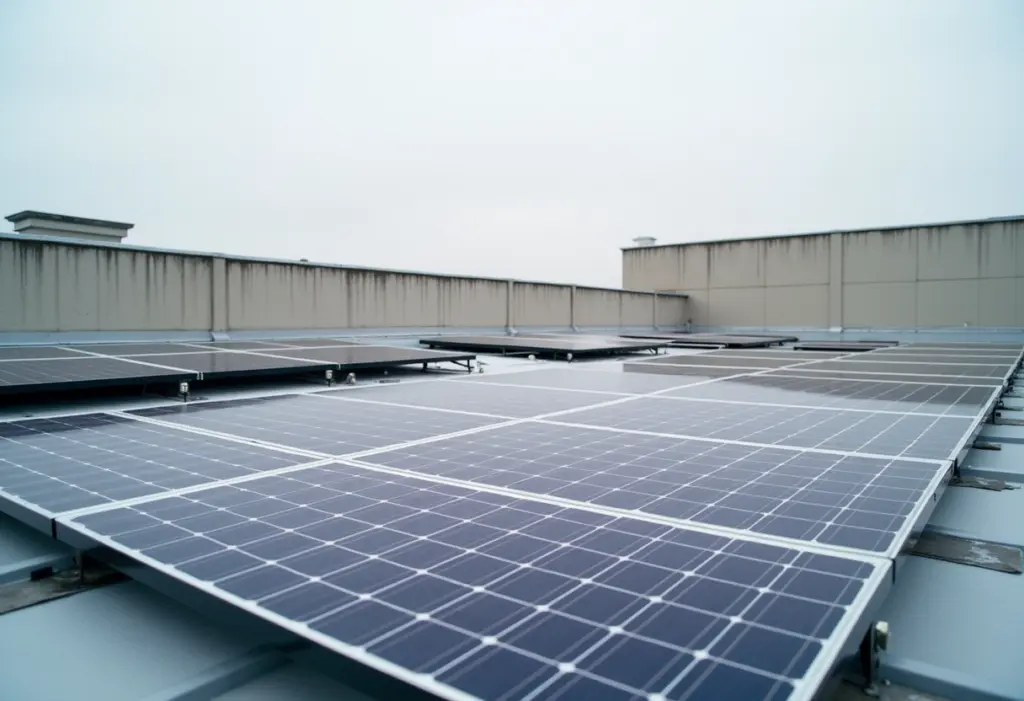
NYSERDA, the New York State Energy Research and Development Authority, is a state agency that administers several energy programs, and solar is one piece of a larger portfolio that also covers efficiency, heat pumps and clean transportation. When people search for "NYSERDA solar projects," they are usually looking for one of two things: the incentive program that pays installers per watt while a block is open (NY-Sun), or the broader question of what the agency does for homeowners and businesses that want solar. This article separates the two and explains how each actually functions.
NY-Sun is the incentive program, not a grant to homeowners
The program most people mean when they say "NYSERDA solar" is NY-Sun. It does not write a check directly to a homeowner. Instead, while a block is open, NY-Sun pays a per-watt incentive to participating solar installers, calculated against a declining schedule tied to how much capacity has already been installed in a given region of the state. The installer factors that incentive into the price they quote, so a homeowner typically sees its effect as a lower system price rather than as a separate rebate check. For homes there is nothing to build in right now: as of September 2026 NYSERDA has no open NY-Sun block for homes in any utility territory; check NYSERDA’s NY-Sun dashboard for a new one.
Because the incentive declines as installed capacity in a region grows, and each block closes when it fills, the dollar-per-watt figure is a moving target that can reach zero. For homes it has: Con Edison’s last standard residential block closed on 29 May 2025 and the Upstate one on 17 December 2025, the Affordable Solar blocks for income-qualified homes closed on 15 October 2025 (Con Edison) and 9 March 2026 (Upstate), and Long Island’s last residential block closed in April 2016. A 2026 home quote that builds in a NY-Sun figure is drawing on a block that has closed.
Ask which block your quote assumes
A written quote that includes a NY-Sun incentive should state which block the installer is applying and when that figure was locked in. Blocks close as capacity fills, and as of September 2026 none is open for homes, so on a 2026 home quote the NY-Sun line should be zero.
NYSERDA also runs financing and information programs
Separate from the per-watt incentive, NYSERDA operates loan and financing programs that solar customers sometimes combine with an installation, and it maintains public information resources — project trackers, contractor eligibility lists and consumer guides — that are not incentives themselves but are part of how the agency supports the market. A contractor who says they are "NYSERDA-approved" is typically referring to eligibility to participate in NY-Sun, which requires meeting the program’s own contractor standards, not a state endorsement of the company’s work.
NYSERDA does not itself own or build residential solar systems. Any project described as a "NYSERDA solar project" on a homeowner’s roof is a privately contracted installation that happens to draw on a NYSERDA-administered incentive, not a project NYSERDA is executing directly.
Community solar is administered differently
Community solar — subscribing to a share of a larger, offsite solar array instead of installing panels on your own roof — also touches NYSERDA’s programs, but the mechanics differ from a rooftop system. A subscriber typically sees a credit on their utility bill rather than any direct incentive payment, and eligibility depends on which community solar projects are accepting subscribers in a given utility territory at a given time.
| Program element | Rooftop solar via NY-Sun | Community solar subscription |
|---|---|---|
| Who receives the incentive | The installer, built into the system price, while a block is open (none is open for homes as of September 2026) | Not applicable in the same way |
| What the homeowner sees | A lower upfront or financed system price, while a block is open | A bill credit from their utility |
| Ownership | Homeowner (or lender, if financed) | The community solar project developer |
| Roof required | Yes | No |
What NYSERDA does not do
NYSERDA does not set federal tax policy, and it is not the source of the federal residential clean energy credit that used to apply to home solar purchases. That credit was a federal, not a state, mechanism, and its termination for expenditures made after 31 December 2025 is a federal tax change, not a NYSERDA decision. NYSERDA also does not approve or inspect individual installations for safety — that remains the role of the local building department and utility interconnection process.
Where to check current program status
Program details, incentive blocks and eligibility rules change. Before assuming a specific number applies to your project, check NYSERDA’s own published program pages directly rather than relying on a quote or a third-party summary alone.
How this affects a homeowner’s math
Because a NY-Sun incentive, when one is open, is embedded in the installer’s price rather than paid separately, comparing quotes on a like-for-like basis means asking each installer to state, in writing, the system size, the gross price before any incentive, the NY-Sun incentive block assumed (for a home as of September 2026, none), and the resulting net price. Without that breakdown, two quotes that look different on the bottom line may be assuming different incentive levels, including one from a block that has closed, rather than reflecting different installer margins.
For homeowners weighing New York’s state-level tools against the changed federal picture, it helps to read about the NY-Sun incentive program in more detail, and to understand what New York’s own permitting and installation process looks like in practice if you are in New York City. Homeowners exploring financing alongside an installation may also want to look at the NYSERDA Smart Energy Loan requirements, and those on a limited income should check the Energy Affordability Program for how it interacts with solar.
Frequently asked questions
Is NYSERDA solar the same thing as NY-Sun?
NY-Sun is NYSERDA’s main solar incentive program, so in casual use the two names are often treated as interchangeable. NYSERDA itself, however, is the broader state agency that runs NY-Sun alongside separate financing and information programs.
Does NYSERDA pay homeowners directly for going solar?
Generally no. When a block is open, the NY-Sun incentive is paid through the installer and reflected in the system price a homeowner is quoted, rather than issued as a separate check to the homeowner after installation. As of September 2026 NYSERDA has no open NY-Sun block for homes in any utility territory.
Can I combine a NYSERDA incentive with New York’s state tax credit?
The NY-Sun incentive and the New York State solar tax credit (Form IT-255) are separate mechanisms administered differently. As of September 2026 NYSERDA has no open NY-Sun block for homes in any utility territory, so a home installed now has no NY-Sun incentive to combine with the credit. Confirm current eligibility rules for each with the relevant agency before assuming they stack automatically.
Where can I verify current NYSERDA incentive levels?
NYSERDA publishes current NY-Sun incentive block information on its own program pages. Because blocks close and figures change, that is a more reliable source than a quote alone or an older article.
Figures change
Incentive blocks, financing terms and program eligibility are updated by NYSERDA over time. Verify current numbers directly with NYSERDA or a participating installer before making a decision based on any specific figure in this article.
NY Solar Incentives
Independent New York solar research. We summarise NYSERDA, NY-Sun and federal programme rules from published sources and state plainly when a figure is an estimate. We are not a government agency and do not sell equipment.
Run the arithmetic on your own system
Check the dated program table and your arrangement before counting an incentive. Standard residential NY-Sun blocks are closed; Long Island Affordable Solar has a conditional income-verification route. The NY credit depends on qualified costs and tax liability, while the NYC abatement reduces future property-tax bills. The estimator keeps those timings separate.