The NYS Clean Heat Program: What the Rebates Actually Cover
NYS Clean Heat rebates run through seven sponsoring utilities, not one statewide table. Here is who sponsors what, what the rebate covers, and why nothing federal remains in 2026.
On this page 7 sections
- 01Who actually runs the programme
- 02What NYS Clean Heat program rebates actually cover
- 03Why there is no single rebate table — and where the live number lives
- 04The federal side: nothing, for a 2026 install
- 05What stacks with a Clean Heat rebate in New York
- 06How the money actually reaches you
- 07What to do next
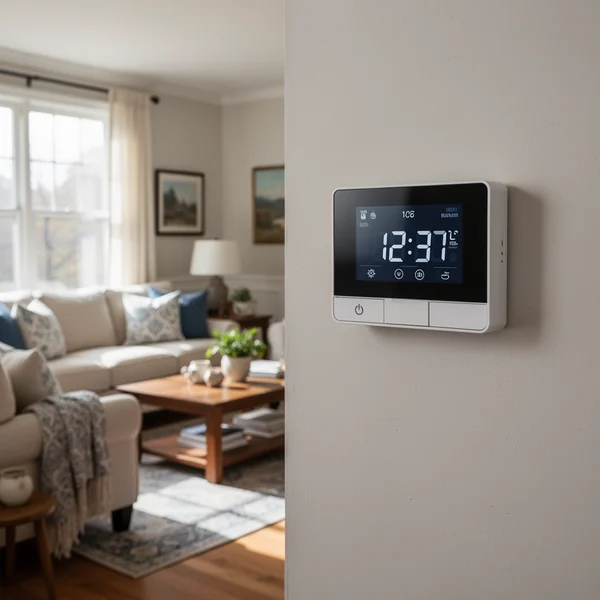
NYS Clean Heat program rebates are paid on qualifying heat pump equipment through seven sponsoring utilities, and in almost every case the money never touches your bank account — your contractor claims it and takes it off the invoice. There is no single statewide rebate table, which is why every page promising you one number is guessing.
That structure trips people up constantly. Homeowners ring their utility asking “what’s the rebate,” get transferred twice, and hang up thinking the programme does not exist. It does. It is just administered per-utility, per-equipment-type, and it changes when a sponsor updates its schedule.
Who actually runs the programme
NYS Clean Heat is administered by NYSERDA together with seven sponsoring utilities: Central Hudson, Con Edison, National Fuel Gas, National Grid, NYSEG, Orange & Rockland, and RG&E. Your rebate comes from whichever of those serves your address, under that sponsor’s own schedule.
Two things follow from that list, and both matter more than they look:
- National Fuel Gas is a sponsor even though it only delivers gas. If you are in Erie, Niagara, Chautauqua, Cattaraugus or Allegany County, the utility whose gas you are about to stop burning is part of the programme paying you to stop burning it. That is deliberate — Clean Heat is a state-directed programme funded through utility delivery rates, not a marketing offer from a gas company.
- PSEG Long Island is not a Clean Heat sponsor. If your electric bill says PSEG Long Island, do not go looking for a Clean Heat rebate under your account — PSEG-LI runs its own separate efficiency and heat pump programmes. Nassau and Suffolk homeowners lose weeks to this every year because national blog posts say “New York homeowners get the Clean Heat rebate” without checking who sponsors what.
What NYS Clean Heat program rebates actually cover
The programme is organised around equipment categories rather than around your house. In broad terms, sponsors publish schedules covering:
- Air source heat pumps — both ducted systems that reuse or replace existing ductwork and ductless mini split systems with wall or ceiling heads.
- Ground source (geothermal) heat pumps — the closed-loop and open-loop systems that trade a much larger up-front cost for the most stable winter performance available in this climate.
- Heat pump water heaters — usually a separate, smaller line on the same schedule.
Beyond the category, the two things that most often move a rebate figure are how much of your heating load the new system actually takes over and whether the equipment appears on the qualified products list for the programme. A single ductless head added to a den is treated differently from a system designed to carry the whole house through a January cold snap, and a unit that is not on the qualified list earns nothing regardless of how good it is. Ask your contractor for the model’s AHRI certificate and confirm it is listed before you sign.
Why there is no single rebate table — and where the live number lives
Each sponsoring utility files and updates its own rebate schedule, so amounts vary by utility and by equipment type and they move over time as budgets are allocated. Any article that prints a per-ton dollar figure for “New York” is either quoting one utility without saying so, or quoting a schedule that has since changed.
The honest answer is to go to the source. NYSERDA runs an address-based rebate finder at cleanheat.ny.gov/find-available-rebates. Type in your service address, and it resolves which sponsor you fall under and what that sponsor is currently paying. That takes about a minute and it is the only number worth planning around. The programme’s main page is cleanheat.ny.gov.
The federal side: nothing, for a 2026 install
This is the part most competing pages still have wrong, and it is worth being blunt about because it changes the arithmetic completely.
Both federal residential energy credits ended for property placed in service after 31 December 2025. Section 25C — the Energy Efficient Home Improvement Credit, the one that carried a $2,000 annual cap for heat pumps and heat pump water heaters and $1,200 for the general envelope bucket — was allowed for qualifying property placed in service before 31 December 2025, and improvements could be claimed through that date. Section 25D, the Residential Clean Energy Credit that covered solar and geothermal at 30%, terminated for expenditures after the same date.
A New York household installing a heat pump in 2026 gets nothing federal. Not a reduced credit, not a phase-down — nothing. If a salesperson’s proposal has a line reading “30% federal tax credit” against a 2026 install date, that line is wrong, and every payback figure built on top of it is wrong too. The IRS page for 25C is at irs.gov; we cover what changed on the solar side in The Federal Solar Tax Credit and New York: What Changed.
What survives is the state and utility layer, which is exactly why Clean Heat matters more in 2026 than it did in 2024.
What stacks with a Clean Heat rebate in New York
| Layer | Status for a 2026 install |
|---|---|
| Federal 25C / 25D | Gone. Placed-in-service and expenditure dates after 31 Dec 2025 do not qualify. |
| NYS Clean Heat rebate | Live, through your sponsoring utility. Amount depends on sponsor and equipment. |
| NYSERDA financing | Live. The On-Bill Recovery loan puts the repayment on your utility bill. |
| Income-qualified support (EmPower+) | Live. Thresholds and amounts change — call NYSERDA at 1-866-NYSERDA rather than trusting a third-party figure. |
| NY State solar credit (Form IT-255) | Live for solar — 25% of system cost, capped at $5,000, five-year carryforward. It is not a heat pump credit. |
One trap on that last row: New York’s tax code treats geothermal separately from solar equipment. Do not assume the IT-255 solar credit covers a ground source heat pump — check the current forms at tax.ny.gov, or ask your preparer, before you build it into a budget. If solar is also on your list, the IT-255 mechanics are laid out in Form IT-255: Claiming the NY State Solar Tax Credit, and the wider state picture is in New York State Renewable Energy Incentives Beyond Solar.
How the money actually reaches you
You do not apply. In the standard path, a participating contractor — one enrolled with your sponsoring utility’s Clean Heat programme — submits the application on your behalf, and the rebate appears as a discount on your invoice. That has three practical consequences:
- A contractor who is not enrolled cannot get you the rebate. Not “will help you apply later” — cannot. Confirm enrolment with the utility, not just with the contractor.
- The rebate should be visible on the proposal as its own line. If it is buried in a single “your price” figure, you cannot tell whether it was passed through to you at all. Ask for gross price, rebate, and net.
- Post-install paperwork is real. Sponsors can require commissioning documentation, model and serial numbers, and sometimes an inspection. Keep the AHRI certificate, the signed contract, the permit, and the final invoice together.
What to do next
- Run your address through cleanheat.ny.gov/find-available-rebates and write down which sponsor you fall under. If it returns PSEG Long Island territory, go to PSEG-LI’s own programmes instead.
- Book a free or low-cost home energy assessment before you buy equipment. Sizing a heat pump to a leaky house locks in a bigger, more expensive machine forever.
- Get three quotes from contractors you have confirmed are enrolled with your sponsor. Ask each for a Manual J load calculation, the AHRI certificate, and the rebate shown as a separate line.
- Delete any “30% federal credit” line from every proposal you receive for a 2026 install, then recompute the payback yourself. Several proposals will look very different afterwards.
- If cash flow is the obstacle rather than total cost, price the NYSERDA On-Bill Recovery loan against a home equity option before you sign a dealer finance agreement.
NY Solar Incentives
Independent New York solar research. We summarise NYSERDA, NY-Sun and federal programme rules from published sources and state plainly when a figure is an estimate. We are not a government agency and do not sell equipment.
Run the arithmetic on your own system
Check the dated program table and your arrangement before counting an incentive. Standard residential NY-Sun blocks are closed; Long Island Affordable Solar has a conditional income-verification route. The NY credit depends on qualified costs and tax liability, while the NYC abatement reduces future property-tax bills. The estimator keeps those timings separate.