The True-Up Bill After Solar in New York: What to Expect
Net metering credits do not settle instantly, and they do not offset everything on the bill. Understanding which lines they cannot touch is what stops an annual reconciliation from being a surprise.
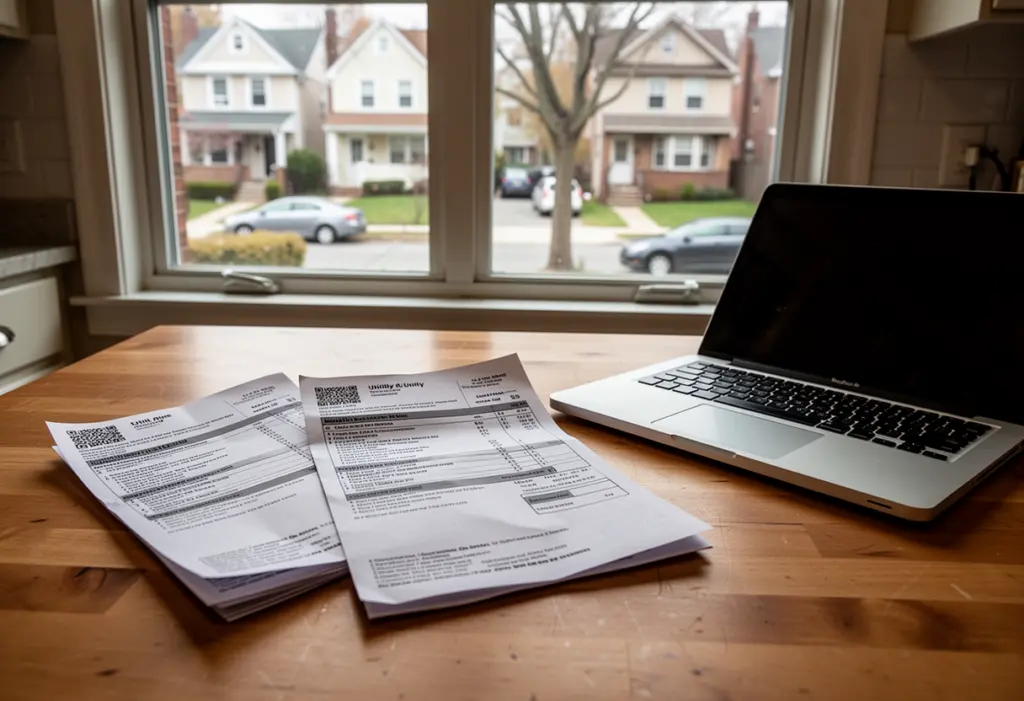
A solar bill in New York does not go to zero, and the reason is not that the system underperformed. Under Phase One net metering your exports are credited at the full retail rate and the structure holds for 20 years from interconnection, but crediting is not the same as cancelling, and several lines on the bill are outside what a credit can touch. The annual reconciliation, commonly called a true-up, is where that becomes visible in one number.
What the credits actually do
Each billing period your meter records what you imported and what you exported. Exported energy earns a credit at the retail rate, which offsets consumption in that period and carries forward as a balance if you produced more than you used. That balance accumulates through the long summer days and is drawn down through winter, which is precisely how a well-sized New York array covers a year of consumption without any storage.
The reconciliation happens on your own annual anniversary rather than on a calendar date shared by every customer. Ask your utility what that date is, in writing, and put it in a calendar. Two questions belong with it: what happens to a remaining credit balance at that anniversary, and whether the answer is set out in the net metering agreement you signed. Do not accept a general answer from a sales conversation on this point; ask the utility.
The lines a credit does not erase
- The fixed customer charge. You are still a connected customer, and the basic service charge is there whether you import a kilowatt-hour or not.
- The Customer Benefit Contribution. This is charged on the DC size of your array, not on your consumption, for systems interconnected on or after 1 January 2022. Production does not reduce it and neither does a credit balance.
- Taxes and surcharges calculated on the charges that remain.
Put a number on the second one, because it is the one people do not expect. A 7.5 kW system on NYSEG at the 2026 residential rate of $1.19 per kW-month pays $8.93 a month, about $107 a year. The same size array on Central Hudson at $1.67 pays $12.53 a month, roughly $150. A 12 kW array on Central Hudson pays $20.04 a month, over $240 a year. None of that is affected by how sunny the year was, and none of it is offset by banked credits.
Why an oversized array does not help
This is the uncomfortable part. Building a credit balance you never consume is not free. You paid for the panels that generated it, and you pay a monthly charge on their capacity for as long as the system is connected. An array sized well above your actual annual consumption converts capital and a recurring charge into credits with no use. Size to the load you will genuinely have, including electrification you have already decided on, rather than to the largest array the roof accepts.
The reverse error is worth naming too. If your consumption has risen since the system was designed, for instance after adding a heat pump or an electric vehicle, the reconciliation will show a real balance owed, and that is the system doing exactly what it was sized to do rather than a fault.
Reading your own bill before the anniversary
- Find the credit balance carried forward and track it monthly. It should peak in late summer and fall through the winter.
- Identify the fixed charges that credits do not offset, and total them for the year. That is your realistic floor.
- Confirm the utility name and the rate class on the bill, because the capacity charge differs by utility and the 2026 residential rates run from $0.97 per kW-month at National Grid to $1.67 at Central Hudson.
- Compare the year of production against the estimate in your original proposal, and ask your installer to explain any gap greater than a rounding error.
Two customers are outside this framework entirely. A municipal electric utility customer is outside Public Service Commission jurisdiction, so there is no state net metering, no capacity charge and no state reconciliation to expect; the terms come from the municipal utility and must be asked for directly. And a community solar subscriber owns nothing, pays no Customer Benefit Contribution, and receives credits under the terms of a subscription rather than a net metering agreement, which is a different document with different cancellation rules.
What incentives change about the arithmetic
Nothing on the bill is affected by the federal credit any more: section 25D ended for expenditures made after 31 December 2025, with an expenditure treated as made when the original installation is completed. The New York State credit of 25% capped at $5,000 on Form IT-255, for a principal residence, is a tax filing rather than a bill credit, so it never appears here either. Rates and programme terms move annually, so verify the current capacity charge with NYSERDA and your own utility rather than assuming the figure quoted when your system was sold.
Frequently Asked Questions
Why is my solar bill not zero?
Credits offset energy charges, not the fixed customer charge, the capacity-based Customer Benefit Contribution, or taxes calculated on what remains. Those lines are billed whether the array produced a lot or a little.
When does the true-up happen?
On your own annual anniversary rather than a shared calendar date. Ask your utility in writing what that date is and what happens to a remaining credit balance, and check it against your net metering agreement.
Does a bigger array reduce the true-up?
Only up to your actual consumption. Beyond that you are paying for panels and a monthly capacity charge to build credits you never use, which is a cost rather than a hedge.
Do community solar subscribers get a true-up bill?
No. A subscriber owns no equipment, pays no Customer Benefit Contribution, and receives credits under a subscription agreement rather than a net metering agreement, with its own terms and cancellation rules.
This article is general information, not tax, legal or financial advice. Incentive amounts, eligibility rules and deadlines change and depend on your utility, your tax situation and your property. Confirm current terms with NYSERDA, your utility and a qualified tax professional before making a decision.
NY Solar Incentives
Independent New York solar research. We summarise NYSERDA, NY-Sun and federal programme rules from published sources and state plainly when a figure is an estimate. We are not a government agency and do not sell equipment.
Run the arithmetic on your own system
Check the dated program table and your arrangement before counting an incentive. Standard residential NY-Sun blocks are closed; Long Island Affordable Solar has a conditional income-verification route. The NY credit depends on qualified costs and tax liability, while the NYC abatement reduces future property-tax bills. The estimator keeps those timings separate.