Does Solar Increase Property Taxes in New York?
Solar does add value an assessor can tax, which is exactly why New York exempts that added value for fifteen years. The exemption is not automatic, and it is not universal.
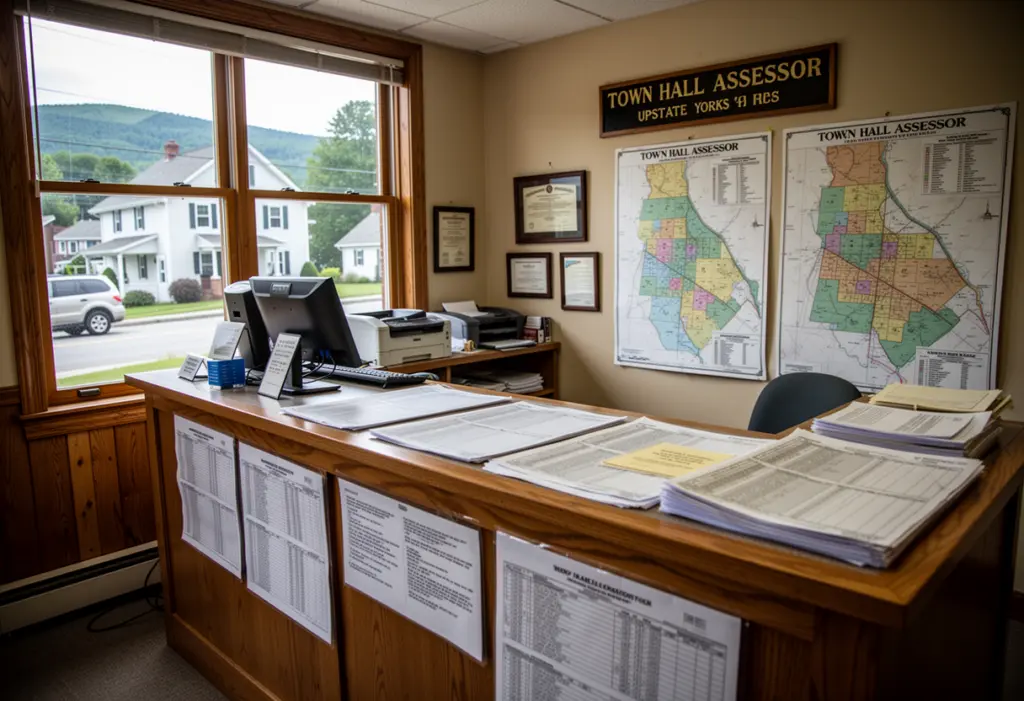
Yes in principle — and whether it reaches your bill turns on a state law with three separate opt-outs inside it. A solar installation adds value that an assessor can recognise. RPTL 487 exempts that added value from real property taxation for 15 years, but only where the municipality, the county and the school district have each not opted out. Municipalities may opt out and many have, so that is three jurisdictions, three independent answers, and you need all three before you can assume anything.
What the exemption does and does not do
It exempts the added value attributable to the system. It does not reduce the tax on the rest of your property, it does not freeze your assessment, and it does not stop a town-wide revaluation or a rate increase from raising your bill. If your taxes go up in the year after installation, the cause is very often something that has nothing to do with the panels, which is why you want the exemption confirmed in writing rather than inferred from a bill.
It is also finite in two ways. The term is 15 years, not permanent. And section 487 requires that the system be constructed before 1 January 2030, so it is not an open-ended offer to think about later.
Three checks, not one
The opt-out is available to a county, city, town or village by local law, and to a school district by resolution. These are separate decisions taken by separate bodies at separate times. A town that kept the exemption tells you nothing about its county or its school district.
There is one structural exception. The Big Five city school districts — New York City, Buffalo, Rochester, Syracuse and Yonkers — are fiscally dependent and levy no separate property tax, so in those five cities there is no separate school district check to make. Everywhere else, make it.
The way to size what an opt-out would cost you is on your own bill. Look at the lines on it and work out what proportion each taxing jurisdiction represents. If one of the three has opted out, that jurisdiction’s share of the rate applies to whatever added value the assessor attributes to the system, and the other two shares do not. Ask the assessor how much value the installation is expected to add to your assessment, then do the multiplication with the rates printed on your own bill rather than with a figure from a proposal.
Filing is on you
The exemption is applied for, not granted automatically. Form RP-487 goes to your assessor, and you should ask that office two things directly: the filing deadline for the coming assessment roll, and what supporting documentation it wants with the application. Get the answer from the assessor rather than from an installer, and keep the correspondence.
Inside New York City the same section 487 exemption is administered by the Department of Finance as the Clean Energy Systems Exemption, preceded by a Notice of Intent to Construct Clean Energy Systems. Section 487 has no carve-out excluding the five boroughs, so do not accept the common claim that the exemption is an outside-the-city benefit.
The New York City abatement is additional
The city’s solar abatement under RPTL Title 4-C is filed on form PTA4 with the Department of Buildings and taken over a four-year compliance period. It layers on top of the section 487 exemption inside the city rather than replacing it. Treating it as the city’s substitute for section 487 leaves one of the two on the table.
The recurring cost that is not a property tax
Homeowners who ask about property taxes are usually asking a broader question: what does this system cost me every month once it is on the roof? For most New York rooftop customers the answer is the Customer Benefit Contribution, a monthly charge on DC capacity regardless of production, applying to systems interconnected on or after 1 January 2022 and recalculated annually. On Orange & Rockland the 2026 residential rate is $1.00 per kW-month, so a 6 kW array pays 6 x $1.00, $6.00 a month or $72 a year. Community solar subscribers pay no Customer Benefit Contribution at all, and a municipal electric utility customer is outside the charge entirely along with the rest of Public Service Commission jurisdiction. Check the utility name on your own bill.
The rest of what is available in 2026
Alongside RPTL 487 there is the state sales tax exemption on residential solar equipment, with localities able to elect separately on their own share, so the total exemption differs by county and city. There is New York’s income tax credit of 25% capped at $5,000 on Form IT-255 for a principal residence in the state, limited by your actual state tax liability. NY-Sun is not on that list. As of September 2026 NYSERDA has no open NY-Sun block for homes in any utility territory; check NYSERDA’s NY-Sun dashboard for a new one. The income-based Affordable Solar tracks have closed as well.
The 30% federal residential credit is gone. Section 25D was terminated for expenditures made after 31 December 2025 and the operative test is when the original installation is completed, so a 2026 proposal showing a federal line is materially wrong. Verify the exemption position with your assessor and the credit with the New York State Department of Taxation and Finance before you rely on either, because local laws and programme terms both change.
Frequently Asked Questions
Will installing solar raise my property taxes in New York?
Solar adds value an assessor can recognise, but RPTL 487 exempts that added value for 15 years where the municipality, the county and the school district have each not opted out. You must apply for it on form RP-487.
How do I find out if my area opted out?
Ask three bodies separately. A county, city, town or village opts out by local law and a school district by resolution. In New York City, Buffalo, Rochester, Syracuse and Yonkers there is no separate school property tax to check.
Does the exemption apply in New York City?
Yes. Section 487 has no city carve-out, and the Department of Finance administers it as the Clean Energy Systems Exemption after a Notice of Intent to Construct. The city abatement filed on form PTA4 is additional, not a substitute.
How long does the exemption last?
Fifteen years on the added value, and the system must be constructed before 1 January 2030 to qualify at all. It does not reduce tax on the rest of the property or prevent a revaluation or a rate rise.
This article is general information, not tax, legal or financial advice. Incentive amounts, eligibility rules and deadlines change and depend on your utility, your tax situation and your property. Confirm current terms with NYSERDA, your utility and a qualified tax professional before making a decision.
NY Solar Incentives
Independent New York solar research. We summarise NYSERDA, NY-Sun and federal programme rules from published sources and state plainly when a figure is an estimate. We are not a government agency and do not sell equipment.
Run the arithmetic on your own system
Check the dated program table and your arrangement before counting an incentive. Standard residential NY-Sun blocks are closed; Long Island Affordable Solar has a conditional income-verification route. The NY credit depends on qualified costs and tax liability, while the NYC abatement reduces future property-tax bills. The estimator keeps those timings separate.