Tesla Solar Roof in NYC: Availability and the Rules
Integrated solar roofing meets a city of flat roofs, historic districts and its own permitting. What a New York City homeowner should establish before waiting on a quote.
On this page 8 sections
- 01Start with availability, because it has moved
- 02Most New York City roofs are the wrong shape for it
- 03How it compares with panels on the same house
- 04Landmark and historic district review cuts both ways
- 05Permits and interconnection are the same as for panels
- 06How the incentives treat it
- 07What to establish before waiting for anything
- 08Frequently asked questions
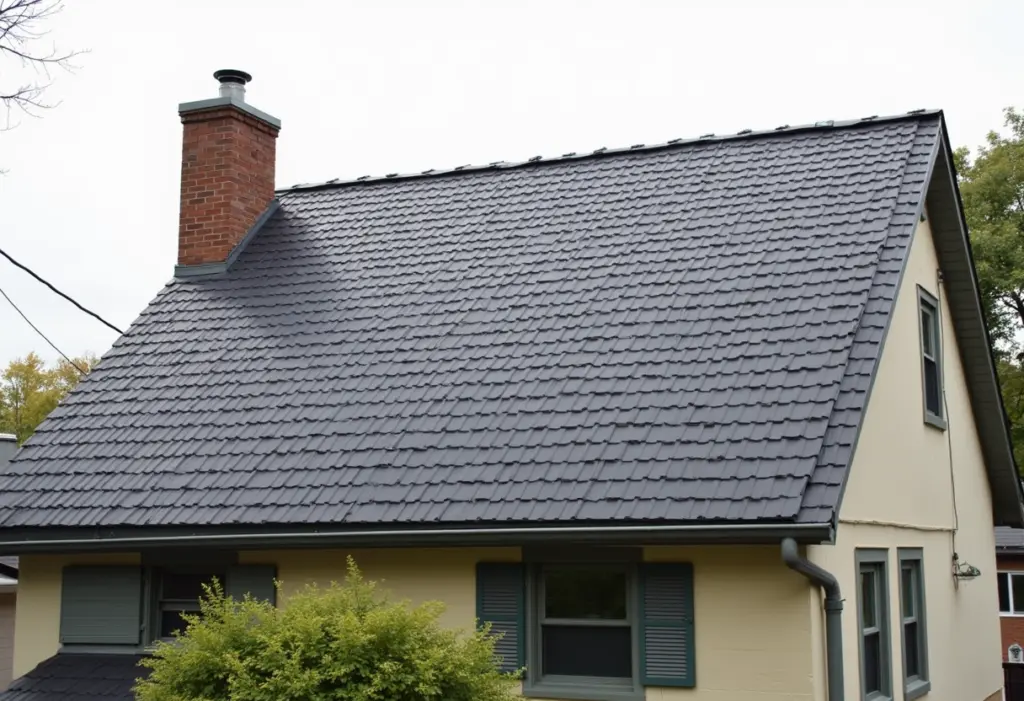
An integrated solar roof replaces the roof covering with a product that both keeps water out and generates electricity, rather than mounting panels on top of an existing roof. In New York City that idea meets three separate filters, and only the third is about the roof itself.
The first is whether the product can currently be quoted at all. The second is whether the roof it would go on is the kind of roof it is made for, which in most of the five boroughs it is not. The third is the city’s own approval machinery, which treats a solar roof much as it treats any other solar installation. This site is independent, sells nothing and installs nothing, and none of what follows is a recommendation of any manufacturer.
Start with availability, because it has moved
Tesla has not announced that the Solar Roof is discontinued. What trade coverage through 2026 describes is a quieter shift: conventional panels have become the centre of the company’s solar line, direct online quoting for the roof product has fallen away, and enquiries are increasingly pointed toward certified third-party installers rather than handled by the manufacturer.
For a New York City homeowner the practical consequence is that a quote may be slow to obtain, may come from an intermediary, or may not materialise. Confirm the current position with the manufacturer directly before building a roof replacement schedule around it, and treat any pricing, wattage or warranty figure as something only the manufacturer can state for your address. Third-party cost articles for this product have a poor record of matching final invoices.
Do not let a roof deadline wait on a quote
Integrated solar roofing is only installed when the roof is being replaced, which means the decision sits on the roof’s timetable, not the product’s. If the covering is failing, set a date by which you will proceed with conventional roofing plus a separate solar decision, and hold it.
Most New York City roofs are the wrong shape for it
Solar roofing tiles are a pitched-roof product. They are laid in courses like shingles or slate and rely on slope to shed water. The city’s rowhouse, brownstone and small apartment building stock is overwhelmingly flat-roofed, finished with membrane or built-up roofing, and nothing about a tile product suits it.
That confines the realistic candidates to detached and semi-detached housing with pitched roofs, which exists in quantity in parts of Queens, Staten Island, the eastern edge of Brooklyn and the northern Bronx, and barely at all in Manhattan. On a flat roof the sensible comparison is not against solar roofing but against ballasted or tilted racking, which is covered in the guide to solar on flat roofs in New York City.
How it compares with panels on the same house
| Consideration | Integrated solar roofing | Panels on an existing roof |
|---|---|---|
| Roof type | Pitched roofs only | Pitched or flat |
| When it makes sense | Only when the roof is being replaced anyway | Any time the roof has remaining life |
| What it is compared against | A new roof plus a separate solar system | The solar system alone |
| Appearance from the street | Reads as roofing | Reads as equipment on roofing |
| Repair and replacement | Roofing and generation are one system | Panels can be removed and refitted |
| Installer pool in NYC | Narrow and product-specific | Broad |
The third row is the one that decides most cases. Judged against panels alone, integrated roofing looks expensive. Judged against the combined cost of a roof replacement that is happening regardless and a solar system, the comparison is much closer, and it is the only comparison that reflects what is actually being spent.
Landmark and historic district review cuts both ways
A large share of the city’s older housing sits in historic districts or is individually landmarked, and any exterior change there needs Landmarks Preservation Commission approval before a permit is issued. The commission’s central question is visibility from the public way: an array invisible from the sidewalk opposite is handled far more simply than one that reads from the street.
A solar roof is an awkward fit for that test. It is less conspicuous than mounted panels, which helps, but it also replaces the visible historic roof covering rather than sitting above it, and the commission weighs materials, colour, finish and whether a change is reversible. Approval is a question to put before the product is ordered, not after.
Permits and interconnection are the same as for panels
Whatever the generating surface looks like, the approval sequence does not change. The work is filed with the Department of Buildings by a registered design professional or licensed contractor acting as applicant of record, the electrical work is inspected, and the utility controls when the system may be energised through the interconnection process. Fire-code access and pathway requirements shape the usable roof area on a pitched roof just as they do on a flat one. That sequence is set out in solar panel installation in NYC.
Ask for the split in writing
A solar roof merges two costs that the incentive and tax programmes treat differently. Ask for a contract that separates the roofing scope from the solar electric generating equipment, and take that document to a tax professional before filing anything. Reconstructing the split afterwards from a single lump-sum invoice is far harder.
How the incentives treat it
An integrated solar roof is still a solar electric generating system, so the same programmes are in play: the New York State solar energy system equipment credit claimed on your own return, and in New York City the property tax abatement applied for at the Department of Buildings. NY-Sun is not among them for now: as of September 2026 NYSERDA has no open NY-Sun block for homes in any utility territory; check NYSERDA’s NY-Sun dashboard for a new one.
What is genuinely uncertain is how much of the cost each programme recognises, because a solar roof is partly a roof. Roofing is ordinarily not a solar expenditure, and how the boundary is drawn for a product that is both is a question for the Department of Taxation and Finance and a qualified tax professional rather than for a sales estimate. The credit’s own rules are set out in the guide to the solar energy system equipment credit, and the property tax side in the abatement overview.
One thing is not uncertain. The 30% federal residential clean energy credit under section 25D was terminated for expenditures made after 31 December 2025, with the operative test being completion of the original installation rather than the date the system was placed in service. A New York City homeowner completing an installation now, of any kind, claims nothing federally, and a quote that still assumes 30% coming back is working from expired rules.
What to establish before waiting for anything
Four facts settle whether this is worth pursuing: whether your roof is pitched and structurally suitable, whether the building is landmarked or in a historic district, how many years the existing roof covering has left, and whether the product can currently be quoted for your address. The first three are answerable this week by a roofer and a check of the building’s landmark status. The fourth is answerable only by the manufacturer.
If any of the four comes back unfavourable, the conventional route is not a consolation prize. Panels on a sound roof are the mainstream option in this city for straightforward reasons, and every incentive described above applies to them without the boundary question.
Frequently asked questions
Can a solar roof be installed on a Brooklyn brownstone?
Generally not, for two reasons. Brownstone roofs are typically flat and finished with membrane or built-up roofing, while solar roofing tiles are a pitched-roof product that relies on slope to shed water. Many brownstones also sit in historic districts, which adds Landmarks Preservation Commission review to any exterior change. Flat-roof mounting systems are the normal route on that housing stock.
Does a solar roof qualify for the New York State solar tax credit?
The solar generating equipment is the kind of expenditure the credit is aimed at, but a solar roof also includes roofing, which is not ordinarily a solar expenditure. How that boundary is drawn for a combined product is a question for the Department of Taxation and Finance and a qualified tax professional. Ask the contractor to separate the two scopes in the contract so the question can be answered from documents.
Is a solar roof approved more easily in a historic district than panels?
Not automatically. Lower visibility helps, because visibility from the public way is the commission’s central criterion, but a solar roof also replaces the historic roof covering rather than sitting above it, and materials, colour, finish and reversibility are all weighed. Approval has to be sought for the specific building and should be settled before ordering anything.
Is the Tesla Solar Roof still available in New York City?
There has been no announced discontinuation, but the product has become markedly harder to obtain a direct quote for, and coverage through 2026 describes conventional panels as the centre of the manufacturer’s solar offering. Availability, pricing and warranty terms can only be confirmed by the manufacturer for your address. Do not delay a needed roof replacement while waiting for an answer.
Confirm the current position before committing
Product availability, incentive levels, landmark review criteria and tax treatment all change, and none of them can be settled from an article. Confirm availability and terms with the manufacturer, permitting with the New York City Department of Buildings, landmark status with the Landmarks Preservation Commission, incentives with NYSERDA, and the tax treatment with a qualified professional.
This article is general information, not tax, legal or financial advice. Incentive amounts, eligibility rules and deadlines change and depend on your utility, your tax situation and your property. Confirm current terms with NYSERDA, your utility and a qualified tax professional before making a decision.
NY Solar Incentives
Independent New York solar research. We summarise NYSERDA, NY-Sun and federal programme rules from published sources and state plainly when a figure is an estimate. We are not a government agency and do not sell equipment.
Run the arithmetic on your own system
Check the dated program table and your arrangement before counting an incentive. Standard residential NY-Sun blocks are closed; Long Island Affordable Solar has a conditional income-verification route. The NY credit depends on qualified costs and tax liability, while the NYC abatement reduces future property-tax bills. The estimator keeps those timings separate.