Solar Installation Costs in New York: Line by Line
A New York solar quote usually arrives as one number. Here is what sits inside it, which lines are fixed regardless of system size, and what installers routinely leave out.
On this page 7 sections
- 01Equipment is the part everyone looks at and the part that varies least
- 02Labour is priced by difficulty, not by hours
- 03Permits and inspections are local, and the spread is wide
- 04Interconnection is a utility process with its own timeline
- 05What most quotes leave out
- 06Where the incentives sit in this stack
- 07Frequently asked questions
Most New York solar proposals arrive as a single figure with a system size next to it. That is convenient for the installer and unhelpful for anyone trying to work out whether the price is reasonable.
Solar panel installation cost NY quotes are built from perhaps eight distinct cost centres, some of which scale with the size of the array and some of which do not move at all. Knowing which is which tells you where negotiation is possible and where it simply is not.
Equipment is the part everyone looks at and the part that varies least
Modules, inverters and racking make up the hardware. Module pricing is close to a commodity market, so two installers buying similar tier equipment are not paying dramatically different amounts for it.
The inverter choice matters more than the panel choice for cost and for design. String inverters are cheaper; microinverters or DC optimisers cost more but handle shading and complex roof planes better, and in New York City they are often chosen for rapid shutdown compliance rather than for performance.
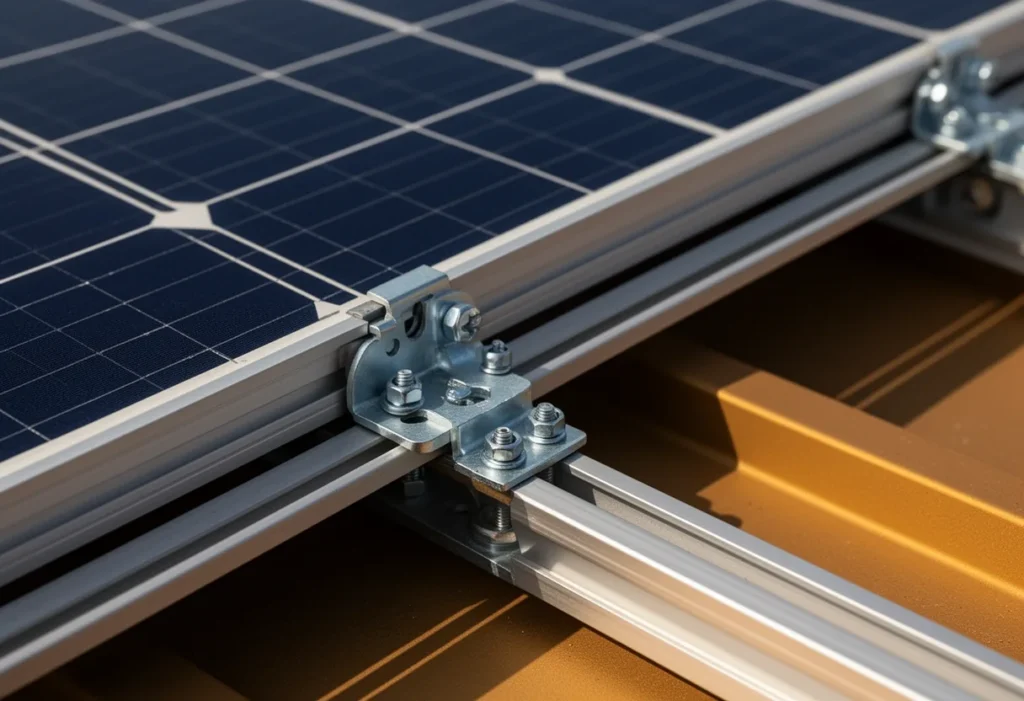
Racking is where roof type shows up in the hardware bill. Pitched shingle roofs use penetrating mounts with flashing. Flat roofs, common across the boroughs, use ballasted or hybrid systems that need a structural assessment of the roof’s load capacity. That assessment is a cost in itself.
Labour is priced by difficulty, not by hours
A crew quoting your roof is estimating access, height, pitch, surface material and how many separate planes they will have to work across. Those factors change the day count more than the number of panels does.
Steep pitches need staging and fall protection. Slate and clay tile need care and often a specialist. Third-storey work in a dense street may need a lift, sidewalk protection or a permit to occupy the roadway.
The electrical labour is separate again and is licensed work. Running conduit from the array to the inverter and then to the service panel, adding a disconnect, and terminating at the meter is a defined scope, and it becomes larger if the run is long or the route awkward.
Fixed costs do not shrink with the array
Design, permitting, interconnection filing, mobilising a crew and commissioning cost roughly the same for a small system as for a large one. That is the main reason price per watt falls as systems get bigger, as set out in the piece on average cost by system size.
Permits and inspections are local, and the spread is wide
Permitting cost depends entirely on the authority having jurisdiction. Many upstate towns and villages have adopted the New York State Unified Solar Permit, which standardises the application and keeps the fee modest for straightforward residential systems.
New York City does not work that way. Filings go to the Department of Buildings, generally through a registered design professional, and there are additional requirements around roof access paths and clearances. That professional’s time is a real line in the quote.
After installation, a local electrical inspection is required before the system can be energised. In some jurisdictions this is a municipal inspector; in others it is a third-party electrical inspection agency. Either way it is scheduled, not instant, and delays here are one of the most common reasons a system sits finished but switched off.
Interconnection is a utility process with its own timeline
Your system cannot legally export to the grid until your utility approves the interconnection and, where required, swaps or reprograms the meter. Con Edison, National Grid, NYSEG, RG&E, Central Hudson, Orange and Rockland and PSEG Long Island each run their own process.
The application itself is usually handled by the installer and its cost is inside the quote. What is not inside the quote is the delay, and in dense service territories the wait for approval and a meter exchange can be the longest single step in the project. The net metering page explains what happens to your billing once it is approved.
What most quotes leave out
Four items are routinely excluded, and each can be significant.
Roof replacement is the first. If the roof has only a few years left, replacing it before installation is cheaper than removing and reinstalling the array later. Any reputable installer will say so; not all of them price it.
Electrical service upgrades are the second. If the existing panel cannot accept a solar breaker within its rating, an upgrade is required, and it brings its own permit and its own utility coordination.
Tree work is the third, and it is not always the installer’s to arrange. Structural repair is the fourth, most often on flat roofs and older framing that will not carry a ballasted array without reinforcement.
| Line item | What it covers | What makes it move | Usually itemised? |
|---|---|---|---|
| Modules | The panels themselves | Efficiency tier, brand, warranty terms | Sometimes, by model and count |
| Inverter or optimisers | DC to AC conversion, rapid shutdown | String versus module-level, shading, code | Usually named, rarely priced separately |
| Racking and attachments | Mounting, flashing or ballast | Roof type, pitch, structural condition | Rarely |
| Labour | Roof crew and licensed electrical work | Access, height, number of roof planes | Rarely, but ask |
| Permits and design | Filing, drawings, professional stamp | Jurisdiction; NYC filings cost more | Sometimes |
| Interconnection | Utility application and meter work | Utility territory and queue | Rarely |
| Service panel upgrade | New main panel or breaker capacity | Existing panel rating and condition | Should be, if included at all |
Where the incentives sit in this stack
The NY-Sun incentive, when NYSERDA has a residential block open, is applied through your contractor as a deduction against the total above, so the contract figure you sign is already net of it. As of September 2026 NYSERDA has no open NY-Sun block for homes in any utility territory; check NYSERDA’s NY-Sun dashboard for a new one. Until then that deduction is $0 on a home quote.
New York’s state income tax credit is claimed afterwards on Form IT-255 as a percentage of qualified expenditure up to a statutory cap. It reduces state tax owed rather than the invoice.
The federal residential credit under section 25D ended for expenditures made after 31 December 2025. An expenditure counts as made when the original installation is completed, so a system finished in December 2025 but switched on in January 2026 still falls under the old rules. A 2026 purchase produces no federal credit for the homeowner. Where a company owns the system under a lease or PPA, a business-side credit can still apply to that company, which is part of why third-party offers still reference an incentive the customer never claims.
Ask for exclusions in writing
Request a short written list of what the quote does not include: roof work, tree removal, service panel upgrade, structural reinforcement, and any charge if the utility requires equipment changes. That list is more revealing than the price, and it is the fastest way to find out why one quote is cheaper. The notes on contract red flags cover what else to look for.
Frequently asked questions
What should a New York solar quote itemise?
At minimum it should state system size in watts, module and inverter make and model, the gross price, any NY-Sun deduction (none while NYSERDA has no residential block open), the net contract price, and the price per watt. It should also list exclusions such as roof replacement or a service panel upgrade. If any of those are missing, ask for them before comparing quotes.
Who pays the permit and inspection fees?
Almost always the installer, with the cost built into the contract price. The exception is where a jurisdiction charges the property owner directly, which some municipalities do. Confirm in writing that permitting, inspection and interconnection filing are included so a fee does not appear later.
Do I need to replace my roof before installing solar?
Only if the roof is near the end of its serviceable life. Panels typically outlast a roof covering installed shortly before them, and removing and reinstalling an array to reroof later is a separate cost with its own labour bill. Ask the installer for a written assessment of the roof’s remaining life.
Is an electrical service upgrade included in the installation cost?
Not usually. Whether one is needed depends on your existing panel’s rating and how much spare capacity it has, which the installer determines during the site survey. If a survey has not yet happened, treat any quote as provisional on that point.
Confirm programme figures before budgeting
Permit fees, NY-Sun block status and utility interconnection requirements all change, and they differ by jurisdiction and service territory. Verify current numbers with your municipality, with NYSERDA for NY-Sun, with your utility for interconnection, and with the New York State Department of Taxation and Finance for the state credit.
NY Solar Incentives
Independent New York solar research. We summarise NYSERDA, NY-Sun and federal programme rules from published sources and state plainly when a figure is an estimate. We are not a government agency and do not sell equipment.
Run the arithmetic on your own system
Check the dated program table and your arrangement before counting an incentive. Standard residential NY-Sun blocks are closed; Long Island Affordable Solar has a conditional income-verification route. The NY credit depends on qualified costs and tax liability, while the NYC abatement reduces future property-tax bills. The estimator keeps those timings separate.