Solar for a New York Nonprofit: Elective Pay Explained
A nonprofit owes no income tax, so a tax credit on its own is worth nothing to it. Elective pay is the mechanism built to answer that, and it is the first question to put to your accountant.
On this page 7 sections
- 01The residential stack does not apply to you
- 02What elective pay is meant to solve
- 03Third-party ownership is the other route, and it changes the comparison
- 04What lands on the bill
- 05Property tax, and the check that is usually skipped
- 06NY-Sun, and how to check everything here yourself
- 07Frequently Asked Questions
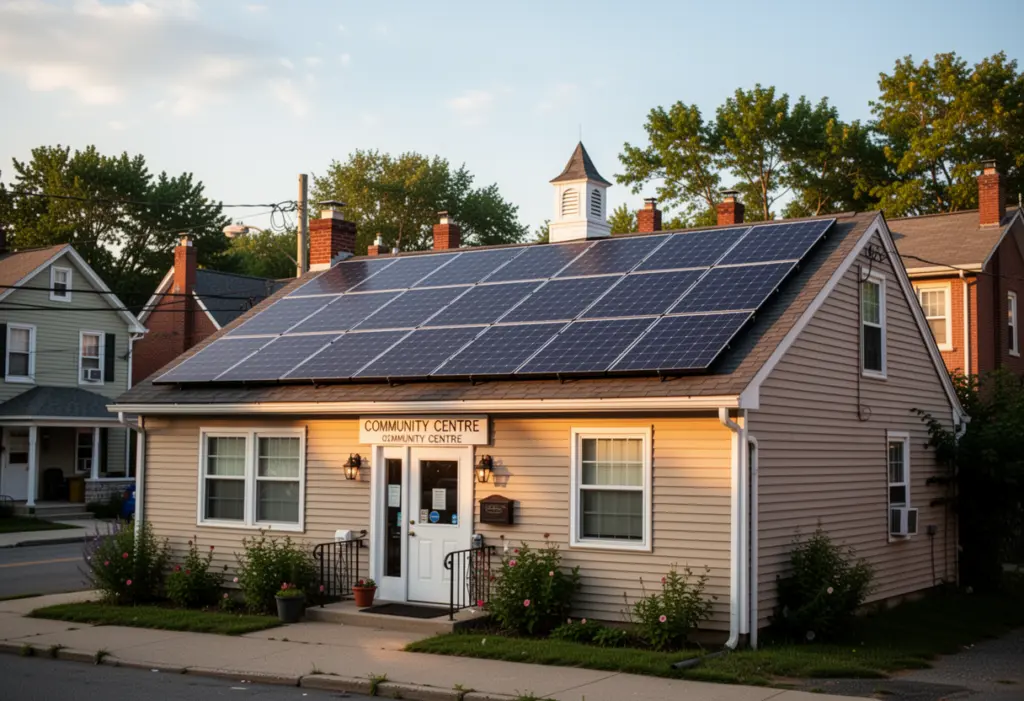
A nonprofit that owns its building can usually put solar on it. What it cannot do is use a tax credit, because it owes no income tax for a credit to offset. That single fact means most of a standard New York solar proposal has to be re-examined line by line, and elective pay is the provision that exists to answer the central problem. Whether it reaches your project, on what terms and under which current rules is a question for your own accountant or counsel, not for a salesperson and not for this page.
The residential stack does not apply to you
Start by discarding the two incentives a homeowner is told about first. The 30 percent federal residential credit under section 25D is gone: it was terminated for expenditures made after 31 December 2025, with an expenditure treated as made when the original installation is completed. It was a residential provision in any case and never reached an organisation. New York State’s own credit of 25 percent, capped at 5,000 dollars and claimed on Form IT-255, requires the taxpayer’s principal residence in New York, so it does not reach an organisation either. A proposal that shows either line on a nonprofit project is describing a different customer, and you should say so.
What elective pay is meant to solve
Elective pay, sometimes called direct pay, is the mechanism by which a tax-exempt entity can be paid the value of certain federal energy credits in cash rather than using them to reduce tax it does not owe. That is the idea, and it is why the question is worth raising at all.
What this page will not do is give you the rate, the filing route, the registration steps or the deadlines. Business and tax-exempt energy provisions sit in a different part of the code from the residential credit above, they have been amended, and guessing at them in public is how a page costs a reader real money. Take the question to a tax professional who will look at your organisation, your ownership structure and the rules as they stand on the day.
Third-party ownership is the other route, and it changes the comparison
The alternative structure is that somebody else owns the system on your roof and you buy the power or lease the equipment. There the tax benefits belong to the owner, not to you, and what you receive is simply a price. So the only honest way to judge such an agreement is against what you pay the utility now, across the full term, with any escalator included.
- The price per kilowatt-hour in year one, and the annual escalation rate.
- The term in years, and what happens at the end of it.
- Who is responsible for repairs, for roof penetrations and for removal.
- What a buyout costs, and at which points in the term it is available.
- What happens if your organisation sells the building or moves.
A twenty-five year obligation attached to a building is a governance decision rather than a facilities one. Your board should see the contract, not a summary of it.
What lands on the bill
Two mechanics matter more for an organisation than for a house. The first is how exports are paid. Most residential rooftop customers in New York are on Phase One net metering, which credits exports at the full retail rate and holds that structure for 20 years from interconnection. The Value Stack is the compensation mechanism for community distributed generation and for larger and commercial projects, and it is not the same thing. Ask in writing which one applies to a system of this size on this account, because every payback figure in the proposal rests on the answer.
The second is the Customer Benefit Contribution, a monthly charge on the DC size of the system rather than on what it produces, applying to systems interconnected on or after 1 January 2022. For 2026, on net-metered projects, the small commercial rates run from 0.88 dollars per kW-month on Orange & Rockland to 1.83 on Central Hudson. On a 25 kW array that is 22.00 dollars a month on Orange & Rockland and 45.75 on Central Hudson, so 264 dollars a year against 549, decided by nothing but which utility the roof sits under. A project compensated under the Value Stack sits on a separate and lower CBC schedule, so establish which of the two tables applies before either number goes into a model. Accounts with a demand charge do not pay it at all, and community solar, being front of the meter, carries none of it. The rates are recalculated annually and are not fixed at interconnection.
Property tax, and the check that is usually skipped
RPTL 487 gives a fifteen-year exemption from real property tax on the value a solar system adds, where the municipality, the county and the school district have each separately not opted out. Three checks, not one, and the answers can differ. The system must also be constructed before 1 January 2030.
But if your organisation already holds a property tax exemption on the parcel, section 487 may add nothing at all to your position, and that should be established before anyone prices it into a proposal as a saving. In New York City, Buffalo, Rochester, Syracuse and Yonkers the school district is fiscally dependent and levies no separate property tax, so there is no separate school check to make in those five.
NY-Sun, and how to check everything here yourself
NY-Sun is applied by the contractor as a reduction in the price rather than claimed by you on a form, and it steps down in blocks as capacity fills, so the figure moves. Ask which block your project falls in, what the per-watt figure is on the day of the quote, and whether the price you have been shown is before or after it.
Every programme named here changes. Confirm NY-Sun and the current block with NYSERDA, confirm the property tax position with your assessor, confirm the export compensation with your utility, and confirm anything involving federal tax with a professional who is looking at your organisation. Confirm the utility itself from your bill: a municipal electric utility sits outside Public Service Commission jurisdiction, which means no PSC net metering, no Customer Benefit Contribution and no state interconnection process.
Frequently Asked Questions
Can a nonprofit claim the federal solar tax credit?
Not as a homeowner would. Section 25D, the 30% residential credit, was terminated for expenditures made after 31 December 2025 and was residential in any case. The business and tax-exempt provisions are separate, and elective pay is the mechanism that lets a tax-exempt entity be paid in cash rather than offsetting tax it does not owe. Take the specifics to your accountant.
Does a nonprofit qualify for the New York State solar credit?
No. The 25% credit capped at $5,000 on Form IT-255 requires the taxpayer's principal residence in New York, so it reaches homeowners and not organisations.
Do we pay the Customer Benefit Contribution?
It depends on the account. The charge applies to systems interconnected on or after 1 January 2022 and is billed on DC system size, but accounts with a demand charge do not pay it, and community solar, being front of the meter, carries none of it. On a 25 kW array the 2026 net-metered small commercial rates work out at $22.00 a month on Orange & Rockland and $45.75 on Central Hudson; a Value Stack project sits on a separate, lower schedule.
Is RPTL 487 worth anything to a tax-exempt organisation?
Possibly nothing. If the parcel already carries a property tax exemption, the fifteen-year exemption on added value adds nothing on top. Establish that before it appears in a proposal as a saving.
This article is general information, not tax, legal or financial advice. Incentive amounts, eligibility rules and deadlines change and depend on your utility, your tax situation and your property. Confirm current terms with NYSERDA, your utility and a qualified tax professional before making a decision.
NY Solar Incentives
Independent New York solar research. We summarise NYSERDA, NY-Sun and federal programme rules from published sources and state plainly when a figure is an estimate. We are not a government agency and do not sell equipment.
Run the arithmetic on your own system
Check the dated program table and your arrangement before counting an incentive. Standard residential NY-Sun blocks are closed; Long Island Affordable Solar has a conditional income-verification route. The NY credit depends on qualified costs and tax liability, while the NYC abatement reduces future property-tax bills. The estimator keeps those timings separate.