Permission to Operate: The Wait Between Install Day and Switch-On
The panels are up and the system is still dark. What permission to operate is, the four reasons it takes weeks, and the three questions to ask before signing.
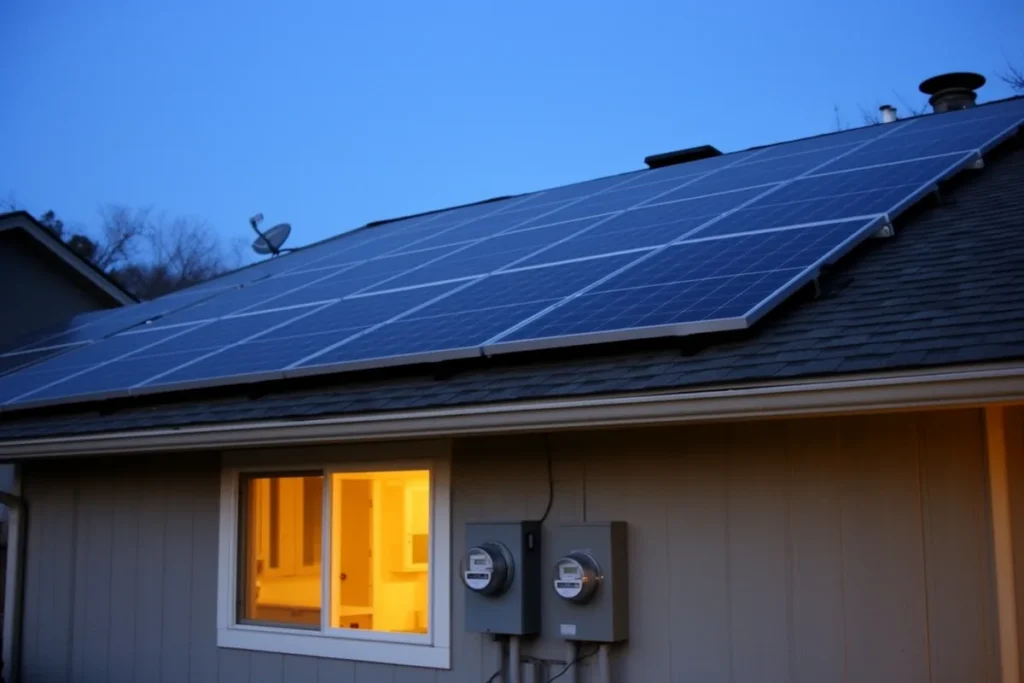
The panels are on the roof. The inverter is mounted. The crew has gone home, the invoice has arrived — and the system is still switched off. Weeks pass. This is the stage of a solar project nobody sells you, and it is where most of the frustration in residential solar now lives.
It has a name: permission to operate, or PTO. Here is what it is, why the delay happens, and what you can actually do about it.
What permission to operate means
PTO is the utility’s written authorisation to energise your system and export power to the grid. Until it is issued, running the array is not merely discouraged — it is a violation of your interconnection agreement, and it puts line workers at risk, which is why installers will not do it for you.
The important thing to understand is that PTO is issued by the utility, not by your installer and not by the municipality. Your installer can chase it. They cannot grant it, and no contract clause makes them able to.
The full sequence, and where PTO sits
Install day is roughly two-thirds of the way through the project, not the end. The order is:
- Contract and site survey — measurements, structural check, electrical panel assessment.
- Design and engineering — the stamped plan set the permit office will review.
- Interconnection application — filed with the utility. Filed early by good installers, because it runs in parallel with everything else.
- Building and electrical permits — municipal, and the timeline varies enormously by jurisdiction.
- Installation — usually one to three days.
- Municipal inspection — the electrical inspector signs off on the work.
- Utility review, meter exchange and PTO — the utility verifies the inspection, swaps or reprograms the meter for bidirectional measurement, and issues the authorisation.
Steps 6 and 7 are the wait. Both are queues at organisations that are not your installer, and neither can be accelerated by paying more.
Why the delay happens
Four causes account for most of it, and they are worth telling apart because only two are actionable.
- The application went in late. Some installers file interconnection only after installation. That converts a parallel process into a serial one and can add weeks for no reason. This is entirely within your installer’s control, and it is the single best question to ask before signing.
- The application was incomplete. A missing single-line diagram, an equipment spec that does not match what was installed, or an inverter model not on the utility’s approved list sends the file back to the start of the queue rather than to the top of it.
- The inspection failed. Labelling, conduit runs, rapid-shutdown compliance and disconnect placement are the usual causes. A re-inspection is another scheduling cycle.
- Volume. Utility interconnection teams process in order. In a busy quarter the queue is simply longer, and nobody involved can do anything about it.
What you should do while you wait
Get the interconnection application number in writing and the date it was submitted. That one field tells you whether you are in a real queue or waiting on your own installer. If they cannot produce it, that is the answer.
Ask which meter change is required. Some utilities reprogram the existing meter, some install a new bidirectional one, and some require a field visit that has its own scheduling queue. The answer changes the expected wait considerably.
Do not let the final payment milestone be tied to something already complete. If your contract’s last payment triggers on installation rather than on PTO, you lose your only remaining leverage on the day the crew drives away. Read that clause before signing, not after.
Keep every document. The permit, the inspection certificate, the interconnection approval and the final invoice are what you will need for the state tax credit and, eventually, for a buyer. Selling later is much easier with a complete file — see Net Metering in New York: How Credits Work for what the meter arrangement actually does to your bill once PTO lands.
Does the delay cost you money?
Directly, yes — every sunny day before PTO is generation you did not get, and on a summer install that can be meaningful. Indirectly, usually not: the state tax credit follows the tax year in which the system is placed in service, and your net metering arrangement starts from the meter exchange rather than from install day.
If your quote is still showing a federal credit, check the current position first — the residential federal credit changed at the end of 2025, and a delayed switch-on is exactly the situation where the timing rules matter. We cover it in The Federal Solar Tax Credit and New York: What Changed, and the state credit rules in New York State Tax Credit for Solar Panels in 2026.
Preventing it before you sign
Three questions, asked before the contract, remove most of the risk:
- “When do you file the interconnection application — before or after installation?”
- “What is your current average from install day to PTO in my utility territory, and how many projects is that based on?”
- “What happens to the final payment if PTO takes longer than that?”
An installer who answers all three precisely is telling you something about how they run projects. One who deflects is telling you something too. How to evaluate the rest of it is in How to Vet a Solar Installer in New York and What a NYSERDA-Qualified Contractor Actually Is.
For the stages before this one, see Solar Panel Installation in New York State: Step by Step and, for city projects, Permits and Process in NYC. And if you are on Long Island, the incentive picture behind the quote is in The PSEG Long Island Solar Rebate: What Actually Exists in 2026.
General information, not legal or tax advice. Interconnection procedures and timelines are set by each utility and change — confirm current requirements with yours.
NY Solar Incentives
Independent New York solar research. We summarise NYSERDA, NY-Sun and federal programme rules from published sources and state plainly when a figure is an estimate. We are not a government agency and do not sell equipment.
Run the arithmetic on your own system
Check the dated program table and your arrangement before counting an incentive. Standard residential NY-Sun blocks are closed; Long Island Affordable Solar has a conditional income-verification route. The NY credit depends on qualified costs and tax liability, while the NYC abatement reduces future property-tax bills. The estimator keeps those timings separate.