Orange & Rockland Solar Interconnection: The Application
Your installer files the interconnection application, not you. It runs alongside the building permit and the two come from completely different authorities.
On this page 7 sections
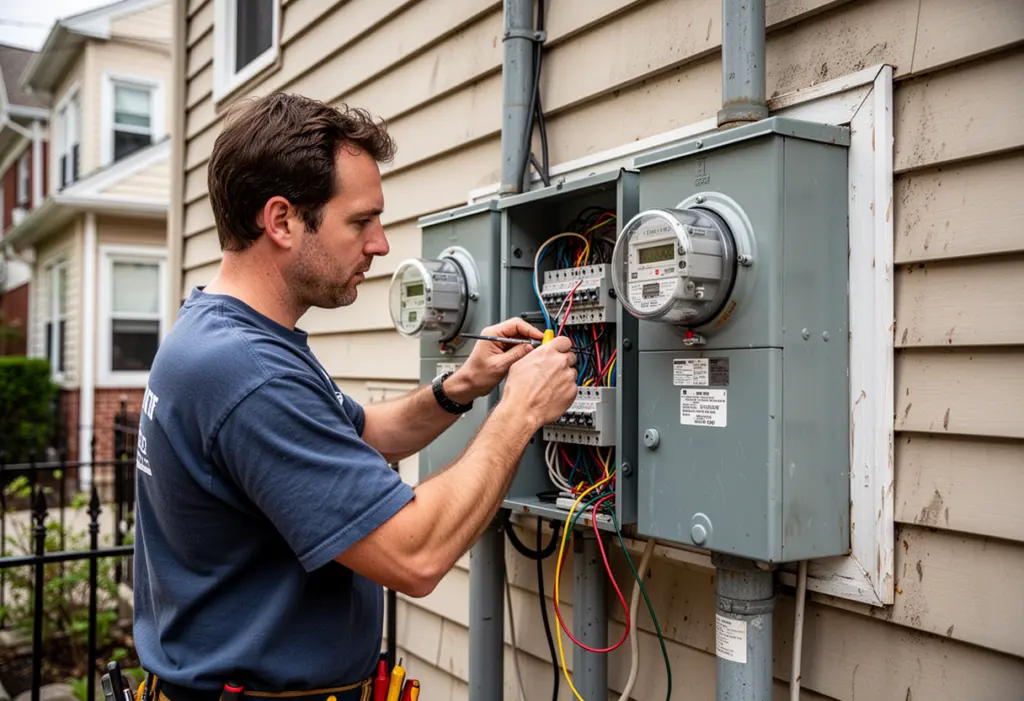
The interconnection application is the utility’s permission to connect your array to its distribution system. Your installer files it, not you — and if a contractor asks you to submit it yourself, that is a signal about how much of the rest of the job they intend to hand you.
It is worth understanding anyway, because the application is where two things get fixed that you will live with for twenty years: the DC size on record, and the interconnection date.
Two separate approvals, two separate authorities
People collapse these into one and then cannot work out why the project has stalled.
- The interconnection application goes to Orange & Rockland, under the state Standardized Interconnection Requirements. It covers whether the grid can accept the export and on what terms.
- The building and electrical permit goes to your local authority having jurisdiction. In Rockland County that is the village where you live in one — Suffern, Nyack, Piermont, Haverstraw, Spring Valley — and otherwise the town: Clarkstown, Ramapo, Orangetown, Haverstraw or Stony Point. Two houses a quarter of a mile apart can answer to different desks.
New York has a Unified Solar Permit for systems of 25 kW DC and under, developed by NYSERDA and the Department of State and adopted by more than 300 authorities having jurisdiction. It standardises the paperwork where it is in force. Ask which form your town or village actually uses rather than assuming, because adoption is per-authority.
Ask the question by name rather than by postal address. A Monsey or Nanuet address names a hamlet and a postal designation, not the authority that issues your permit — Monsey files with the Town of Ramapo, Nanuet with the Town of Clarkstown, while an address inside the Village of Suffern or the Village of Nyack files with the village. Your deed and your property tax bill name the jurisdiction; the ZIP code does not.
What is in the application
The DC size of the array, the inverter make and model, a one-line electrical diagram, a site plan, and the customer account details. Two of those deserve your attention:
- The DC size. This number sets your monthly Customer Benefit Contribution for as long as you own the system — $1.00 per kW-month on O&R for 2026, so a 9.2 kW array is $9.20 a month. If the array shrinks between the proposal and the roof because a module row would not fit, the application should shrink with it. Check that it did.
- The inverter model. Substitutions happen. A different inverter is not automatically a problem, but it is a change to a filed document and to the equipment you were quoted.
What actually delays it in this territory
The application itself is rarely the bottleneck. These are:
- A 100 amp service. Rockland has a lot of mid-century housing stock, and a 100 amp panel with a full breaker space is a common finding. A service upgrade is a separate scope of work, a separate cost and often a separate utility visit. Establish it before the contract, not after.
- Roof age. A roof with a few years left in it turns into a re-roof and a removal-and-reinstall later. Ask for the roof assessment in writing.
- Local review. Along the Hudson shoreline in the river villages, a flood plain elevation requirement or a historic district review can apply to exterior work. Ask your village clerk whether your parcel sits in either, because it changes the timeline rather than the technology.
- Structure. Slate and standing-seam roofs need specific attachment hardware and sometimes a structural letter. So does an old rafter framing plan carrying a snow load.
Shading is a Rockland-specific question
Properties tucked under the Palisades ridge or in the shadow of Hook Mountain lose early or late sun in a way an annual production estimate can smooth over. Mature trees do the same. Ask for the shading assessment by month, not as a single annual percentage, and ask specifically what December and January look like.
Questions worth asking before you sign
- Who files the interconnection application, and who chases it?
- Which authority issues my permit, and have you filed there before?
- What DC size will appear on the application?
- Does the payment schedule tie a milestone to permission to operate, or only to the panels being on the roof?
2026 incentives, and why the date on this form matters
The interconnection date is not administrative trivia. It starts the 20-year term of Phase One net metering, under which exports are credited at the full retail rate, and it determines Customer Benefit Contribution liability — the charge applies to systems interconnected on or after 1 January 2022, so a neighbour with a 2019 array genuinely pays nothing. Separately, New York’s 25 percent credit capped at $5,000 on Form IT-255 remains available for a principal residence, alongside the sales tax exemption and the RPTL 487 property tax exemption, which requires that the municipality, the county and the school district have each not opted out and that the system is constructed before 1 January 2030. The federal 30 percent residential credit does not: section 25D ended for expenditures made after 31 December 2025. Confirm the current position with NYSERDA and the tax department yourself before signing anything.
Frequently Asked Questions
Do I file the Orange & Rockland interconnection application myself?
Normally no. Your installer files it as part of the job. If a contractor asks you to submit it yourself, treat that as a signal about how much of the rest of the process they expect you to run.
Is the interconnection application the same as my building permit?
No. They are separate approvals from separate authorities. The interconnection goes to O&R; the permit goes to your village or town building department in Rockland County.
What is the New York Unified Solar Permit?
A standardised permit for systems of 25 kW DC and under, developed by NYSERDA and the Department of State and adopted by more than 300 authorities having jurisdiction. Ask whether your own village or town uses it.
What usually delays a Rockland County solar project?
A 100 amp service that needs upgrading, a roof near the end of its life, flood plain or historic district review in the river villages, and structural attachment questions on slate or standing-seam roofs.
This article is general information, not tax, legal or financial advice. Incentive amounts, eligibility rules and deadlines change and depend on your utility, your tax situation and your property. Confirm current terms with NYSERDA, your utility and a qualified tax professional before making a decision.
NY Solar Incentives
Independent New York solar research. We summarise NYSERDA, NY-Sun and federal programme rules from published sources and state plainly when a figure is an estimate. We are not a government agency and do not sell equipment.
Run the arithmetic on your own system
Check the dated program table and your arrangement before counting an incentive. Standard residential NY-Sun blocks are closed; Long Island Affordable Solar has a conditional income-verification route. The NY credit depends on qualified costs and tax liability, while the NYC abatement reduces future property-tax bills. The estimator keeps those timings separate.