Solar Panel Costs in New York City Specifically
The same system costs more in the five boroughs than upstate, and the reasons are structural rather than opportunistic. Here is where the difference sits.
On this page 7 sections
- 01Why solar panels NYC cost more than the same system upstate
- 02Filing with the Department of Buildings is a professional job
- 03Access and hoisting are real line items
- 04Flat roofs need different racking and a structural view
- 05Con Edison interconnection has its own timeline
- 06The abatement offsets part of the premium
- 07Frequently asked questions
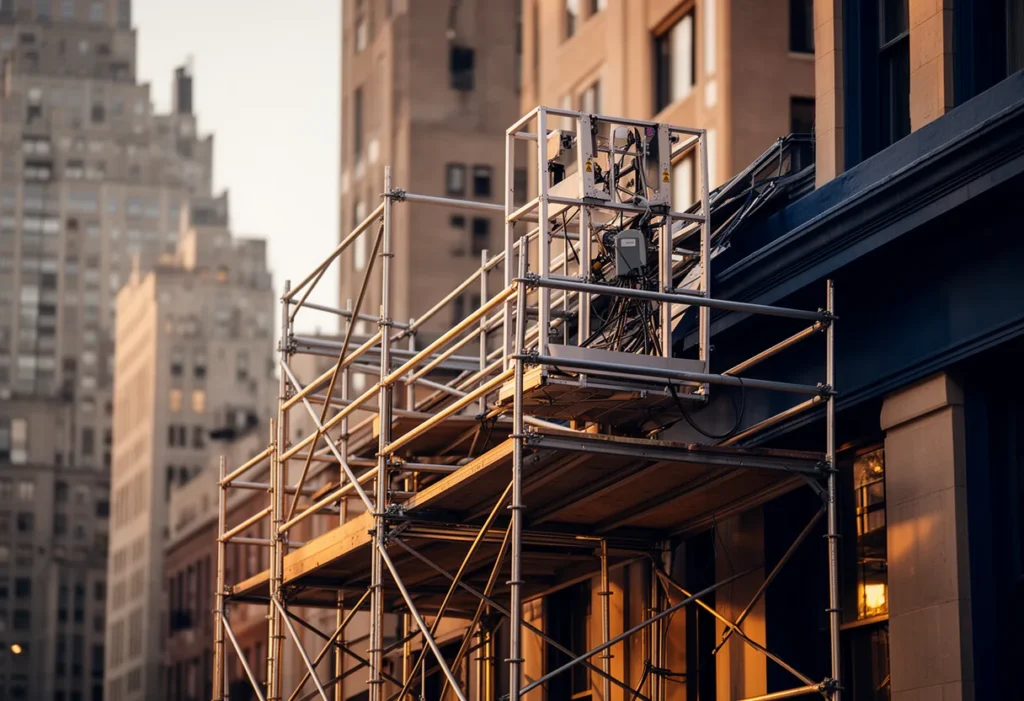
An installer quoting the same array on a house in Dutchess County and a house in Bay Ridge will not return the same price, and the gap is larger than most people expect.
Solar panels NYC cost more for reasons that are structural: a different permitting regime, harder physical access, different roof construction and a utility with its own interconnection process. None of it is arbitrary, and most of it can be verified before you sign anything.
Why solar panels NYC cost more than the same system upstate
Four cost centres carry almost all of the difference: filing and design, access, roof type, and interconnection. Equipment is essentially the same price in both places, which is why comparing panel brands tells you nothing about the gap.
The city premium is therefore mostly labour, professional time and logistics. Understanding which of those applies to your building is the difference between a fair quote and an inflated one.
Filing with the Department of Buildings is a professional job
Outside the city, many municipalities have adopted the New York State Unified Solar Permit, which standardises applications for straightforward residential systems and keeps fees modest.
The five boroughs sit outside that framework. Work is filed with the Department of Buildings, generally through a registered design professional, and the drawings and review process are more involved. That professional’s time appears in your quote whether or not it is broken out as a line.
Fire safety requirements add to the design work. Roof access paths and clearances around the array reduce the space available for panels, which can mean a smaller system on the same roof, and a higher price per watt as a result. The NYC installation overview goes through the process end to end.
Ask who is filing, and confirm they are registered
City filings must be made by an appropriately registered design professional. Ask which firm or individual will file your job and confirm their standing with the Department of Buildings. An installer who cannot answer this clearly is a problem before any money changes hands.
Access and hoisting are real line items
Upstate, a crew parks on the drive, sets a ladder and works. In much of the city none of that is available.
Material has to reach a roof that may be several storeys up, often through a building or up an exterior stair, sometimes with a lift. Sidewalk protection may be required. Parking for the crew and the truck is a genuine daily cost, and in some streets a permit is needed to occupy the roadway.
Each of those adds hours that have nothing to do with electrical work but everything to do with the day rate. On a small array those hours are spread across few watts, which is why compact city systems often show the highest price per watt in the state.
Flat roofs need different racking and a structural view
Much of the city’s low-rise housing stock has flat or low-slope roofs. These are typically fitted with ballasted or hybrid racking that tilts panels to a working angle rather than lying flush.
Ballast adds weight, which means the roof structure has to be assessed as capable of carrying it. Where it is not, either penetrating attachments or structural reinforcement is required, and both cost more than a standard shingle installation.
Tilted rows also shade one another if spaced too tightly, so a flat roof of a given area holds less capacity than a pitched roof of the same footprint. That is a design constraint, not a shortcut an installer has taken.
Con Edison interconnection has its own timeline
Nothing exports to the grid until the utility approves the interconnection and the meter arrangement is in place. In Con Edison territory that process runs on its own schedule and is frequently the longest step in a city project.
The filing cost sits inside the installer’s price. The delay does not show up as money, but it does determine when the system starts offsetting bills, which matters if a loan has already begun accruing. The net metering page explains what changes on the bill once the system is live.
| Cost driver | Typical outside the city | Typical in the five boroughs |
|---|---|---|
| Permitting | Often the Unified Solar Permit, modest fee | DOB filing through a registered design professional |
| Site access | Driveway parking, ladder access | Hoisting, sidewalk protection, possible street permit |
| Roof type | Pitched shingle, penetrating mounts | Often flat, ballasted racking plus structural review |
| Usable roof area | Limited mainly by obstructions | Further reduced by fire access paths and clearances |
| Interconnection | Varies by utility, often quicker | Con Edison process, commonly the longest step |
| Local incentive | The state credit; no NY-Sun residential block is open as of September 2026 | Also the NYC property tax abatement |
The abatement offsets part of the premium
City properties can claim a solar property tax abatement, filed with the Department of Buildings and applied against the property tax bill in four annual instalments. It exists nowhere else in the state and is a deliberate counterweight to city installation costs.
It is not cash. It reduces a bill you would otherwise pay, over four years, and it only helps a property with a tax liability to abate. An owner intending to sell soon captures only part of it. The application guide sets out the filing steps and who makes them.
Alongside it, New York’s state income tax credit is claimed on Form IT-255 as a percentage of qualified expenditure up to a statutory cap. NY-Sun adds nothing for a home at present: Con Edison territory’s last residential block closed on 29 May 2025 and its Residential Affordable Solar block on 15 October 2025. As of September 2026 NYSERDA has no open NY-Sun block for homes in any utility territory; check NYSERDA’s NY-Sun dashboard for a new one. The federal residential credit ended for expenditures made after 31 December 2025 and is not available to a 2026 buyer. An expenditure counts as made when the original installation is completed, so a system finished in December 2025 but switched on in January 2026 still falls under the old rules.
If the roof is not viable, check community solar
Many city households cannot install: rented homes, shaded roofs, co-op and condo buildings where the roof is not yours to use. Subscribing to an off-site array through community solar in NYC requires no installation and no upfront cost, and it is the option most city residents actually qualify for.
Frequently asked questions
Why is solar more expensive in New York City than upstate?
Mostly professional filing costs, physical access and roof type. Department of Buildings filings need a registered design professional, hoisting and sidewalk protection replace simple ladder access, and flat roofs need ballasted racking plus a structural assessment. Equipment prices are essentially the same in both places.
Do I need Department of Buildings approval for rooftop solar?
Yes. Solar installations in the five boroughs are filed with the DOB, generally by a registered design professional, and are subject to fire access and clearance requirements that affect how much of the roof can be used. Your installer should confirm in writing who will file the job.
Does the NYC solar abatement arrive as a payment?
No. It is a property tax abatement applied against the property tax bill in four annual instalments after approval, so it reduces what you owe rather than paying you. It only benefits a property with a tax liability to offset, and an owner who sells early captures only the instalments taken so far.
What can I do if I rent or live in a co-op?
Rooftop installation generally requires control of the roof, which renters do not have and co-op shareholders hold only collectively. Community solar is the usual alternative: you subscribe to a share of an off-site array and receive credits on your utility bill without any installation. It requires no upfront payment and is not tied to your building’s roof.
Confirm current requirements and figures
DOB filing requirements, fire access rules, Con Edison interconnection procedures and NY-Sun block status all change. Verify the current position with the NYC Department of Buildings, with Con Edison, and with NYSERDA, and confirm the state credit with the New York State Department of Taxation and Finance.
NY Solar Incentives
Independent New York solar research. We summarise NYSERDA, NY-Sun and federal programme rules from published sources and state plainly when a figure is an estimate. We are not a government agency and do not sell equipment.
Run the arithmetic on your own system
Check the dated program table and your arrangement before counting an incentive. Standard residential NY-Sun blocks are closed; Long Island Affordable Solar has a conditional income-verification route. The NY credit depends on qualified costs and tax liability, while the NYC abatement reduces future property-tax bills. The estimator keeps those timings separate.