Replacing a PTAC With a Heat Pump in a NYC Apartment
Swapping a PTAC for a packaged terminal heat pump in a NYC apartment is usually a drop-in job. The sleeve, the 208V circuit and the board's façade rules decide whether it stays that way.
On this page 7 sections
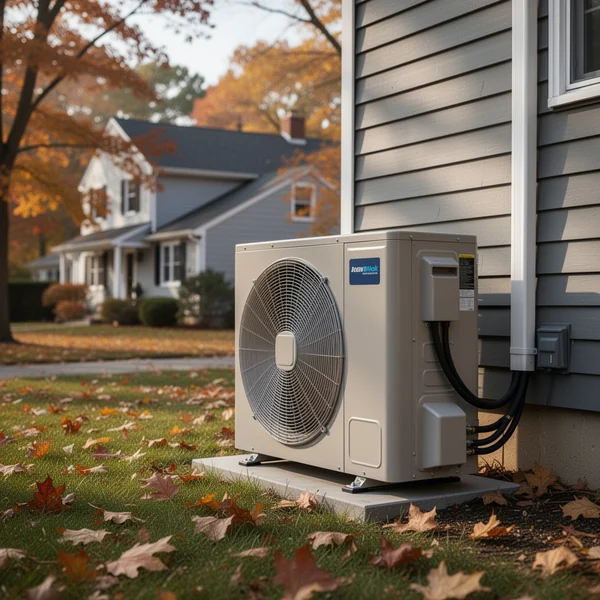
A PTAC replacement with a heat pump in a NYC apartment usually means swapping the packaged terminal air conditioner in your existing wall sleeve for a packaged terminal heat pump — the same box, the same hole in the wall, but one that can run in reverse and produce heat instead of only cooling. In most postwar buildings this is a drop-in swap that needs board permission rather than construction, because the sleeve stays where it is.
Two things determine whether it is that simple. First, whether your existing sleeve matches the replacement unit’s dimensions and the electrical circuit behind it can carry a heating load. Second, whether your building — co-op board, condo board or landlord — will approve a change to a unit that is visible from the street.
What a PTAC actually is, and why the sleeve rules everything
The PTAC is the through-the-wall unit under the window in tens of thousands of New York apartments built from the 1950s onward. The chassis slides into a metal sleeve set permanently into the masonry, with a louvred grille on the exterior face. The industry standardised on a common sleeve size long ago, which is why replacement chassis mostly slide into existing openings — but older, custom and pre-standard sleeves exist all over the city, and a sleeve that has rusted or shifted is its own repair job.
Measure before you shop. Take the height, width and depth of the sleeve interior, photograph the exterior grille, and note the manufacturer’s plate on the existing chassis. If the new unit needs a different sleeve, you are no longer doing a swap — you are cutting a wall opening, which changes the permission question completely.
The steam riser does not go away
This is the part most guides miss. A large share of NYC apartment buildings heat from a central boiler through steam or hot-water risers, and the PTAC was installed for cooling only. Replacing it with a heat pump does not disconnect you from building heat, and it does not reduce your maintenance or common charges — you are still paying for the boiler through the building’s budget.
What it does give you is control. Steam-heated apartments are famously overheated in January because the riser is balanced for the coldest unit in the line, and the resident’s only control is a window. A heat pump lets you close the radiator valve, run your own heat at your own setpoint, and stop heating Riverside Drive. It also covers the shoulder seasons — those October and April weeks when the building boiler is off and the apartment is cold — which is genuinely the strongest argument for the swap.
If you rent, remember that New York City’s heat season obligations run through the winter months and the landlord’s duty to supply heat does not disappear because you installed your own unit. Buying a heat pump is not a substitute for a heat complaint.
Electrical: 208 volts and the backup strip
Most New York multifamily buildings distribute 208V rather than the 240V found in a suburban house, and PTAC circuits are typically dedicated and sized for the cooling-only unit that was installed originally. A packaged terminal heat pump adds two considerations:
- Resistance backup. Most PTHPs include electric resistance heat that engages when the outdoor temperature drops below the compressor’s usable range. That element draws real current, and it is the reason the replacement unit’s circuit requirement may exceed the original’s.
- Who pays. In a building where heat is central and electricity is individually metered, moving heat from the riser to your PTHP moves the cost from common charges to your own Con Edison bill. That is a fair trade for control, but it is a trade, and it is worth understanding before the first January statement. Our walkthrough of reading a Con Edison bill explains how supply, delivery and the rest of the line items stack up.
Have a licensed electrician confirm the existing circuit’s rating and the receptacle configuration against the replacement unit’s nameplate. In New York City electrical work is filed under a licensed electrician with the Department of Buildings, and a managing agent will generally want to see that licence before anyone opens a wall cavity.
Permission: the board, the façade and the Landmarks question
A PTAC grille is part of the building’s exterior. Changing its appearance — a different louvre pattern, a different colour, a projecting unit where a flush one used to sit — is a façade alteration in the eyes of most boards.
- Co-op. Expect an alteration agreement even for a like-for-like swap, and expect the board to require that the exterior grille match the building standard exactly.
- Condo. The exterior wall is a common element. The board’s approval is about uniformity across the façade, not about your comfort.
- Rental. The sleeve and the unit are the landlord’s property. A tenant-installed replacement generally needs written consent and stays behind at move-out.
- Landmarked buildings. If your building sits in a designated historic district or is an individual landmark, exterior changes go before the Landmarks Preservation Commission. Grilles and through-wall units are exactly the kind of small visible change LPC reviews. The same logic applies to rooftop equipment — see our guide to solar panels in a New York historic district for how that review process actually runs.
Many large buildings have already adopted a standard replacement model precisely to avoid a patchwork façade. Ask the managing agent what the building standard is before you shop — it may make the decision for you, and it will certainly make approval faster.
Incentives: what applies, and what does not
There is no federal credit for a 2026 install. Section 25C, which carried a $2,000 annual cap for heat pumps and heat pump water heaters, applied to property placed in service before the end of 2025, and Section 25D terminated for expenditures after 31 December 2025. A New York household replacing a PTAC in 2026 gets nothing federal, regardless of what a manufacturer’s marketing page still says.
On the state side, Con Edison is one of the seven NYS Clean Heat sponsoring utilities, alongside Central Hudson, National Fuel Gas, National Grid, NYSEG, Orange & Rockland and RG&E. Clean Heat rebates are not published as a single statewide table — they vary by utility, by equipment category and by programme year, and packaged terminal equipment is not treated the same as a ducted whole-home system. The only reliable answer is the official address-based finder at cleanheat.ny.gov/find-available-rebates/, which returns what your sponsor is actually offering for your address today. Do not accept a dollar figure from a salesperson without seeing it there.
Two further notes for New York City readers. NYSERDA runs income-qualified programmes including EmPower+; thresholds and amounts change, so confirm directly with NYSERDA at 1-866-NYSERDA rather than relying on a third-party summary. And New York’s solar credit, Form IT-255 — 25% of system cost capped at $5,000, carried forward up to five years — is a solar credit. It does not apply to a heat pump. People conflate the two constantly; see how IT-255 is actually claimed if you also have panels in the picture.
What a good swap looks like
| Step | Who does it |
|---|---|
| Measure the sleeve; photograph the exterior grille | You, in ten minutes |
| Confirm the building standard unit and the alteration process | Managing agent |
| Verify circuit rating and receptacle against the new nameplate | Licensed electrician |
| Check Clean Heat eligibility for your address and equipment category | Official finder, then a participating contractor |
| Board approval / alteration agreement, LPC if landmarked | You and the board’s counsel |
| Install, and confirm the sleeve seal and exterior drainage | Contractor |
What to do next
- Measure your sleeve and photograph the grille today — every conversation after this depends on those numbers.
- Email the managing agent and ask two questions: is there a building standard PTHP, and does a like-for-like swap require an alteration agreement?
- Check whether your building is in a designated historic district before you assume a grille change is your decision.
- Run your address through cleanheat.ny.gov/find-available-rebates/ and save the result with the date on it.
- Have an electrician confirm the existing circuit can carry the new unit’s backup heat, and get that in writing for the board package.
- Budget with zero federal credit — both 25C and 25D ended for property placed in service after 31 December 2025.
NY Solar Incentives
Independent New York solar research. We summarise NYSERDA, NY-Sun and federal programme rules from published sources and state plainly when a figure is an estimate. We are not a government agency and do not sell equipment.
Run the arithmetic on your own system
Check the dated program table and your arrangement before counting an incentive. Standard residential NY-Sun blocks are closed; Long Island Affordable Solar has a conditional income-verification route. The NY credit depends on qualified costs and tax liability, while the NYC abatement reduces future property-tax bills. The estimator keeps those timings separate.