The New York Net Metering 20 Year Lock, Explained
Twenty years sounds like a price guarantee. It is a structure guarantee, and the difference decides how you should plan around it.
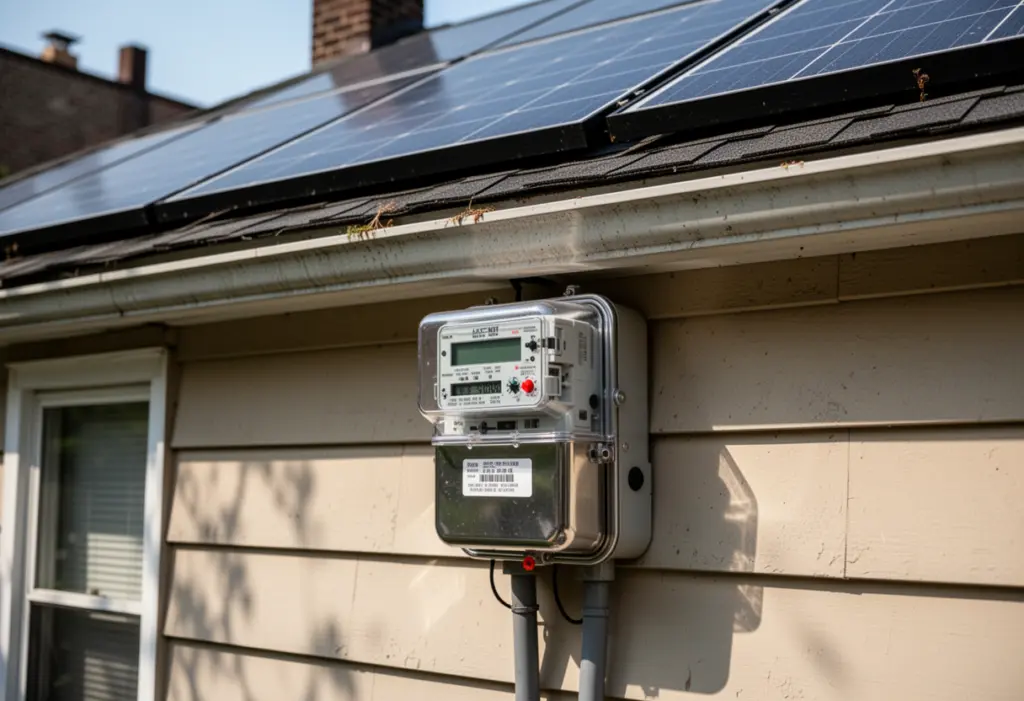
New York’s Phase One net metering credits the electricity you export at the full retail rate, and a system interconnected today holds that arrangement for 20 years from interconnection. That is the guarantee people mean when they talk about the twenty-year lock. It is a strong protection and it is routinely described inaccurately, so it is worth being precise about what is inside it and what is not.
What is locked is the structure, not the price
The commitment is about how your exports are valued: at the full retail rate, rather than at some lower wholesale or administratively set figure. It is not a promise that the retail rate itself will stay where it is. Retail electricity prices move for reasons that have nothing to do with your solar array, and they will keep moving across twenty years.
In practice that is still the more valuable of the two guarantees. If retail rates rise, your exports rise in value with them, because they are pegged to the retail rate rather than to a fixed cents-per-kilowatt-hour number. The mechanism follows the market. What the lock removes is the risk of the compensation rule being rewritten underneath you mid-way through the life of the system.
The clock starts at interconnection
Not at contract signature, not at installation, and not on the day the scaffolding comes down. Interconnection is the utility arrangement, and it is also the reference point for several other things, which is why the date is worth writing down and keeping.
This matters most when a project straddles a year end or when permission to operate is delayed by a service upgrade or a meter exchange. Those weeks are not lost from the twenty years — the period simply starts later. It also means a system that has been sitting finished but unenergised for a month has not begun its term. Nobody should be energising it before the utility grants permission to operate in any case — that sequence is set by the interconnection process and is not the installer’s to bring forward.
What the lock deliberately does not cover
The clearest example is the Customer Benefit Contribution. That monthly charge is billed on the DC size of your array, applies to systems interconnected on or after 1 January 2022, and is explicitly recalculated annually rather than locked in at interconnection. It sits alongside net metering rather than inside it.
The 2026 residential rates show how much of a spread that leaves: $0.97 per kW-month at National Grid, $1.00 at Orange and Rockland, $1.13 at LIPA and PSEG Long Island, $1.19 at NYSEG, $1.29 at Con Edison, $1.31 at RG&E and $1.67 at Central Hudson. An 8 kW array pays $10.32 a month on Con Edison and $7.76 on National Grid this year, and both of those numbers can be different next year while the net metering structure behind them does not move at all. Plan on the mechanism, not on the figure.
Fixed service charges are the other exclusion. You pay for having a connection whether or not you draw anything through it, and net metering was never going to change that.
Phase One is not the Value Stack
A recurring source of confusion. Most residential rooftop customers in New York are on Phase One net metering. The Value Stack, also called VDER, is the compensation framework for community distributed generation and for larger and commercial projects, and it values exports by a different method entirely. If a residential proposal describes Value Stack compensation, ask directly which framework the project will actually be enrolled under, because the twenty-year full retail arrangement is the one most homeowners are being sold and it is a different thing.
Practical consequences worth acting on
- Settlement is annual, not monthly. Summer surplus is meant to carry winter deficit. Judging an installation on one bill will mislead you in either direction.
- Oversizing is still a mistake. Credits you never draw down are not money, and you pay the capacity charge on that unused DC every month regardless.
- Keep the paperwork. The interconnection record, the electrical certificate and the permit are the documents a buyer’s attorney will want, and they establish when your twenty years began.
- Ask what happens on a sale. How the arrangement transfers with the property is a question for your utility about your specific account, and it is worth asking before the house is on the market rather than during a closing.
- Do not plan around year 21. What follows the twenty-year period is a policy question that has not been settled for a system connected today, and anyone who tells you confidently what it will be is guessing.
How this fits the rest of the 2026 picture
The twenty-year arrangement is the largest single thing supporting residential solar economics in New York now that the federal credit has gone — section 25D was terminated for expenditures made after 31 December 2025, with an expenditure treated as made when the original installation is completed, so a 2026 buyer claims nothing federally. Around it sit the state sales tax exemption, the 25% credit capped at $5,000 on Form IT-255 for a principal residence, and RPTL 487‘s 15-year property tax exemption, for construction before 1 January 2030 and where the municipality, county and school district have each not opted out. NY-Sun is not among them: as of September 2026 NYSERDA has no open NY-Sun block for homes in any utility territory; check NYSERDA’s NY-Sun dashboard for a new one. One group is outside all of it: municipal electric customers are not under Public Service Commission jurisdiction, so there is no PSC net metering and no twenty-year term to rely on — their terms come from their own utility. Check the name on your bill, and confirm current programme terms with NYSERDA rather than with a sales document.
Frequently Asked Questions
What exactly does the 20 year lock guarantee?
That your exports continue to be credited under Phase One net metering at the full retail rate for 20 years from interconnection. It protects the compensation structure, not the level of retail electricity prices, which will move over that period.
When does the 20 years start?
At interconnection, not at contract signature or installation. A delay caused by a service upgrade or meter exchange pushes the start later rather than eating into the term. Energising ahead of permission to operate is not an option in any case, so the sequence is not yours to choose.
Is the monthly capacity charge locked for 20 years too?
No. The Customer Benefit Contribution is recalculated annually and is not locked in at interconnection. For 2026 the residential rates range from $0.97 per kW-month at National Grid to $1.67 at Central Hudson.
What happens after the 20 years are up?
That is not settled for a system interconnected today, and anyone stating it confidently is guessing. Build your expectations on the twenty years you are actually promised rather than on an assumption about what follows.
This article is general information, not tax, legal or financial advice. Incentive amounts, eligibility rules and deadlines change and depend on your utility, your tax situation and your property. Confirm current terms with NYSERDA, your utility and a qualified tax professional before making a decision.
NY Solar Incentives
Independent New York solar research. We summarise NYSERDA, NY-Sun and federal programme rules from published sources and state plainly when a figure is an estimate. We are not a government agency and do not sell equipment.
Run the arithmetic on your own system
Check the dated program table and your arrangement before counting an incentive. Standard residential NY-Sun blocks are closed; Long Island Affordable Solar has a conditional income-verification route. The NY credit depends on qualified costs and tax liability, while the NYC abatement reduces future property-tax bills. The estimator keeps those timings separate.