Solar Panel Cost in Oyster Bay, NY: Trees, Roofs, Permits
Across the Town of Oyster Bay the biggest uncontrolled variable in a solar price is the tree line to the south, and a satellite shade study will not settle it.
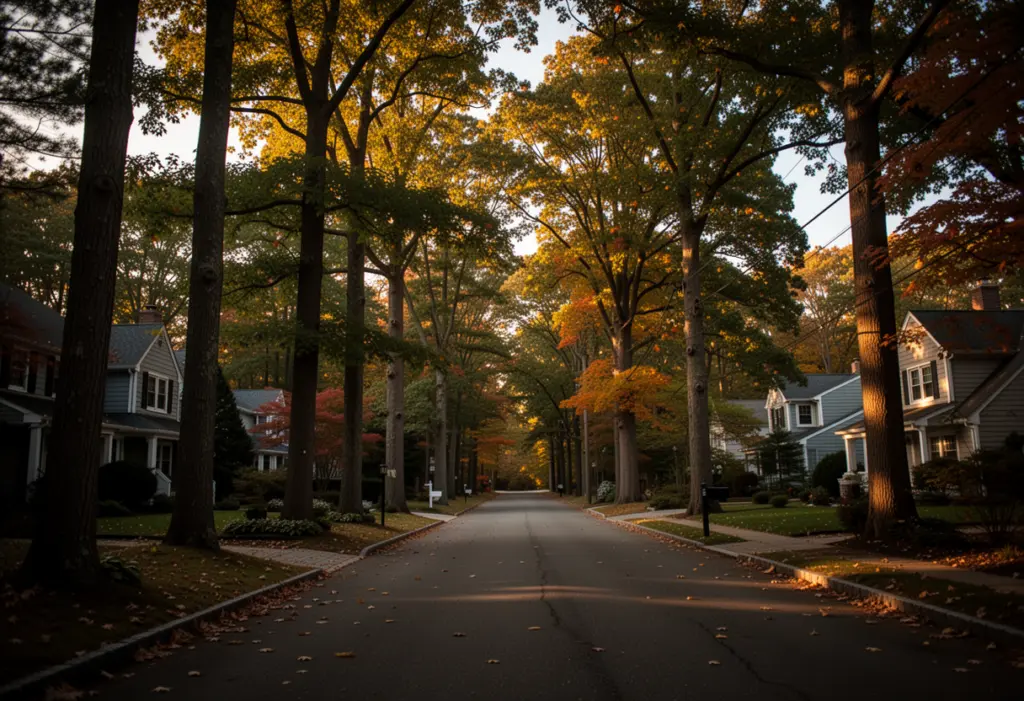
The Town of Oyster Bay stretches from the north shore down to the south shore of Nassau County and takes in Hicksville, Syosset, Plainview, Bethpage, Jericho, Massapequa, Farmingdale and the hamlet of Oyster Bay itself, across postal areas including 11714, 11753, 11758, 11771, 11791 and 11803. Prices vary across that range for one reason more than any other, and it is not the equipment.
Shade is the variable that decides the design
The north shore of this town is genuinely wooded, and the trees are old. A house that looks perfect on a satellite map can lose its winter afternoons entirely to a neighbour’s oaks. The question to ask is blunt: was the shade study done on site with an instrument, or drawn from imagery? If it was drawn from imagery, treat the annual production figure as optimistic until someone stands on the roof.
Two follow-ons matter as much. First, tree work belongs in the solar budget, not beside it. Removing or crown-lifting a large tree is a substantial cost and it is the homeowner’s cost, so a proposal that quietly assumes the trees will go has understated the project. Second, the tree that shades you is often not on your land, and a neighbour is under no obligation to cut it. Design for the horizon you actually control.
Jurisdiction across a very varied town
The town building department covers the unincorporated hamlets, which is most of the population, while the incorporated villages permit for themselves, and those are not only the north shore ones: Farmingdale and Massapequa Park in the south of the town are incorporated villages too. Postal address does not settle it. Ask your installer to name the authority having jurisdiction for your address, whether it uses New York’s Unified Solar Permit for systems of 25 kW DC and under, and what recent reviews at that office have taken from submission to approval.
Roofs and services differ sharply within a few miles
- The postwar tract housing in the south of the town has small, broken roof planes and, frequently, an original 100 amp service that will not carry solar plus an EV charger plus a heat pump.
- The older north shore housing brings steeper pitches, slate and standing seam metal, and framing that may need a structural letter before a distributed load is added.
- Detached garages and outbuildings are sometimes the better site, but a separate structure means a trench, a feeder and a second set of inspections.
What you pay every month, whatever the trees do
PSEG Long Island, which operates the LIPA system, serves this territory, and the name on your own bill is the confirmation worth taking thirty seconds over. The Customer Benefit Contribution is charged on the DC size of the array rather than on generation, so shading does not reduce it. At the 2026 residential rate of $1.13 per kW-month, a 12 kW array pays 12 x $1.13 = $13.56 a month, about $163 a year. That is the sharpest argument against building extra capacity to compensate for shade: the shaded kilowatts bill you monthly and repay you only when the sun clears the tree line. The charge applies to systems interconnected on or after 1 January 2022 and is recalculated annually.
Exports are credited at the full retail rate under Phase One net metering, held for 20 years from interconnection, and mass-market projects on the LIPA system do not opt into the Value Stack.
Why third-party offers still look cheaper
The federal residential credit is gone. Section 25D was terminated for expenditures made after 31 December 2025, and an expenditure is treated as made when the original installation is completed rather than when the system is switched on. There is no phase-down and no transition for a homeowner buying in 2026. If the work is part of constructing or reconstructing a structure, a different test applies again, which is a conversation for your accountant rather than your installer.
What did survive is the business-side credit, claimed by the company that owns a leased or PPA system. That is precisely why third-party offers can still price in a benefit you will never see on your own return, and why the tax comparison in 2026 no longer automatically favours buying. New York’s own 25 percent credit capped at $5,000 on Form IT-255, for equipment at your principal residence in New York, does reach leases and PPAs, but only where the agreement runs for ten years or more. Verify every one of these at tax.ny.gov and nyserda.ny.gov before you sign anything, because the rules changed once already and they will change again.
Frequently Asked Questions
How much does tree cover affect solar in Oyster Bay?
On the wooded north shore it is the largest single variable. Ask whether the shade study was done on site with an instrument or drawn from satellite imagery, and treat imagery-based annual estimates as optimistic.
Who pays for tree removal?
The homeowner. Tree work belongs inside the solar budget rather than beside it, and a tree on a neighbour's land cannot be cut on your say-so, so design for the horizon you actually control.
What does the monthly charge cost on a 12 kW array?
At the 2026 PSEG Long Island residential rate of $1.13 per kW-month, 12 kW costs $13.56 a month, about $163 a year, and shading does not reduce it because it is billed on DC size.
Why do lease and PPA offers still mention a federal incentive?
Because the business-side credit survives and is claimed by the company that owns the equipment. The homeowner buying a system outright in 2026 claims nothing federally under section 25D.
This article is general information, not tax, legal or financial advice. Incentive amounts, eligibility rules and deadlines change and depend on your utility, your tax situation and your property. Confirm current terms with NYSERDA, your utility and a qualified tax professional before making a decision.
NY Solar Incentives
Independent New York solar research. We summarise NYSERDA, NY-Sun and federal programme rules from published sources and state plainly when a figure is an estimate. We are not a government agency and do not sell equipment.
Run the arithmetic on your own system
Check the dated program table and your arrangement before counting an incentive. Standard residential NY-Sun blocks are closed; Long Island Affordable Solar has a conditional income-verification route. The NY credit depends on qualified costs and tax liability, while the NYC abatement reduces future property-tax bills. The estimator keeps those timings separate.