Utility Delay on a New York Solar Interconnection: What to Do
An installed array that has not been switched on is the most common complaint in New York solar, and almost all of it happens in the gap between mechanical completion and permission to operate.
On this page 7 sections
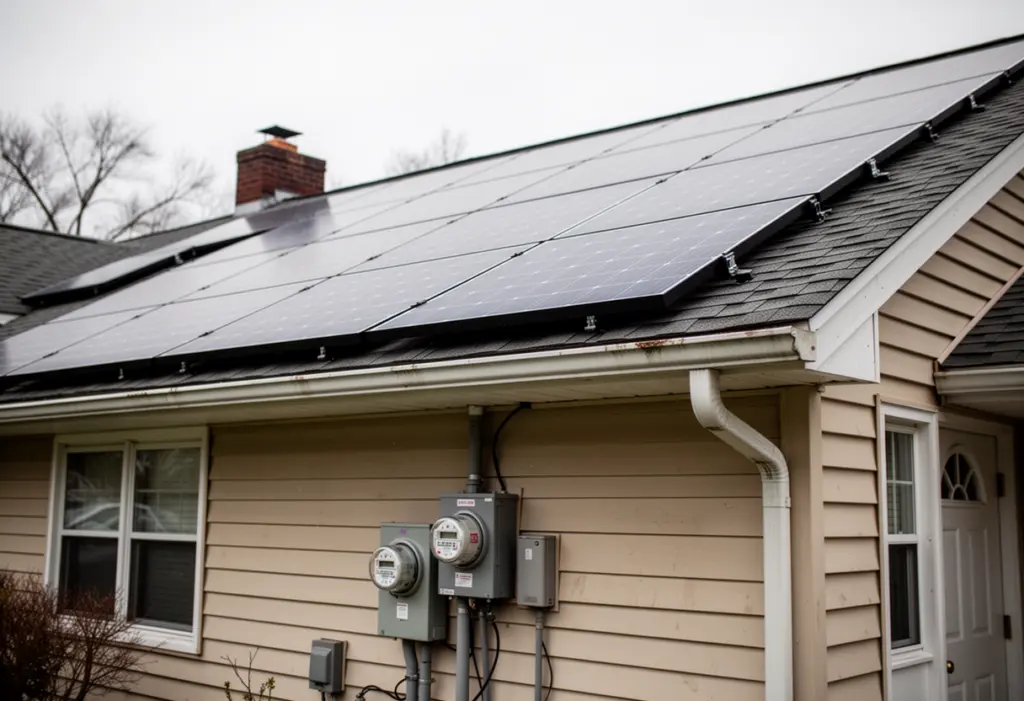
The array is on the roof, the inverter is mounted, the installer has gone, and nothing is switched on. This is the single most common frustration in New York residential solar, and it is not usually a fault. It is the gap between mechanical completion and permission to operate, the utility authorisation without which a grid-connected system must not be energised.
The sequence, so you know where you are
- Permit issued by your authority having jurisdiction, which is your town, village or city, or the Department of Buildings in the five boroughs.
- Interconnection application filed with your utility, normally by the installer.
- Installation and mechanical completion.
- Electrical inspection by the inspecting authority your jurisdiction recognises.
- Utility review, any required meter exchange, and finally permission to operate.
- Only then is the system energised.
Knowing which of those six steps you are actually waiting on turns an open-ended wait into a specific question. Ask your installer to tell you the step by number and the date it was reached, rather than accepting a general reassurance that it is with the utility.
What usually causes the delay
- An incomplete or corrected application. A resubmission goes back into the queue rather than resuming where it left off, which is why one missing document costs weeks rather than days.
- A meter exchange. Many systems need a meter capable of measuring in both directions, and that is a scheduled utility visit with its own backlog.
- Service or equipment work. If the service entrance, the panel or utility-side equipment needs upgrading, the solar file waits on that work.
- Design changes after submission. Changing panel count or inverter model after filing can require a revised application.
- Seasonal volume. Applications cluster, and a queue is a queue.
Settle these before installation, not during the wait
Almost every painful version of this story is a contract problem rather than a utility problem. Before signing, get answers in writing to four questions:
- Who files the interconnection application and when, relative to the installation date.
- Which payment milestones are tied to permission to operate rather than to mechanical completion. If the final payment falls due when the panels are screwed down, nobody but you is waiting for the switch-on.
- What happens if the utility requires equipment changes, and who pays for them.
- What the installer commits to doing during the wait — specifically, who chases the utility and how often you are updated.
What a delay does and does not cost you
It does not cost you the capacity charge, which begins with interconnection: the Customer Benefit Contribution applies to systems interconnected on or after 1 January 2022 and is billed on DC system size from then on. On a 10 kW array that is $9.70 a month at National Grid’s 2026 residential rate of $0.97 per kW-month, or $13.10 at RG&E’s $1.31. Those rates are recalculated annually and are not fixed at interconnection.
It does not shorten your net metering term either, since the 20 years of Phase One net metering run from interconnection rather than from installation.
What it does cost is a full electricity bill for every month the array sits idle, and that is a real number worth raising with whoever controls the schedule.
One point of precision that matters for anyone whose system straddled the end of 2025. A late interconnection did not forfeit the old federal residential credit, because section 25D treated an expenditure as made when the original installation is completed, not when the system was placed in service. A system whose installation finished in December 2025 but which was energised in 2026 was still an expenditure made in 2025. The exception is new construction: where the work was part of constructing or reconstructing a structure, the test becomes when the taxpayer’s original use of that structure begins. Take either situation to your accountant with the dates in hand.
Where the state framework does not reach
If your electricity comes from a municipal electric utility, none of the above describes your process. Municipal utilities are outside Public Service Commission jurisdiction, so there is no state interconnection process, no state net metering and no Customer Benefit Contribution, and the timeline and terms have to be obtained from that utility directly. Confirm which utility serves you from the name printed on your own bill rather than from the county you live in.
The incentives that still apply once you are switched on
For a 2026 purchase the federal residential credit is gone, so nothing in the wait affects it. What survives for a principal residence is the New York State credit at 25% of qualified expenditure capped at $5,000 on Form IT-255, which also reaches leases and power purchase agreements of ten years or more, the state sales tax exemption, and the RPTL 487 exemption on the added assessed value, which runs 15 years, requires construction before 1 January 2030, and applies only where your municipality, your county and your school district have each declined to opt out. The NY-Sun incentive that contractors used to apply as a price reduction is not on that list: as of September 2026 NYSERDA has no open NY-Sun block for homes in any utility territory; check NYSERDA’s NY-Sun dashboard for a new one. Confirm the current terms with NYSERDA and the Department of Taxation and Finance before you rely on any of them.
Frequently Asked Questions
Can I switch the system on before permission to operate?
No. A grid-connected system must not be energised until the utility grants permission to operate, and doing so anyway puts you in breach of the interconnection agreement as well as creating a safety issue for line workers.
What is the most common cause of an interconnection delay?
An incomplete or corrected application, because a resubmission rejoins the queue rather than resuming its place. Meter exchanges and service upgrade work are the next most common causes.
Does a delay cost me money?
It costs a full electricity bill for every month the array sits idle. It does not cost you capacity charges, which start at interconnection, and it does not shorten the 20-year net metering term, which also runs from interconnection.
Did a late switch-on kill the old federal credit?
Not by itself. Section 25D treated the expenditure as made when the original installation was completed, not when the system was placed in service, so a December 2025 completion energised in 2026 still counted. New construction follows a different test.
This article is general information, not tax, legal or financial advice. Incentive amounts, eligibility rules and deadlines change and depend on your utility, your tax situation and your property. Confirm current terms with NYSERDA, your utility and a qualified tax professional before making a decision.
NY Solar Incentives
Independent New York solar research. We summarise NYSERDA, NY-Sun and federal programme rules from published sources and state plainly when a figure is an estimate. We are not a government agency and do not sell equipment.
Run the arithmetic on your own system
Check the dated program table and your arrangement before counting an incentive. Standard residential NY-Sun blocks are closed; Long Island Affordable Solar has a conditional income-verification route. The NY credit depends on qualified costs and tax liability, while the NYC abatement reduces future property-tax bills. The estimator keeps those timings separate.