Buying a House With Solar Panels: What to Check First
Before anything else, find out whether the array is owned, financed, leased or on a power purchase agreement. Everything you inherit at closing follows from that one answer.
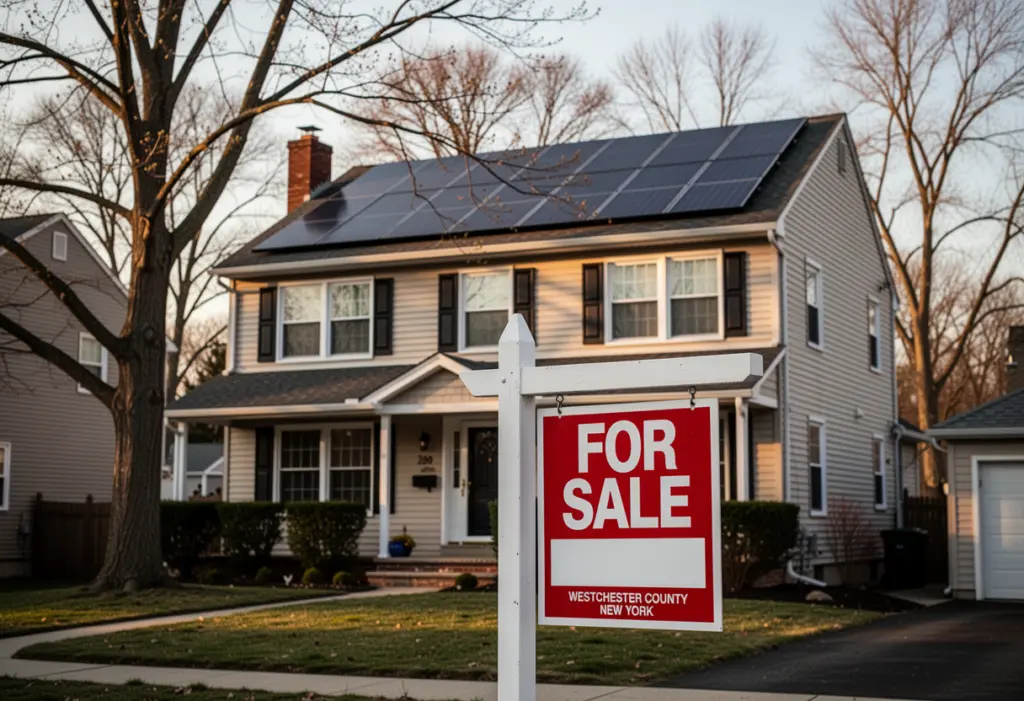
One question comes before every other: who owns the array? Owned outright, owned with a loan and a lien against it, leased, or supplying you under a power purchase agreement — these are four different transactions, and each one hands you a different set of obligations at closing. Ask for the answer in documents, not in conversation.
The document list to request in writing
- Proof of ownership or the full contract. For a lease or PPA, the whole agreement, not a summary sheet: remaining term, any annual escalator, buyout terms, and the assignment clause that governs whether you can take it over and on what credit conditions.
- Any lien or financing statement filed against the equipment, and written confirmation of what your lender requires before it will close over it.
- The interconnection agreement and its date. The date matters twice, as below.
- Permits and final inspection sign-off from the authority having jurisdiction. A system installed without a closed permit is a problem you inherit.
- Equipment and workmanship warranties and, specifically, whether each transfers to a new owner and whether a transfer fee or registration deadline applies.
- Twelve months of production data from the monitoring platform, plus twelve months of utility bills, so you can see what the system actually delivered rather than what a proposal once modelled.
- The monitoring account itself and how it is transferred, which is routinely forgotten until the seller has moved.
Why the interconnection date is the sleeper item
Under Phase One net metering, exports are credited at the full retail rate and the arrangement holds for 20 years from interconnection. A system interconnected six years ago carries fourteen years of that structure, not twenty. Ask for the date and count.
The same date determines a recurring cost. The Customer Benefit Contribution applies to systems interconnected on or after 1 January 2022, charged monthly on DC capacity regardless of production, and it will now appear on your bill. On Con Edison the 2026 residential rate is $1.29 per kW-month, so a 9.6 kW array costs 9.6 x $1.29, about $12.38 a month or roughly $149 a year. Rates are recalculated annually and are not locked in at interconnection. A system interconnected before 2022 does not carry the charge at all, which is a genuine difference between two otherwise similar houses.
Check which utility serves the property from a bill rather than from the address. If the answer is a municipal electric utility, the property sits outside Public Service Commission jurisdiction: no state net metering rule, no Customer Benefit Contribution and no state interconnection process, and the terms are whatever that utility sets. Ask the utility directly what a change of account holder does to the arrangement.
Property taxes and the exemption on the parcel
Ask the assessor whether an RPTL 487 exemption is in place on the parcel and how many of its 15 years remain, because you inherit the remainder rather than a fresh term. The exemption covers the added value of the system, and it only applies where the municipality, the county and the school district have each not opted out — three separate checks. In New York City it is administered by the Department of Finance as the Clean Energy Systems Exemption, and the separate city abatement filed on form PTA4 with the Department of Buildings sits on top of it rather than replacing it.
Tax credits do not come with the house
You do not inherit the seller’s New York State credit. The state credit is 25% of qualified expenditure capped at $5,000 on Form IT-255, tied to the taxpayer’s own principal residence in New York, and it belongs to whoever made the expenditure. If you are taking over a lease or power purchase agreement of ten years or more, that arrangement can reach the credit, but the $5,000 is a per-agreement lifetime ceiling rather than an annual figure, and the form requires subtracting what was claimed for that same agreement in earlier years. So ask the seller in writing what has already been claimed, and take that to your own tax preparer before assuming anything is left.
The 30% federal residential credit is gone and cannot be inherited, transferred or revived. Section 25D was terminated for expenditures made after 31 December 2025, with an expenditure treated as made when the original installation is completed. If a listing, a seller or an agent prices the house on the basis that you will claim it, that is materially wrong and worth correcting in writing.
The physical inspection nobody schedules
Have the roof under and around the array inspected, and ask how old the covering is. If it needs replacing in a few years, you are also buying a removal and reinstatement job, so get a written figure for that work before closing rather than after. Ask whether the installing company still exists, because a workmanship warranty from a dissolved company is a piece of paper. Confirm the inverter model and its age against its own warranty term, since inverters are typically the first component to need replacement.
Programmes and rates change, so confirm the current position with the utility, the assessor and the Department of Taxation and Finance during your contingency period rather than relying on what was true when the system was installed.
Frequently Asked Questions
What should I check first when buying a house with solar panels?
Ownership. Owned outright, owned with a lien, leased, or on a power purchase agreement are four different transactions with different obligations at closing. Ask for the documents rather than accepting a verbal answer.
Do I inherit the seller's solar tax credits?
No. New York's 25% credit capped at $5,000 on Form IT-255 belongs to the taxpayer who made the expenditure at their own principal residence. The federal residential credit ended for expenditures made after 31 December 2025.
What ongoing costs come with the system?
If the system was interconnected on or after 1 January 2022, the Customer Benefit Contribution moves to your bill, charged monthly on DC size. On Con Edison at $1.29 per kW-month for 2026 a 9.6 kW array is about $12.38 a month.
Does the property tax exemption transfer with the house?
Ask the assessor whether an RPTL 487 exemption is on the parcel and how many of its 15 years remain, since you inherit the remainder rather than a new term. It applies only where municipality, county and school district each did not opt out.
This article is general information, not tax, legal or financial advice. Incentive amounts, eligibility rules and deadlines change and depend on your utility, your tax situation and your property. Confirm current terms with NYSERDA, your utility and a qualified tax professional before making a decision.
NY Solar Incentives
Independent New York solar research. We summarise NYSERDA, NY-Sun and federal programme rules from published sources and state plainly when a figure is an estimate. We are not a government agency and do not sell equipment.
Run the arithmetic on your own system
Check the dated program table and your arrangement before counting an incentive. Standard residential NY-Sun blocks are closed; Long Island Affordable Solar has a conditional income-verification route. The NY credit depends on qualified costs and tax liability, while the NYC abatement reduces future property-tax bills. The estimator keeps those timings separate.