National Grid Net Metering in New York, Explained
National Grid covers Buffalo, Syracuse, Albany and much of upstate. Here is how it credits exported solar, what the 2026 CBC costs, and what stays on your bill.
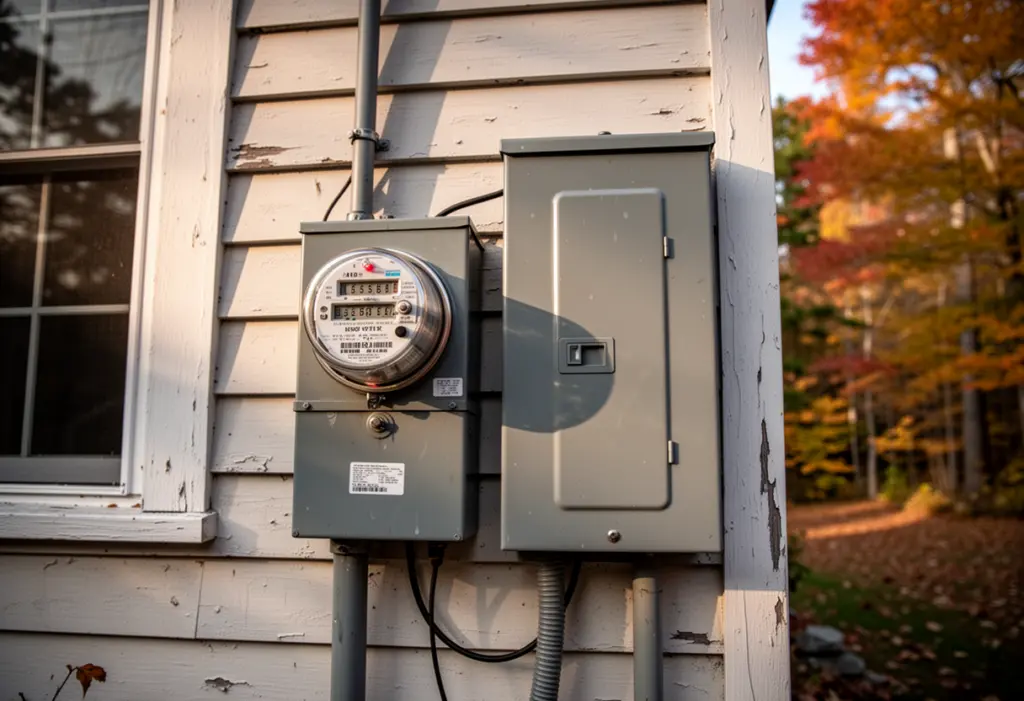
National Grid is the utility for Buffalo, Syracuse, the Capital District and a large share of the rest of upstate New York. If your bill says National Grid, the rules below are the ones that govern what your roof earns.
How the credit actually works
Your array feeds the house first. Only the surplus — the kilowatt-hours produced while nobody is using them — flows back onto the grid and registers as an export. Under Phase One net metering, each exported kilowatt-hour is credited at the full retail rate, so a unit sent out at midday offsets a unit drawn back after dark.
A system interconnected today keeps that arrangement for 20 years. New York has revised the successor tariff more than once and each revision applied forward, which is why the interconnection date matters more than the installation date.
Summer builds the balance that pays for winter
Upstate production is heavily seasonal. A National Grid customer generates a substantial surplus from roughly March through September and runs a deficit from November through February. National Grid does not pay that surplus out monthly; it accrues on the account and is drawn down through the winter.
This is why an upstate system is sized against a full year of consumption rather than a summer bill, and why the first February is where undersized systems reveal themselves. Ask your installer what annual kWh figure the design was built on, and check it against your own twelve-month history rather than an estimate.
The Customer Benefit Contribution on National Grid
Any residential customer who interconnected solar on or after 1 January 2022 pays a monthly Customer Benefit Contribution. It funds low-income, energy-efficiency and clean-energy programmes that used to be paid through the volumetric charges a solar customer largely stops paying.
The charge is billed on the DC size of the system, not on output. For 2026 the final residential rate on National Grid for a net-metered PV system is $0.97 per kW-month — the lowest of the major New York utilities.
- A 6 kW system: 6 × $0.97 = $5.82 a month, about $70 a year.
- An 8 kW system: 8 × $0.97 = $7.76 a month, about $93 a year.
- A 12 kW system: 12 × $0.97 = $11.64 a month, about $140 a year.
For comparison, the same 8 kW system pays $10.32 a month on Con Edison and $13.36 on Central Hudson. Identical hardware, identical roof, different bill — purely because of territory.
Three things worth knowing. The charge applies every month regardless of production, because it is billed on capacity. It is recalculated annually and is not locked in at interconnection. And it does not apply to systems interconnected before 1 January 2022, to community solar, or to commercial accounts carrying a demand charge.
If you go the Value Stack (VDER) route instead of net metering, National Grid’s 2026 residential rate is $0.49 per kW-month. For a mass-market rooftop system, net metering is normally the better arrangement, but the difference in CBC is real and belongs in the comparison.
Getting connected
Net metering starts at permission to operate, not at installation. The sequence:
- Your installer files an interconnection application with National Grid, normally before any equipment goes up.
- National Grid reviews the application against available capacity on your circuit and issues an approval to install.
- The system is installed and passes local electrical inspection.
- The inspection certificate goes to National Grid, which exchanges or reprograms the meter.
- National Grid issues permission to operate, and only then may the system be switched on.
Upstate circuits in areas with heavy solar uptake sometimes need a distribution upgrade before a new system can be accepted. Ask, in writing, what happens to your deposit and your timeline if that comes back on your address.
What the bill still shows
A National Grid residential bill separates supply from delivery, and solar only fully offsets part of one of them. A basic service charge applies for as long as you are connected. Expect a small bill every month rather than no bill, and treat any sales claim of a zero bill as a claim to be put in writing next to the CBC line.
What is still available in 2026
The 30% federal residential credit under section 25D is gone. The One Big Beautiful Bill Act ended it for expenditures made after 31 December 2025, and an expenditure counts as made when the original installation is completed — not when the system is placed in service or granted permission to operate. A system finished in December 2025 qualifies even if National Grid did not energise it until 2026; one bought today does not.
New York’s own 25% credit, capped at $5,000 and claimed on Form IT-255, is unaffected, as is the state sales tax exemption. NY-Sun is a separate matter: as of September 2026 NYSERDA has no open NY-Sun block for homes in any utility territory; check NYSERDA’s NY-Sun dashboard for a new one. A 2026 quote showing a 30% federal line is overstating your net cost by thousands.
Frequently Asked Questions
What is the National Grid CBC rate for 2026?
The final 2026 residential rate for net-metered PV is $0.97 per kW-month of DC system size — the lowest among the major New York utilities. An 8 kW system pays about $7.76 a month, roughly $93 a year.
Does National Grid pay cash for excess solar?
No. Surplus exports accrue as a credit balance on your account, which is drawn down during the winter months when the system produces less than the house uses.
How long does National Grid net metering last?
A system interconnected today holds Phase One net metering for 20 years. The Customer Benefit Contribution rate is separate and is recalculated every year.
Which areas does National Grid serve for solar in New York?
Buffalo, Syracuse, the Albany and Capital District area and much of the rest of upstate New York. Check the utility name printed on your own bill, because territory boundaries do not follow county lines.
This article is general information, not tax, legal or financial advice. Incentive amounts, eligibility rules and deadlines change and depend on your utility, your tax situation and your property. Confirm current terms with NYSERDA, your utility and a qualified tax professional before making a decision.
NY Solar Incentives
Independent New York solar research. We summarise NYSERDA, NY-Sun and federal programme rules from published sources and state plainly when a figure is an estimate. We are not a government agency and do not sell equipment.
Run the arithmetic on your own system
Check the dated program table and your arrangement before counting an incentive. Standard residential NY-Sun blocks are closed; Long Island Affordable Solar has a conditional income-verification route. The NY credit depends on qualified costs and tax liability, while the NYC abatement reduces future property-tax bills. The estimator keeps those timings separate.