What a UCC Filing on Your Solar Panels Actually Means
Most homeowners meet the term in the middle of a refinance or a sale. It is worth understanding at the point where you still have leverage over the wording.
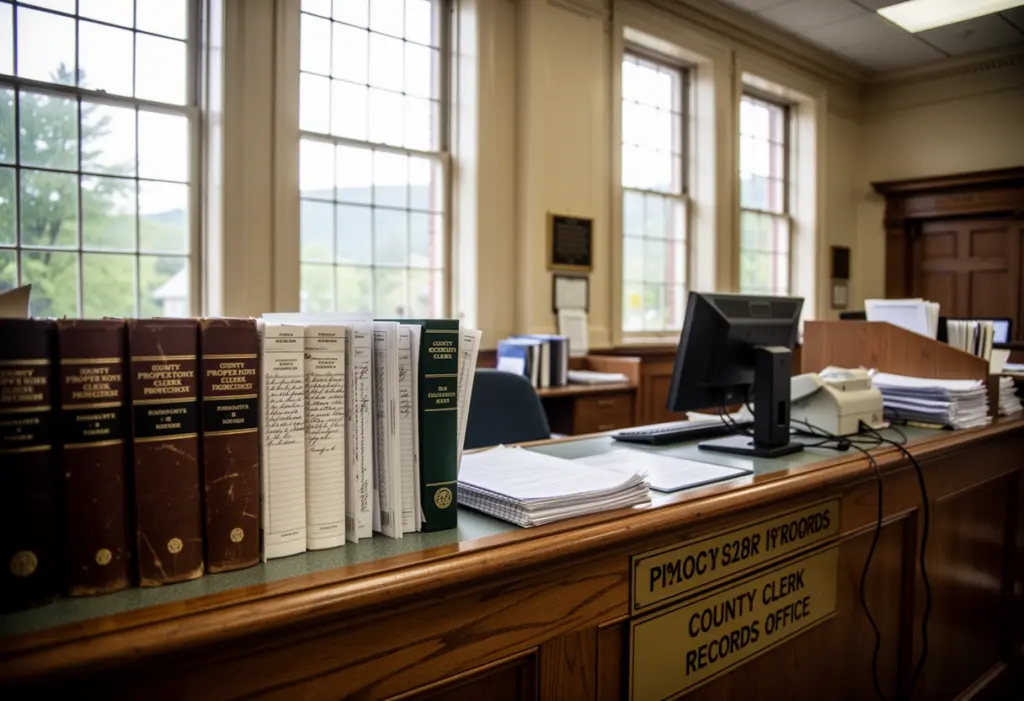
A UCC filing on a solar system is a public notice that somebody holds a security interest in the equipment. It is not a mortgage, it is not a judgment, and it does not give the finance company a claim on your house. It does mean the array is collateral, and it means a title search will find it — which is why most homeowners meet the term for the first time in the middle of a refinance or a sale.
What is actually filed
The document is a financing statement, usually called a UCC-1. It names the debtor, names the secured party, and describes the collateral. Where the collateral is equipment attached to a building — modules, racking, an inverter, a battery — the filing is generally made as a fixture filing, recorded in the same office where a mortgage on that property would be recorded. That is the whole reason it surfaces on a title report rather than sitting quietly in a state database.
Appearing on a title report is not the same as being a lien on the land. The distinction matters, and it is worth insisting on when somebody tells you there is a lien on your house.
Read the collateral description
This is the sentence to read before signing anything, and the one almost nobody reads. A properly drafted description names the solar energy system and its components. A description that reaches further — all fixtures, all improvements, the real property, or anything installed at the address — is broader than the transaction requires.
You have leverage over that wording before the contract is signed and effectively none afterwards. Ask for a copy of the exact financing statement that will be filed, not a summary of it, and read what comes after the words describing the covered collateral.
Where it shows up in real life
- Refinancing. Your new lender may want the filing subordinated so its mortgage sits ahead of it. That is a request to the solar finance company and it runs on their schedule.
- Selling. The title company will require the filing released, subordinated, or expressly assumed by the buyer. Start it at listing.
- A home equity line. The same question as a refinance, usually with less patience in the timeline.
- A roof replacement or an insurance claim. Not a legal obstacle, but the secured party may need notifying under the agreement. Check the notice clause.
Getting it released
Paying off the balance does not remove the filing by itself. The secured party files a termination, usually a UCC-3, and until that happens the record still shows the interest. Three practical steps:
- When you make the final payment, ask in writing for confirmation of the payoff and the date the termination will be filed.
- Ask how many business days that normally takes as a matter of their standard practice.
- After that period has passed, check the recording office yourself. Do not assume it happened because somebody said it would.
An untermimated filing is a small administrative problem when it is discovered years early, and a genuine closing delay when it is discovered late.
Third-party owned systems
Filings are at least as common on leased and power purchase agreement systems as on loans, because there the equipment genuinely is owned by somebody else. The consequence at a sale is different, though. Instead of a payoff you are usually looking at a transfer of the agreement, and the finance company will typically supply an estoppel or consent letter that the title company can work with. Ask for that document by name rather than describing what you want.
Two New York specifics worth knowing
First, the tax position does not follow the filing. The New York State credit of 25% capped at $5,000 on Form IT-255 goes to the homeowner for a purchase at a principal residence, and it also reaches leases and power purchase agreements of ten years or more, with the ten-year minimum applying to the lease as well as to the PPA. For a lease or PPA the $5,000 is a lifetime ceiling for that agreement rather than an annual figure, so amounts claimed in earlier years are subtracted. Whether an equipment filing exists changes none of that.
Second, the monthly utility charge is unaffected too. The Customer Benefit Contribution is billed on DC system size for systems interconnected on or after 1 January 2022, whoever holds a security interest in the hardware. On a 6 kW array under Con Edison that is 6 multiplied by $1.29, about $7.74 a month; the identical array under National Grid is 6 multiplied by $0.97, about $5.82. Community solar subscribers pay none of it at all, because those are front-of-the-meter projects.
The questions to ask before signing
- Will anything be recorded against my property or my equipment, and in which office.
- May I see the exact financing statement and its collateral description.
- What is your process and timescale for subordination if I refinance.
- Which document terminates the filing, and how long after payoff do you file it.
- If I sell, do you provide an estoppel or payoff letter to the title company, and how quickly.
Get those answers in writing. A finance company that answers them clearly is telling you something useful about how the rest of the relationship will run.
The 2026 backdrop
Financing decisions in New York now sit against a changed incentive picture. The 30% federal residential credit is gone — section 25D was terminated for expenditures made after 31 December 2025, and an expenditure is treated as made when the original installation is completed — so a proposal or a repayment schedule still leaning on it is wrong on its face. The state tax incentives are intact: the IT-255 credit, the sales tax exemption on residential solar equipment, and the RPTL 487 property tax exemption, claimed by filing form RP-487 with the assessor, where the municipality, the county and the school district have each not opted out. The contractor-applied NY-Sun reduction is not: as of September 2026 NYSERDA has no open NY-Sun block for homes in any utility territory; check NYSERDA’s NY-Sun dashboard for a new one. Programmes change, so confirm the current position with NYSERDA and the Department of Taxation and Finance before signing anything that assumes one.
Frequently Asked Questions
Is a UCC filing a lien on my house?
No. It is a notice of a security interest in the solar equipment. Because it is generally made as a fixture filing in the same office as a property mortgage, it appears on a title search, but it gives the finance company no interest in the land or the building.
How do I get a UCC filing removed after paying off my solar loan?
The secured party files a termination, usually a UCC-3. Ask in writing for the payoff confirmation and the filing date, ask how many business days it normally takes, then check the recording office yourself rather than assuming it was done.
Can I refinance my mortgage with a solar UCC filing in place?
Usually yes, but your new lender may ask for the filing to be subordinated. That request goes to the solar finance company and runs on their timetable, so raise it at application rather than at closing.
Do leased solar panels have UCC filings too?
Frequently, because the equipment genuinely belongs to somebody else. At a sale the route is a transfer rather than a payoff, and the finance company normally supplies an estoppel or consent letter for the title company.
This article is general information, not tax, legal or financial advice. Incentive amounts, eligibility rules and deadlines change and depend on your utility, your tax situation and your property. Confirm current terms with NYSERDA, your utility and a qualified tax professional before making a decision.
NY Solar Incentives
Independent New York solar research. We summarise NYSERDA, NY-Sun and federal programme rules from published sources and state plainly when a figure is an estimate. We are not a government agency and do not sell equipment.
Run the arithmetic on your own system
Check the dated program table and your arrangement before counting an incentive. Standard residential NY-Sun blocks are closed; Long Island Affordable Solar has a conditional income-verification route. The NY credit depends on qualified costs and tax liability, while the NYC abatement reduces future property-tax bills. The estimator keeps those timings separate.