Solar Installer Insurance and Bonding in New York
The certificate a salesperson hands you proves what was true on the day it was printed. Verifying cover properly takes one email to the insurance agent, and it is the cheapest protection in the whole transaction.
On this page 8 sections
- 01General liability
- 02Workers compensation is the one that can reach you
- 03A bond is not insurance, and it is not a warranty
- 04Subcontractors are where the gap opens
- 05How to verify without taking anyone’s word
- 06The awkward truth about a very low quote
- 07Where this sits against the 2026 incentives
- 08Frequently Asked Questions
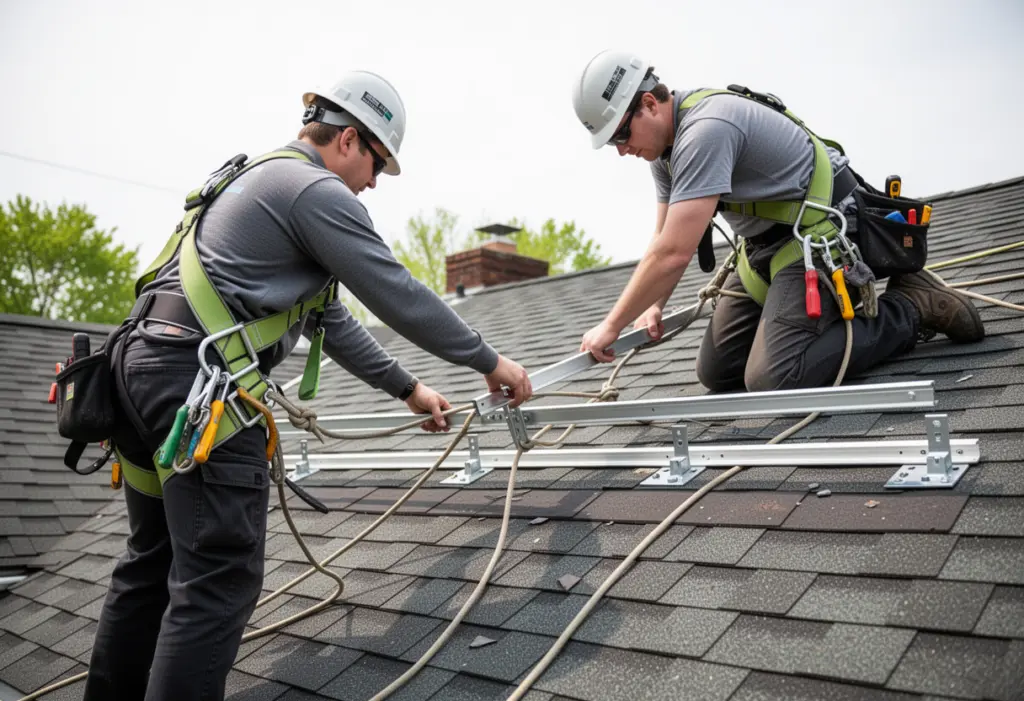
Before anyone climbs onto your roof, establish three things: that the company carries general liability cover, that it carries New York workers compensation for everyone who will be on site, and that you have seen both confirmed by the insurance agent rather than by the salesperson. Bonding is a fourth and different question, and it protects something narrower than most homeowners assume.
General liability
General liability responds to damage the crew causes to your property and to injury to people who are not employees. On a solar job the realistic claims are unglamorous: a torn membrane on a flat roof, a cracked slate, a penetration that leaks into a bedroom ceiling three storms later, a dropped rail through a skylight, damage to a driveway from a delivery.
Two questions get you further than the certificate on its own. Ask what the per-occurrence and aggregate limits are, and ask whether the policy carries any exclusion for roofing work or for work at height, because an installer whose policy excludes the activity they are performing is effectively uninsured for the job you are buying.
Workers compensation is the one that can reach you
This is the coverage most worth confirming. If an uninsured worker is injured on your property, the consequences do not stay with the contractor, and a homeowner policy is not designed to absorb a construction injury. New York requires employers to carry workers compensation, and the New York State Workers Compensation Board publishes a way to verify a specific employer’s coverage. Use it.
Watch for the arrangement where a company claims to have no employees because everyone on the job is an independent contractor. That is common, and it is exactly the situation in which you need to see cover for each crew on site rather than one certificate for the company name on the truck.
A bond is not insurance, and it is not a warranty
Bonding is frequently offered as reassurance and rarely explained. A surety bond is a promise by a third party to pay up to a stated amount if the contractor fails to meet a specific obligation, and it exists to protect whoever the bond names. A licensing bond required by a municipality protects the public and the licensing authority under the terms that municipality set. It is not a fund you can draw on because you are unhappy with the workmanship, and its limit is usually far smaller than the price of a solar installation.
So treat bonding as a signal that the company met a licensing requirement, not as a safety net for your project. The documents that actually protect the installation are the workmanship warranty, the manufacturer warranties on the panels and inverter, and the insurance above.
Subcontractors are where the gap opens
Most solar installations involve more than one trade. Roofing repairs, electrical work, sometimes a service upgrade, occasionally a crane. Ask which parts of your job are subcontracted and to whom, then ask for the same two certificates for each of those firms. A general contractor’s certificate does not cover an uninsured subcontractor’s employee.
How to verify without taking anyone’s word
- Have the certificate emailed to you directly by the insurance agency, not forwarded by the salesperson. A forwarded certificate proves what was true on the day it was printed, and policies get cancelled for non-payment.
- Check the policy dates against the expected installation dates, including the possibility that your job slips by a month.
- Ask to be named as a certificate holder, so that you are notified if the policy is cancelled.
- Verify workers compensation with the Workers Compensation Board rather than relying on the certificate alone.
- Ask your county or city consumer affairs office whether home improvement contractors are licensed where you live, and what that licence requires in the way of insurance and bonding.
The awkward truth about a very low quote
Insurance, workers compensation and licensing are real costs, and they show up in a price. A quote that is far below the others is sometimes a company being efficient and is sometimes a company that is not carrying what its competitors carry. That is not a reason to pay the highest price; it is a reason to make the comparison like for like by asking every bidder for the same certificates before you compare their numbers.
Where this sits against the 2026 incentives
The incentive that has depended most on your choice of contractor is NY-Sun, because it is applied by the contractor as a reduction in the price rather than claimed by you afterwards, and a company that is not participating cannot pass it to you. As of September 2026 NYSERDA has no open NY-Sun block for homes in any utility territory; check NYSERDA’s NY-Sun dashboard for a new one. Treat a NY-Sun discount on a 2026 quote as a question to ask rather than a saving. The same is true of the Affordable Solar incentive for low- to moderate-income households: its last blocks for homes closed on 15 October 2025 in Con Edison territory and on 9 March 2026 in the Upstate region.
The state sales tax exemption on residential solar equipment should also be visible in how the invoice is written, and localities may separately elect to exempt their local share, so the total varies by county and city. On the tax return side, New York’s solar energy system equipment credit is 25 percent of qualified expenditure capped at $5,000 on Form IT-255, which means the cap starts biting at $20,000 of qualified expenditure and a larger system earns nothing more from it. The credit requires the equipment to be at your principal residence in New York and is limited by your actual state tax liability. The 30 percent federal residential credit is gone, terminated for expenditures made after 31 December 2025, so no 2026 quote should carry it. Rules move; confirm the current position with NYSERDA and the Department of Taxation and Finance before signing.
Frequently Asked Questions
What insurance should a New York solar installer carry?
General liability for damage to your property and injury to non-employees, and New York workers compensation for everyone on site. Ask about limits and about any exclusion for roofing or work at height.
Why does workers compensation matter to me as the homeowner?
Because an injury to an uninsured worker on your property does not stay with the contractor, and a homeowner policy is not built to absorb a construction injury. Verify coverage with the New York State Workers Compensation Board rather than from a certificate alone.
Does bonding protect my installation?
Not in the way most people expect. A surety bond pays up to a stated amount against a specific obligation and protects whoever the bond names, usually under a municipal licensing requirement. Its limit is normally far below the cost of a solar installation.
How do I verify a certificate of insurance?
Ask the insurance agency to email it to you directly, check the policy dates against your expected install dates including a slip, and ask to be named as a certificate holder so you are told if the policy is cancelled.
This article is general information, not tax, legal or financial advice. Incentive amounts, eligibility rules and deadlines change and depend on your utility, your tax situation and your property. Confirm current terms with NYSERDA, your utility and a qualified tax professional before making a decision.
NY Solar Incentives
Independent New York solar research. We summarise NYSERDA, NY-Sun and federal programme rules from published sources and state plainly when a figure is an estimate. We are not a government agency and do not sell equipment.
Run the arithmetic on your own system
Check the dated program table and your arrangement before counting an incentive. Standard residential NY-Sun blocks are closed; Long Island Affordable Solar has a conditional income-verification route. The NY credit depends on qualified costs and tax liability, while the NYC abatement reduces future property-tax bills. The estimator keeps those timings separate.