Door-to-Door Solar Sales in New York: What to Do
The correct action at the door is short: take the company name, hand over nothing, and sign nothing. Every useful check happens afterwards, with the door closed and no one watching you decide.
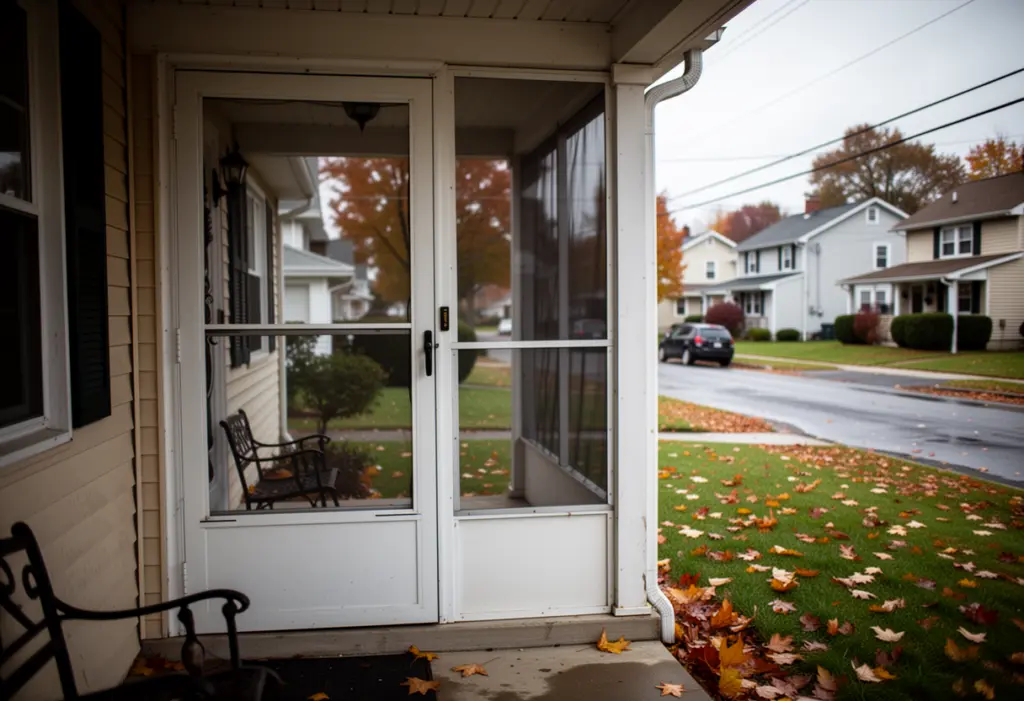
When a solar canvasser arrives, the whole of the correct response is: take the company name and a phone number, hand over nothing, sign nothing, and close the door. Every check that matters happens afterwards, at your own pace, with nobody standing on the step watching you decide. A company worth buying from is still there tomorrow.
What not to hand over on the doorstep
Canvassers frequently ask for small things that are not small.
- Your utility account number, or a photo of your bill. This is enough to pull your consumption history and, in some arrangements, to start enrolling you in something. Share it after you have chosen a company, not before.
- Date of birth and social security number for a soft check. A credit application belongs at the end of a decision, not at the start of a conversation.
- A signature on a tablet, for any reason at all. If you are told it only confirms the visit or reserves an assessment slot, ask for a paper copy of what you are signing and read it indoors. A signature that is only an acknowledgement does not need to happen today.
- Roof access. There is no reason for anyone to be on your roof or in your service panel during a first conversation.
The claim that dates the pitch
If the pitch includes a 30 percent federal tax credit, the script is out of date and the arithmetic underneath it is wrong. Section 25D, the residential credit that line refers to, was terminated for expenditures made after 31 December 2025 — and the operative test is when the original installation is completed, not when the system is switched on. So a homeowner buying in 2026 claims nothing federally: no phase-down, no transition rule, and no carryover of a credit that was never earned.
That matters beyond the credit itself, because a savings projection built on a 30 percent federal line has a hole in it the size of roughly a third of the system price. Ask any company that says it to send you a revised proposal without that line, and compare that version instead.
The word free is a statement about ownership
Offers described as free solar or no cost solar are almost always a lease or a power purchase agreement. You do not own the system, you pay for the power or for the equipment monthly, and the tax benefits that survive on the business side go to the company that owns it rather than to you. That is not automatically a bad deal, and for some households it is the better one in 2026, but it is a different transaction from buying and it should be named plainly. Ask which it is in the first minute.
Checks to run once the door is closed
- Search the company name together with your county and read what comes back, including complaint records.
- Ask your county or city consumer affairs office whether home improvement contractors are licensed where you live and whether this company holds a current licence. Several New York counties and cities license them and many do not.
- Ask for a certificate of insurance sent directly from the insurance agent, covering general liability and New York workers compensation.
- Get at least two more written proposals, from companies you approached rather than ones that approached you.
- Confirm the utility named on your own bill, because that determines your interconnection process and your monthly charges, and a canvasser may not have it right.
The number the doorstep never mentions
Ask what the Customer Benefit Contribution will be on the system being proposed. It is a monthly charge assessed on the DC size of the array rather than on what it produces, applying to systems interconnected on or after 1 January 2022, and it is recalculated annually rather than fixed at interconnection. On a 10 kW system in Con Edison territory the 2026 residential rate of $1.29 per kW-month is $12.90 a month, about $155 a year. On National Grid, at $0.97, the same array pays $9.70 a month. If the person at your door cannot say what it is, they have not costed your system.
Note also that a community solar subscription pays no Customer Benefit Contribution at all, which is worth knowing before you agree to anything on a roof.
The incentives to check yourself
Two of New York’s solar incentives were never claimed by you: NY-Sun and its Affordable Solar incentive for low- to moderate-income households were applied by the contractor as a reduction in the price. Both are closed for homes. The last Affordable Solar blocks closed on 15 October 2025 in Con Edison territory and on 9 March 2026 in the Upstate region, and as of September 2026 NYSERDA has no open NY-Sun block for homes in any utility territory; check NYSERDA’s NY-Sun dashboard for a new one. A canvasser who quotes either as a discount on your price is quoting something that is not on offer.
Beyond that: the state solar energy system equipment credit is 25 percent capped at $5,000 on Form IT-255 for a principal residence in New York, there is a state sales tax exemption on residential solar equipment, and RPTL 487 gives a 15-year property tax exemption on the added value where your municipality, your county and your school district have each not opted out. Those are three separate checks, and the system must be constructed before 1 January 2030. Programmes change, so confirm the current position with NYSERDA and with the Department of Taxation and Finance rather than with a visitor.
Frequently Asked Questions
Should I sign anything a door-to-door solar rep puts in front of me?
No. Take the company name and a phone number, then close the door and check the company on your own time. A signature described as only confirming the visit still does not need to happen at the door.
A canvasser mentioned a 30% federal tax credit. Is that right?
No. Section 25D was terminated for expenditures made after 31 December 2025, with the expenditure treated as made when the original installation is completed. Any 2026 proposal showing a 30% federal line is materially wrong.
Is free solar really free?
Offers described that way are usually a lease or a power purchase agreement. You do not own the system and you pay monthly. It can still suit some households, but it is a different transaction from buying and should be named as one.
What should I ask about monthly charges?
Ask for the Customer Benefit Contribution on the proposed system size. It is billed on DC capacity regardless of production: a 10 kW array pays 10 x $1.29 = $12.90 a month in Con Edison territory for 2026, or $9.70 on National Grid at $0.97.
This article is general information, not tax, legal or financial advice. Incentive amounts, eligibility rules and deadlines change and depend on your utility, your tax situation and your property. Confirm current terms with NYSERDA, your utility and a qualified tax professional before making a decision.
NY Solar Incentives
Independent New York solar research. We summarise NYSERDA, NY-Sun and federal programme rules from published sources and state plainly when a figure is an estimate. We are not a government agency and do not sell equipment.
Run the arithmetic on your own system
Check the dated program table and your arrangement before counting an incentive. Standard residential NY-Sun blocks are closed; Long Island Affordable Solar has a conditional income-verification route. The NY credit depends on qualified costs and tax liability, while the NYC abatement reduces future property-tax bills. The estimator keeps those timings separate.