Your Solar Installer Went Out of Business: What Now
When the company that installed your system disappears, the workmanship warranty usually goes with it. The manufacturer warranties, the interconnection agreement and the loan all carry on regardless.
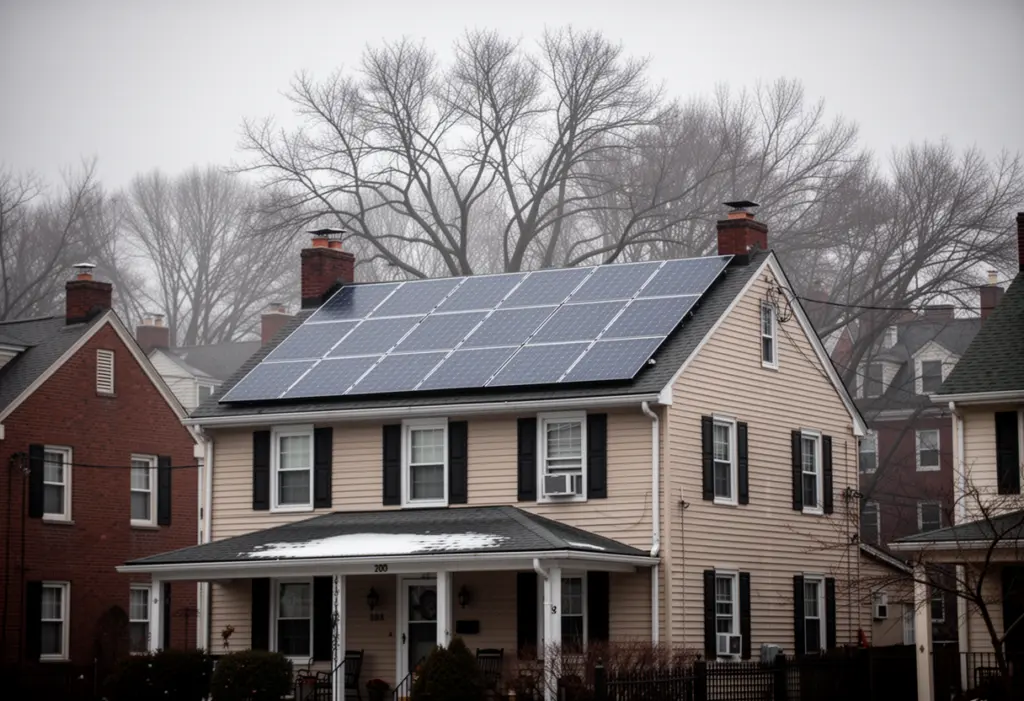
Start by separating what died from what did not. When a solar installer closes, the promises the company made in its own name generally go with it, while the promises made by other parties carry on unchanged. Your panels keep producing, your utility relationship is unaffected, and your loan payments are due on the same day as always.
What dies with the company
The workmanship warranty is the main loss. That is the installer’s own promise covering the quality of the labour, roof penetrations and flashing, and it is worth exactly as much as the entity behind it. A parent company or a successor may honour it, and sometimes another local firm buys the service book, but neither is guaranteed and neither should be assumed from a message on a website.
Any labour allowance the installer offered on top of the manufacturer warranties usually goes the same way, and so does free annual servicing, monitoring support, and any production guarantee written in the company’s name.
What survives
- Manufacturer warranties on the panels and the inverter. These are promises from the manufacturer, not from the installer, and they continue. You will need the model numbers, serial numbers, the invoice and evidence of the installation date to make a claim, which is why the paperwork matters more now than it did last month.
- Your interconnection agreement. That is between you and your utility. Net metering is unaffected by who installed the system: under Phase One net metering, exports are credited at the full retail rate and the arrangement holds for 20 years from interconnection.
- Incentives already applied or claimed. A NY-Sun reduction already taken off the price is spent. A state credit already claimed on Form IT-255 stands on its own facts, and any unused portion carries forward for up to five years.
- Your property tax exemption, where you have one under RPTL 487, which attaches to the property rather than to the contractor.
The loan does not care
This is the uncomfortable one. If you financed the system, the loan is with a lender rather than with the installer, and the lender’s failure to deliver is not the same as the installer’s. Stopping payments because the work is incomplete is a credit problem you will still have long after the solar problem is resolved. If the system was never finished, put the dispute in writing to the lender immediately, keep every document, and take advice on your position rather than acting on a forum post.
A lease or a power purchase agreement usually sits with a finance company rather than with the installer at all, and in that case the entity responsible for maintenance may be entirely unaffected. Read the agreement to find out who owes you service.
What to gather today, whether or not your installer is healthy
Everything below is easy to obtain while a company exists and difficult afterwards. Assemble it now and put it with the deed.
- Final invoice, contract, and any change orders.
- Panel and inverter make, model and serial numbers, plus the datasheets.
- The as-built electrical drawing and the string or module layout.
- The permit and the signed electrical inspection certificate.
- The interconnection agreement and the permission to operate letter from your utility.
- Monitoring account login, registered in your name rather than the installer’s.
- Every warranty document, including the manufacturer registration confirmations.
Finding someone to service it
Approach service firms with the equipment list in hand, because the first question will be what is on the roof. Expect to pay for diagnosis, and expect a company that did not install the system to be careful about assuming responsibility for someone else’s roof penetrations. Ask specifically whether they will register as your maintenance provider with the monitoring platform, since some portals need a transfer of the installer account.
If a manufacturer claim is approved, the module or inverter arrives free and the labour to fit it does not. That is normal, and it is the reason a service relationship is worth establishing before something fails rather than after.
The charge that keeps arriving
Your Customer Benefit Contribution is billed on the DC size of the array regardless of who installed it, whether it is producing, or whether anyone is answering the phone. On a 7 kW system in RG&E territory the 2026 residential rate of $1.31 per kW-month is $9.17 a month, about $110 a year. That is a further argument for getting a dead inverter diagnosed quickly: an array that is offline still costs you the capacity charge while earning nothing.
The incentive paperwork you now own
With the installer gone, you are the keeper of the record. The one worth checking properly is RPTL 487, the 15-year real property tax exemption on the added value of the system. It applies where the municipality, the county and the school district have each not opted out, which is three separate checks rather than one, and the exemption is not limited to outside New York City. In New York City, Buffalo, Rochester, Syracuse and Yonkers the school districts are fiscally dependent and levy no separate property tax, so there is no separate school check in those five. Section 487 also requires construction before 1 January 2030.
Confirm with your assessor that the exemption is actually on your assessment roll, because an application your installer said it filed is not the same as an exemption granted. And note that the 30 percent federal residential credit is gone for expenditures made after 31 December 2025, so there is nothing federal left to chase for a 2026 installation. Programmes change; verify with your assessor, NYSERDA and the Department of Taxation and Finance directly.
Frequently Asked Questions
Do my panel warranties survive if the installer closes?
Yes. Panel and inverter warranties are manufacturer promises and continue. You will need model and serial numbers, the invoice and evidence of the installation date to claim, so gather that paperwork now.
What actually stops working?
The installer's own workmanship warranty, any labour allowance on top of the manufacturer cover, free servicing, monitoring support and any production guarantee written in the company's name.
Can I stop paying the solar loan?
No. The loan is with a lender, not the installer, and missed payments become a credit problem that outlasts the solar one. If the system was never completed, dispute it in writing with the lender and take advice on your position.
Does my net metering change?
No. The interconnection agreement is between you and your utility. Under Phase One net metering exports are credited at the full retail rate and the arrangement holds for 20 years from interconnection, regardless of who installed the system.
This article is general information, not tax, legal or financial advice. Incentive amounts, eligibility rules and deadlines change and depend on your utility, your tax situation and your property. Confirm current terms with NYSERDA, your utility and a qualified tax professional before making a decision.
NY Solar Incentives
Independent New York solar research. We summarise NYSERDA, NY-Sun and federal programme rules from published sources and state plainly when a figure is an estimate. We are not a government agency and do not sell equipment.
Run the arithmetic on your own system
Check the dated program table and your arrangement before counting an incentive. Standard residential NY-Sun blocks are closed; Long Island Affordable Solar has a conditional income-verification route. The NY credit depends on qualified costs and tax liability, while the NYC abatement reduces future property-tax bills. The estimator keeps those timings separate.