Solar for a New York Winery: What Changes
A winery's electric load looks nothing like a typical small business, and that changes how a solar system should be sized, sited and financed.
On this page 10 sections
- 01The load profile is the first thing that is different
- 02Tasting rooms swing the numbers the other way
- 03Vineyard land is not empty land
- 04Ownership structure affects more than the paperwork
- 05An outage costs more here than it does for most businesses
- 06Interconnection at this scale is not the residential process
- 07Seasonal revenue changes the financing conversation too
- 08What to ask an installer
- 09The bottom line
- 10Frequently Asked Questions
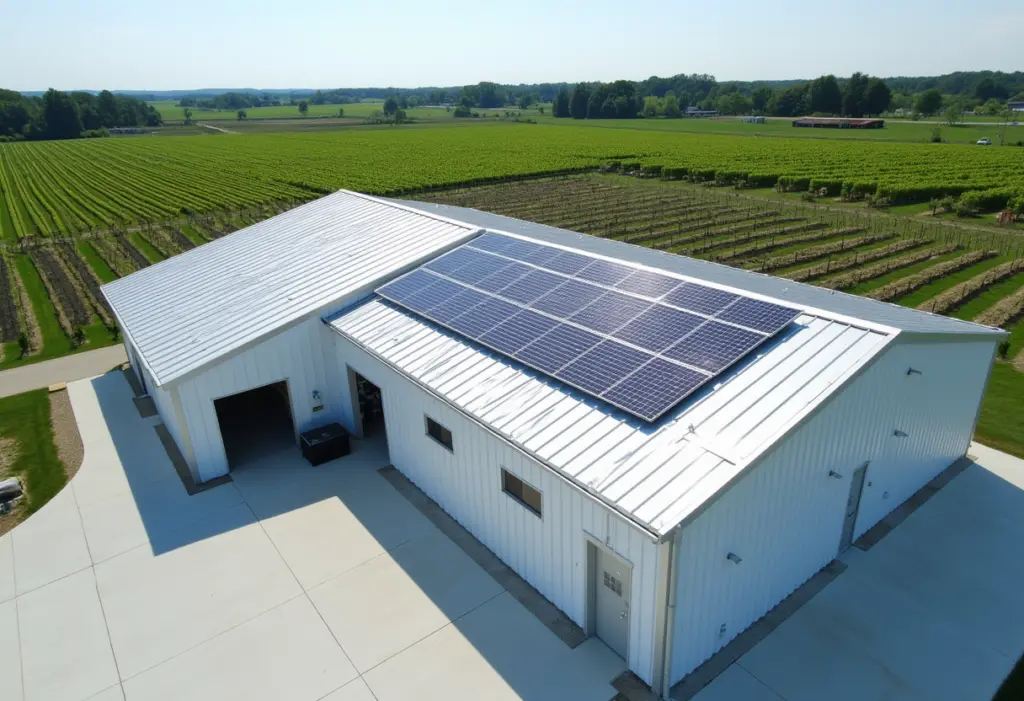
A winery does not use electricity the way a typical small business does, and that difference is exactly what a generic commercial solar quote misses. Refrigeration and temperature-controlled fermentation run around the clock, tasting-room traffic swings hard by season, and the land itself is planted with vines rather than sitting empty as a parking lot. All three change what a solar system should actually look like for a New York winery, separate from anything specific to any one utility or county.
The load profile is the first thing that is different
Most commercial solar guidance assumes a building that draws power mainly during daylight business hours, which lines up well with when panels produce. A winery’s biggest loads often do not follow that pattern. Cold stabilization, barrel room climate control, and tank refrigeration can run continuously, day and night, regardless of whether the tasting room is open. That means a system sized only against daytime production, with no thought given to overnight and off-season draw, will overstate how much of the winery’s actual bill solar can offset.
This is not a reason to avoid solar. It is a reason to size around actual metered load data from the production side of the operation specifically, not just the winery’s total annual usage, and to have an honest conversation with an installer about whether battery storage changes the payback math enough to matter for a load this steady. This site covers battery storage economics and sizing in detail elsewhere; the point here is narrower — a winery is one of the few small-business cases where that conversation is worth having early rather than treating storage as an afterthought.
Tasting rooms swing the numbers the other way
The hospitality side of a winery — the tasting room, an event barn, a retail shop — behaves almost the opposite of the production side. Traffic concentrates on weekends and in tourist season, especially across the Finger Lakes, meaning usage in that part of the building can spike hard on exactly the sunny weekend days when solar production is highest. If the tasting room and the production facility share one utility meter, that seasonal mismatch gets averaged out in the billing data in a way that can make sizing harder to get right from a single year of bills. If they are metered separately, each side should be sized against its own usage pattern rather than one blended average.
Vineyard land is not empty land
A ground-mount array is often the first idea for a rural property with acreage, but vineyard acreage is working land, not open field. Every row given over to solar is a row not producing fruit, and vine spacing, trellis height, and equipment access for tractors and harvesters all constrain where an array can realistically sit without disrupting the operation it is meant to support. Roof-mount on the production building or an equipment barn is worth pricing first for exactly this reason — it does not compete with the vines for space.
Where a ground-mount is still the right call, siting on marginal or non-planted acreage, rather than pulling productive rows out of service, is usually the better trade. An installer who proposes a layout without asking what the land is actually used for is pricing a generic rural lot, not a working vineyard.
Ownership structure affects more than the paperwork
Many New York wineries operate as an LLC, a farm corporation, or another business entity rather than as a sole proprietor, and that structure is what determines which federal and state tax mechanisms actually apply — commercial depreciation treatment, the federal investment tax credit as it applies to a business rather than a homeowner, and prevailing wage requirements if the project size triggers them. This site already covers each of those mechanics in depth for a New York business in general; a winery does not get a separate track, so read that coverage directly for the current rules rather than relying on a summary here, and confirm specifics with a tax professional who has actually worked with a business under your entity type before signing anything.
If any part of the winery’s land is enrolled in an agricultural district or receiving an agricultural assessment, mention that up front too. It can affect what counts as agricultural use for property tax purposes and is worth raising with your assessor before construction, not after.
An outage costs more here than it does for most businesses
A retail shop that loses power for a few hours mostly loses a few hours of sales. A winery mid-fermentation, or holding barrels and tanks at a specific temperature, can lose product if refrigeration or climate control drops out for an extended stretch — the risk is not just inconvenience, it is spoiled inventory that took a season or longer to produce. That is a different calculation than the one most small businesses run when they weigh whether battery backup is worth the added cost.
This does not mean every winery needs a battery system sized to run the whole production facility indefinitely. It means the backup conversation should start from which specific loads cannot tolerate an outage — the tanks and barrel room, not necessarily the tasting room or the office — and size backup capacity against that critical list rather than against the building’s total draw. An installer who has not asked which equipment is temperature-critical before proposing a backup system is guessing at the one number that actually matters here.
Interconnection at this scale is not the residential process
A system sized to meaningfully offset a working winery’s production load is almost always larger than a typical home installation, and utilities generally route commercial-scale interconnection applications through a review process distinct from the standard residential one. That does not mean it is slower by default, but it does mean the paperwork, the studies that can be triggered, and the compensation structure your exported power falls under are worth confirming directly with your utility and installer rather than assuming the residential process this site describes elsewhere applies unchanged at commercial scale.
Seasonal revenue changes the financing conversation too
A winery’s cash flow often does not arrive evenly across the year the way it does for a business with steady monthly sales. Harvest, bottling, and peak tasting-room season can concentrate a large share of annual revenue into a few months, with leaner stretches the rest of the year. That pattern is worth raising directly with whoever is financing the system, because a standard even-monthly loan payment schedule assumes a cash flow shape that a seasonal agricultural business frequently does not have. Ask specifically whether payment timing can be structured around your actual revenue calendar rather than accepting a generic commercial loan template built for a steadier business.
What to ask an installer
| Question | Why it matters for a winery specifically |
|---|---|
| Have you sized a system against 24-hour refrigeration or fermentation loads before? | A quote built on daytime-only assumptions will overstate the offset |
| Are the production building and tasting room separately metered? | Determines whether sizing should be done per-meter or against blended usage |
| Have you designed around working vineyard acreage before? | Vine spacing and equipment access constrain ground-mount siting |
| What commercial interconnection studies might this system trigger? | Commercial-scale review differs from the standard residential path |
| Have you worked with wineries under an LLC or farm corporation structure? | Affects which depreciation and credit mechanics actually apply |
The bottom line
None of this makes solar a poor fit for a New York winery — if anything, a continuous refrigeration load is exactly the kind of steady baseline demand that makes the economics work harder in solar’s favor once it is sized correctly. The mistake to avoid is letting an installer treat a winery like a generic small business, size it off one blended electric bill, and place the array wherever is easiest rather than where it actually belongs on a working property.
Frequently Asked Questions
Does a winery need a bigger solar system than a typical small business?
Not necessarily bigger, but differently sized. A winery's refrigeration and fermentation loads often run continuously rather than only during business hours, so sizing should be based on the production facility's actual round-the-clock usage rather than a single blended annual bill.
Can solar panels be installed over working vineyard rows?
Physically it is possible, but vine spacing, trellis height and equipment access for tractors and harvesters make this impractical in most cases. Roof-mount on a production building or an equipment barn, or ground-mount on non-planted acreage, is usually the more workable option.
Are there winery-specific solar incentives in New York?
No. A winery follows the same state and federal commercial solar incentive framework available to any New York business of its entity type, not a separate wine-industry program. Which mechanisms apply depends on how the winery is structured (LLC, farm corporation, etc.), which is worth confirming with a tax professional.
Should a winery's tasting room and production facility be sized separately for solar?
If they are separately metered, yes. Their usage patterns differ enough — continuous production loads versus weekend and seasonal tasting-room traffic — that sizing each against its own actual usage gives a more accurate system than sizing off one combined bill.
NY Solar Incentives
Independent New York solar research. We summarise NYSERDA, NY-Sun and federal programme rules from published sources and state plainly when a figure is an estimate. We are not a government agency and do not sell equipment.
Run the arithmetic on your own system
Check the dated program table and your arrangement before counting an incentive. Standard residential NY-Sun blocks are closed; Long Island Affordable Solar has a conditional income-verification route. The NY credit depends on qualified costs and tax liability, while the NYC abatement reduces future property-tax bills. The estimator keeps those timings separate.