NYSEG Battery Storage: Backup Power or Bad Investment?
In NYSEG country a battery answers a rural outage problem. It very rarely answers a financial one, and 2026 made that gap wider.
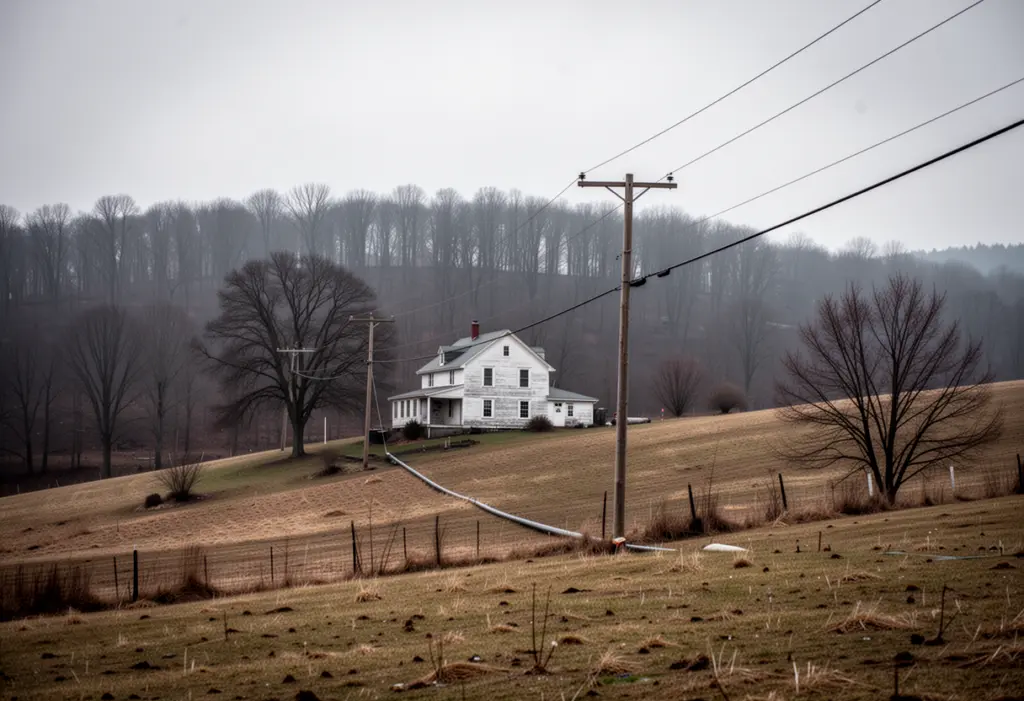
If you are looking at storage in NYSEG territory, be clear which problem you are solving. A battery solves outages. It very seldom solves economics, because New York’s Phase One net metering already credits your exports at the full retail rate and holds that structure for 20 years from interconnection. When the grid pays you retail for everything you send it, there is little arbitrage left for a battery to capture.
The rural outage case, which is the real one
Much of NYSEG’s footprint is Southern Tier and Finger Lakes country: long overhead spurs, wooded ridges, and houses at the end of a lane. Two consequences follow, and neither shows up in a statewide model.
The first is restoration order. A fault affecting a handful of houses on a rural tap is not restored on the same schedule as one affecting a village centre, so the outage a state average describes is not the outage you experience.
The second is water. A house on a drilled well has no water at all without power — no taps, no toilets, no livestock trough. That is often the single circuit that justifies storage in this part of the state, and it is worth naming explicitly rather than buying capacity in the abstract. Add the boiler or furnace controls, since an oil or propane heating system that cannot run its own controls and circulator is an unheated house in January regardless of how much fuel is in the tank.
Battery against generator, honestly
Most rural New York homes considering this already have a generator or have priced one. The comparison is genuinely close and it is not a slam dunk in either direction.
- A standby generator runs indefinitely while fuel lasts, which matters in a multi-day ice storm. A battery runs until it is empty, and refills only from the sun or the grid.
- A battery is silent, starts instantly, requires no fuel deliveries and no seasonal exercising, and does not need someone at home to start it.
- A battery paired with solar can recharge during a daytime outage — but only if the system is configured to keep producing when the grid is down. Ask that question directly, because not every installation does.
- A generator has an annual service cost and a fuel cost. A battery has a warranty term and a degradation curve. Ask for both in writing rather than comparing a purchase price against a purchase price.
What changed in 2026
The 30% federal residential credit was terminated for expenditures made after 31 December 2025, with an expenditure treated as made when the original installation is completed. That credit reached qualified home battery storage as well as panels, and a residential buyer in 2026 receives none of it. If you are looking at a proposal drafted before the change, or a comparison someone did last year, the storage line in it is out of date by roughly a third of its cost. Redo the comparison with today’s numbers before deciding anything.
On the state side, the 25% credit capped at $5,000 on Form IT-255 applies to qualified solar energy system equipment at your principal residence. Which components of a paired solar and storage installation belong in that figure is a question for the tax preparer looking at your actual invoice — ask for the invoice to itemise, because a single lump sum makes the question unanswerable later.
Sizing questions that stop disappointment
- Which circuits are backed up, listed individually? Well pump, furnace or boiler controls, refrigeration, one lighting circuit, a specific outlet — not a vague description of the house.
- What is excluded during backup? Electric range, central air conditioning, an EV charger and electric water heating are the usual exclusions.
- How many hours does the quoted capacity actually deliver against those specific circuits?
- Where is the unit being mounted, and what is the temperature range there in January? An unheated barn or an uninsulated garage is not the same environment as a basement.
- Does your service panel have room for the battery, the solar breaker and anything else planned? A 100 amp service in older housing frequently does not, and that upgrade is its own job.
The monthly charge does not shrink
NYSEG’s Customer Benefit Contribution is billed on the DC size of net metered solar at $1.19 per kW-month for 2026 residential customers. A 9 kW array is $10.71 a month, about $128.52 a year, and adding storage does not reduce it. How a paired system is treated on your particular account is worth confirming with NYSEG directly rather than inferring from a solar fact sheet. And if the name on your bill is a village electric department — Bath, Groton, Watkins Glen and Penn Yan among others run their own — you are outside Public Service Commission jurisdiction entirely, and the terms for storage and export are whatever that utility sets.
Where the 2026 support actually sits
On the solar side, consumer support in New York is the state sales tax exemption on residential solar equipment, the IT-255 credit, and RPTL 487‘s 15-year property tax exemption, available for construction before 1 January 2030 and only where all three of your municipality, county and school district have declined to opt out. NY-Sun and its Affordable Solar incentive are not on that list: as of September 2026 NYSERDA has no open NY-Sun block for homes in any utility territory; check NYSERDA’s NY-Sun dashboard for a new one. Storage does have its own incentive: outside Long Island, NYSERDA’s Residential Energy Storage Program offers incentives for a new, permanent home battery of 25 kilowatt-hours or less installed by one of its participating contractors, so ask whether your installer participates and what the incentive comes to on your quote. Because that balance is revisited from year to year, confirm the current position with NYSERDA and with NYSEG before you sign rather than trusting any document written before this tax year.
Frequently Asked Questions
Will a battery lower my NYSEG bill?
Rarely by much. Phase One net metering already credits exports at the full retail rate and holds for 20 years from interconnection, so there is little price difference for a battery to capture. Judge it on outage hours avoided instead.
Is a battery better than a generator in rural NYSEG territory?
It depends on outage length. A generator runs as long as fuel lasts, which matters in a multi-day ice storm, while a battery is silent, instant and needs no fuel deliveries. Compare warranty and degradation against service and fuel costs, not purchase price against purchase price.
Does the federal credit still cover home batteries?
No. Section 25D ended for expenditures made after 31 December 2025, treating an expenditure as made when the original installation is completed. Any storage comparison drafted before that change is out of date.
Can the battery recharge from my panels during an outage?
Only if the system is configured to keep producing while the grid is down. Not every installation is, so ask for the answer specifically and in writing before you sign.
This article is general information, not tax, legal or financial advice. Incentive amounts, eligibility rules and deadlines change and depend on your utility, your tax situation and your property. Confirm current terms with NYSERDA, your utility and a qualified tax professional before making a decision.
NY Solar Incentives
Independent New York solar research. We summarise NYSERDA, NY-Sun and federal programme rules from published sources and state plainly when a figure is an estimate. We are not a government agency and do not sell equipment.
Run the arithmetic on your own system
Check the dated program table and your arrangement before counting an incentive. Standard residential NY-Sun blocks are closed; Long Island Affordable Solar has a conditional income-verification route. The NY credit depends on qualified costs and tax liability, while the NYC abatement reduces future property-tax bills. The estimator keeps those timings separate.