Your Orange & Rockland Solar Bill, Line by Line
A solar bill from Orange and Rockland does not go to zero, and three of the lines on it have nothing to do with how much electricity you used.
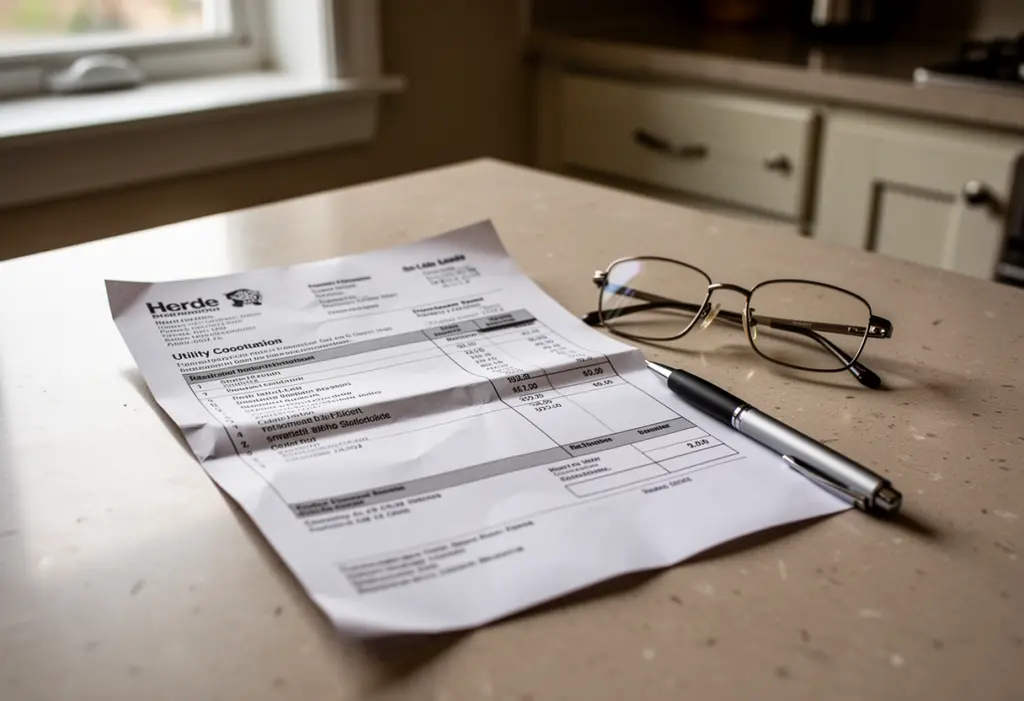
The first Orange & Rockland bill after the array is switched on surprises almost everyone, because it is not zero and because it contains a charge that did not exist before. Neither of those is a mistake. Here is what each part is.
The charge that is not consumption
Three lines are independent of how much electricity you used:
- The basic service charge. A fixed monthly amount for being connected. Solar does not remove it. You are still a customer, still metered, and still using the grid as a battery.
- The Customer Benefit Contribution. Billed on the DC size of your array, not on production. For 2026 the O&R residential rate is $1.00 per kW-month. A 9.6 kW system is $9.60 a month, $115.20 across the year, in a snowy February exactly as in a bright June. It applies to systems interconnected on or after 1 January 2022 and it is recalculated annually, so do not read this year’s figure as fixed.
- Taxes and surcharges, which ride on the amounts above.
A useful two-minute check: the DC size implied by the capacity charge should match the DC size on your contract and on your interconnection application. Divide the charge by 1.00 and see whether the number is the array you bought. If it is not, ask why before a second bill arrives.
The net metering credit
Under Phase One net metering, electricity you export is credited at the full retail rate, and the arrangement holds for 20 years from interconnection. On the bill this shows up as kilowatt-hours delivered to you, kilowatt-hours you sent back, and a running balance.
The balance is the part people misread. Credits build up through the long days and are drawn down through the short ones. A bill in July showing a large credit balance is not money you are owed in cash; it is the buffer that pays for January. Judge the system on twelve months, not on one.
Delivery and supply are two different halves
Your bill separates delivery, which is O&R moving the electricity, from supply, which is the commodity itself and which you may buy from an energy services company instead. Solar affects both, but they appear separately, and a supply contract signed with a third party does not disappear because you installed panels. If you have an ESCO agreement, read what it says about net metered accounts.
Why the bill can still look high
Four honest explanations, in the order they turn out to be true:
- Consumption grew. An electric vehicle, a heat pump, a new hot tub or a family member working from home lands on the same meter. Solar sized to last year’s bills does not cover this year’s house.
- The array is smaller than the one that was modelled. Compare the DC size actually installed with the size in the proposal.
- Seasonality. A winter bill with the credit balance exhausted is normal, not a defect.
- Shading that the annual estimate averaged away. Under the Palisades ridge or a mature tree canopy, the months that matter are the ones a single annual percentage hides.
What to do with a bill you do not believe
Take the monitoring figure for the same period and compare it with the export shown on the bill. They will not match exactly — monitoring measures at the inverter, the meter measures at the boundary, and everything your house consumed in between never left the property. But they should be in the same territory. A persistent, large gap is worth a call, with both numbers in front of you.
And confirm the name on the bill is Orange & Rockland at all. Central Hudson serves other parts of Orange and Sullivan counties, and a village or city electric department customer is outside Public Service Commission rules entirely — no state net metering rules, no capacity charge, and terms you have to ask the municipal utility for directly.
2026 incentives and what the bill will never show
Nothing on the monthly statement reflects the incentives. New York’s 25 percent credit capped at $5,000 is claimed by you on Form IT-255 against your state liability, and only for equipment installed and used at your principal residence in New York. Unused credit carries forward up to five years. If the system went in while a NY-Sun block was open, that incentive was applied by your contractor before you ever saw a price; as of September 2026 NYSERDA has no open NY-Sun block for homes in any utility territory, so a system bought now gets none (check NYSERDA’s NY-Sun dashboard for a new one). RPTL 487 shows up on the property tax bill, not the electric one, and only where the municipality, the county and the school district have each not opted out, on a system constructed before 1 January 2030. The federal 30 percent residential credit ended for expenditures made after 31 December 2025 and will never appear either. Programmes change; check the current position with NYSERDA and the state tax department rather than with a salesperson.
Frequently Asked Questions
Why is my Orange & Rockland bill not zero after solar?
Because the basic service charge, the Customer Benefit Contribution and the taxes riding on them are independent of what you produced. The capacity charge in particular is billed on your array's DC size, not on output.
How much is the CBC on an Orange & Rockland bill?
For 2026 the residential rate is $1.00 per kW-month of DC system size. A 9.6 kW array pays $9.60 a month, or $115.20 a year, and the rate is recalculated annually.
What does the credit balance on my bill mean?
It is banked net metering credit from months when you exported more than you used. It is the buffer that pays for winter, not cash owed to you. Judge the system across twelve months.
My monitoring app and my bill disagree. Which is right?
They measure different things. Monitoring reads production at the inverter; the meter reads what crossed the boundary after your house consumed some of it. They should be in the same range, but a large persistent gap is worth a call.
This article is general information, not tax, legal or financial advice. Incentive amounts, eligibility rules and deadlines change and depend on your utility, your tax situation and your property. Confirm current terms with NYSERDA, your utility and a qualified tax professional before making a decision.
NY Solar Incentives
Independent New York solar research. We summarise NYSERDA, NY-Sun and federal programme rules from published sources and state plainly when a figure is an estimate. We are not a government agency and do not sell equipment.
Run the arithmetic on your own system
Check the dated program table and your arrangement before counting an incentive. Standard residential NY-Sun blocks are closed; Long Island Affordable Solar has a conditional income-verification route. The NY credit depends on qualified costs and tax liability, while the NYC abatement reduces future property-tax bills. The estimator keeps those timings separate.