Heat Pump Settings in Extreme Cold: What to Change, What Not To
A heat pump does not stop working when the weather turns severe - it gets weaker along a curve the manufacturer publishes in advance. What usually fails in a cold snap is not the equipment but the settings, and most often the settings somebody changed because of the cold snap.
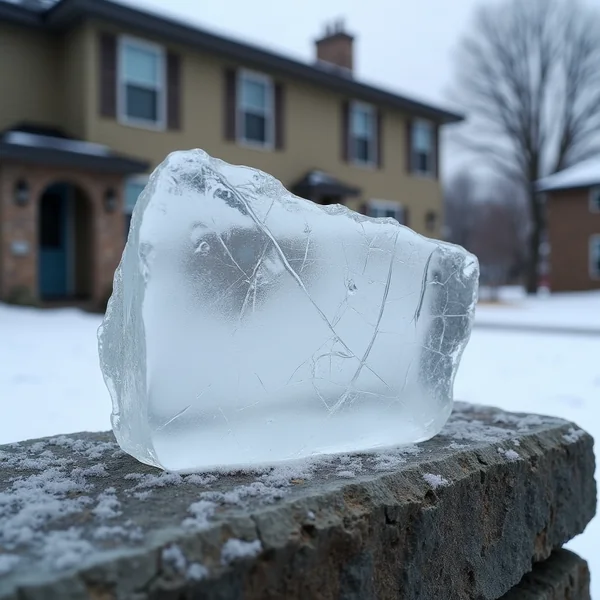
Why the thermostat habits that save money in mild weather cost the most during a severe New York cold snap, and which cold-weather interventions make a heat pump worse instead of better.
A heat pump does not switch off when the weather turns severe. It gets
weaker, and it gets weaker in a way that is written down in advance. Capacity
falls as the outdoor air cools, because there is less heat in that air to
collect, and the efficiency of collecting it falls alongside. Every
cold-climate unit sold for a New York winter is published with a table showing
exactly how much output it still makes at low outdoor temperatures.
What goes wrong in a genuine cold snap is usually not the machine. It is the
settings, and more often than not the settings someone changed
because of the cold snap.
Heat Pump Settings in Extreme Cold: What Actually Helps
The useful mental model is a pair of lines. One is the heat your house
loses, which climbs steadily as it gets colder outside. The other is the heat
your equipment can make, which falls as it gets colder outside. Somewhere the
two cross. Above that crossing the heat pump carries the house on its own;
below it, something has to make up the difference, whether that is electric
resistance elements, a furnace, or a boiler.
That crossing point is a property of your house and your equipment together,
not a number you can look up for heat pumps in general. It is what a
heat loss calculation is for is for, and it is why two identical outdoor units in the same
village can behave completely differently in the same week.
Deep setbacks are the setting that backfires
The habit most likely to cost you during a severe stretch is the one that
saves money the rest of the year: dropping the thermostat several degrees
overnight and pulling it back up in the morning.
Recovering from a large setback asks the system for more output than steady
operation does, at exactly the hour when the equipment has the least to give.
Most controls resolve that gap the only way they can, by bringing on
supplemental heat until the room catches up. On an all-electric system that
means resistance elements, which produce heat at a fraction of the efficiency
the compressor manages even in poor conditions. The overnight saving is
handed back, with interest, during the recovery ramp.
A flatter setpoint through the coldest days keeps the compressor running
long and slow, which is where a modulating unit does its best work. This is
not an argument against setbacks in general – a mild shoulder-season night is
a different situation entirely. It is an argument for leaving the schedule
flat while the cold is at its worst.
Emergency heat is not the cold-weather setting
Two thermostat concepts get confused constantly, and the confusion is
expensive.
- Auxiliary heat is automatic. The compressor keeps
running and carries most of the load; the supplement tops up the shortfall.
This is the system working as designed. - Emergency heat locks the compressor out entirely and
heats the house with the backup alone. It exists for the day the outdoor unit
is broken, buried, or frozen into a block of ice.
Switching to emergency heat because the forecast looks bad means paying for
resistance heat while a functioning compressor sits idle beside the house. If
someone put the thermostat into emergency heat during a storm, the thing worth
checking after the storm is whether anyone put it back.
Defrost is normal, and it looks like a fault
In damp cold the outdoor coil collects frost, and the unit periodically
reverses to melt it off. During that interval the outdoor unit steams, the
indoor air may feel cool, and the backup heat often runs briefly to cover the
gap. People watching their system closely for the first time in a cold week
reliably read this as a breakdown. It is the opposite: a unit that never
defrosted in a New York January would be the one with a problem.
The defrost cycle explainer covers the cycle in detail.
What to leave alone
Several popular cold-snap interventions actively make things worse.
- Do not wrap or box in the outdoor unit. It needs to move
a large volume of air across the coil and it needs meltwater to drain away
from its base. Covering it starves both. - Do not raise the setpoint far above where you want it. A
thermostat is a target, not a throttle. On many systems a wide gap between
room temperature and setpoint is precisely the condition that calls in
auxiliary heat. - Do not add refrigerant as a seasonal ritual. A sealed
system does not consume refrigerant; if it is short, it is leaking, and the
amount it should hold depends on the equipment and the
length of the line set. Guessing at it in January makes diagnosis harder later. - Think twice about the constant-fan setting. Continuous
circulation can even out room-to-room differences, but it also means the
blower is moving air through the coil during defrost, when that air is not
warm. Whether it helps is specific to the house.
Snow, ice and the ground around the unit
The physical checks matter more than anything on the thermostat. Keep the
coil faces and the fan discharge clear, keep drifting snow away from the base,
and make sure meltwater has somewhere to go other than a puddle that refreezes
under the machine. Ice is best removed with warm water and patience rather
than a screwdriver: the fins bend if you look at them hard, and a flattened
section of coil is a permanent capacity loss.
If a unit sits low and the site drifts, mounting it higher on a stand is the
durable fix, and it is a job for a mild week rather than a cold one.
Houses that still have a furnace or a boiler
If the old heating plant is still in place, the setting that decides your
comfort and your running cost during a cold snap is not on the thermostat face
at all – it is the temperature at which control passes from one appliance to
the other, and how that handover was configured at commissioning.
Using a gas furnace as backup covers how that arrangement works, and
keeping the boiler as backup covers the hydronic version.
The heat pump and furnace cost comparison sets out the operating-cost comparison the handover is really
deciding between.
What each change actually does
| Change made during a cold snap | What people expect | What tends to happen |
|---|---|---|
| Deep overnight setback | Lower overnight running cost | Morning recovery pulls in supplemental heat at the coldest hour |
| Switch to emergency heat | More heat, faster | Compressor locked out; the house runs on backup alone |
| Raise setpoint several degrees | The house warms faster | Same output, wider gap, and on many controls an auxiliary call |
| Cover the outdoor unit | Protecting it from the weather | Restricted airflow, blocked drainage, worse defrost |
| Leave the schedule flat | Wasting heat on an empty house | Long, low compressor runs and fewer supplemental calls |
| Clear snow from around the base | Tidiness | Restores the airflow and drainage the defrost cycle assumes |
How to check this for your own system
Four things are worth knowing before the next severe stretch, and none of
them require a technician standing in your driveway.
- The low-temperature capacity table for your exact model,
in the manufacturer’s submittal or installation manual. It tells you what the
unit still makes when it is genuinely cold, rather than at the mild rating
condition quoted in marketing. - The balance point your installer designed to, and what
they expected to run below it. If nobody can answer that, the design was a
rule of thumb. - Your thermostat’s runtime history. Many models log
auxiliary or backup hours separately. A large auxiliary total on a mild day is
a symptom worth chasing. - The air side. A system that cannot move enough air will
behave in cold weather like one that is undersized, and the causes are
usually mundane – a loaded filter, a closed damper, or an
undersized return duct.
The New York part of the problem
New York is not one climate. Design temperatures on Long Island and in the
lower Hudson Valley are far milder than those in the Adirondacks or the
Tug Hill, and a system specified sensibly for one would be specified
differently for the other. Equipment intended for the colder half of the state
is generally selected from the cold-climate product listings, which carry
tested performance at low outdoor temperatures rather than at the mild rating
condition alone.
That is also the practical reason to ask a contractor how they size for your
county rather than for the state. Reading the NYSERDA contractor list explains how those listings are
organised and what the entries actually certify.
None of this makes a severe week comfortable by itself. But most of the
stories that end with “the heat pump could not keep up” turn out, on
inspection, to be stories about a setback schedule, a locked-out compressor, a
snow-packed coil, or a balance point nobody ever wrote down.
Frequently Asked Questions
Should I turn my heat pump down at night in very cold weather?
During the coldest stretches, a flat setpoint is generally the safer choice. The saving from an overnight setback comes from the hours the house sits cooler, but the cost comes from the recovery: pulling the temperature back up asks for more output than steady operation at precisely the hour when the equipment has the least capacity, and most controls close that gap by calling in supplemental heat. In mild weather the arithmetic is different and a setback usually still pays.
What is the difference between auxiliary heat and emergency heat?
Auxiliary heat is automatic and additive – the compressor keeps running and carries most of the load while the backup makes up the shortfall. Emergency heat locks the compressor out completely and heats the house with the backup alone. Emergency heat is meant for the situation where the outdoor unit cannot run at all: it is a fault setting, not a cold-weather setting, and leaving it on through a cold week means paying for backup heat while a working compressor sits idle.
Is it worth covering the outdoor unit during a storm?
No. The outdoor unit is built to sit in weather, and it needs two things a cover takes away: a large volume of air moving freely across the coil, and a path for meltwater to leave the base during and after each defrost cycle. Wrapping it, boxing it in or piling snow against it degrades both. What does help is keeping the coil faces and the fan discharge clear and making sure meltwater is not refreezing into a pool under the machine.
My heat pump is steaming and blowing cool air. Is it broken?
That is almost always a defrost cycle. In damp cold the outdoor coil collects frost, and the system periodically reverses to melt it, which produces visible steam outdoors and a few minutes of cooler supply air indoors. Backup heat often runs briefly to cover that interval. A unit that never defrosted through a New York winter would be the one worth worrying about.
How cold is too cold for a heat pump in New York?
There is no single temperature, which is why the question is hard to answer from the outside. What matters is where your house’s heat loss crosses your equipment’s output at a given outdoor temperature – the balance point. Below it, something supplements; above it, the heat pump carries the house alone. That crossing depends on the building, not the brand, and it moves substantially between Long Island and the North Country. Ask the installer what balance point they designed to, and look up the low-temperature capacity table for your model.
Does raising the thermostat several degrees heat the house faster?
Not on its own. The compressor makes whatever output the outdoor conditions allow, and setting a higher target does not change that. What a wide gap between room temperature and setpoint often does change is the control logic: on many thermostats it is exactly the condition that brings auxiliary heat on, so the room may warm faster while running on the more expensive half of the system.
Why does my system use more backup heat than my neighbour’s?
Two identical outdoor units in the same village can behave very differently, because backup use is decided by the pairing of equipment output with building heat loss. A leakier envelope, a different balance point, a longer or badly routed line set, a restricted return, or a different aux-lockout configuration in the thermostat will each shift it. Comparing runtime histories is more informative than comparing model numbers.
NY Solar Incentives
Independent New York solar research. We summarise NYSERDA, NY-Sun and federal programme rules from published sources and state plainly when a figure is an estimate. We are not a government agency and do not sell equipment.
Run the arithmetic on your own system
Check the dated program table and your arrangement before counting an incentive. Standard residential NY-Sun blocks are closed; Long Island Affordable Solar has a conditional income-verification route. The NY credit depends on qualified costs and tax liability, while the NYC abatement reduces future property-tax bills. The estimator keeps those timings separate.