Can a Home Battery Charge From the Grid in New York?
Technically yes. Financially, under flat-rate net metering, almost never — with one genuinely useful exception.
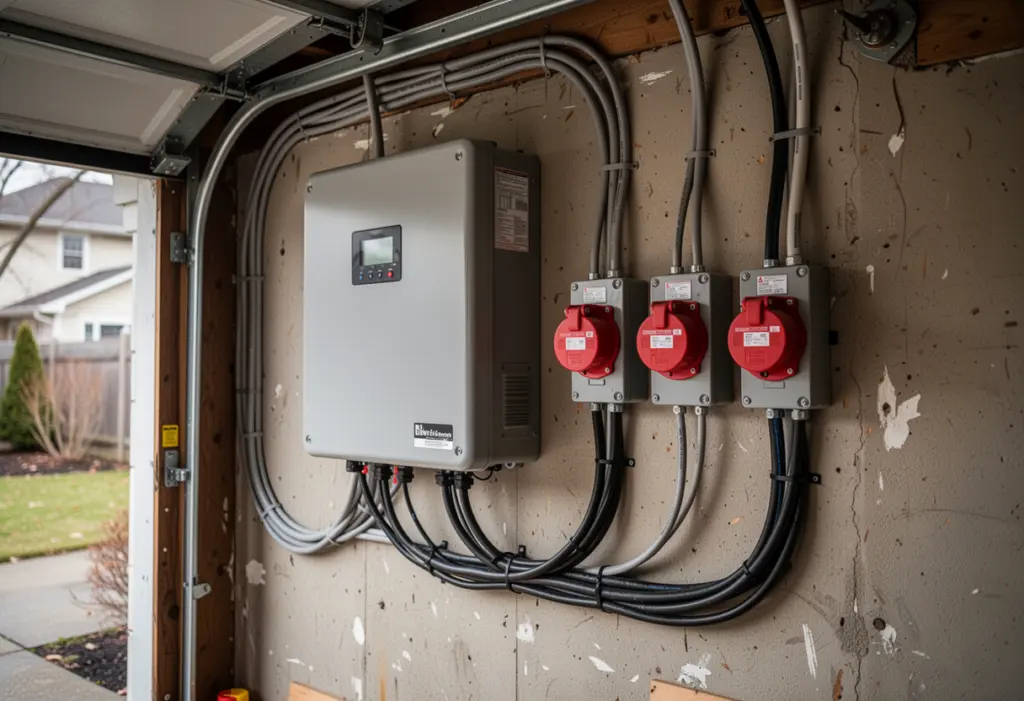
Most home batteries sold in New York can charge from the grid as well as from solar. Whether they should is a different question, and under this state’s net metering the answer is usually no — with one exception that is genuinely worth setting up.
Why grid charging usually earns nothing here
Grid charging pays in states with time-of-use pricing: fill the battery on cheap overnight power, discharge it during the expensive evening peak, pocket the spread.
New York’s Phase One net metering removes that logic for most residential customers. Exports are credited at the full retail rate and imports are billed at that same rate. There is no spread to arbitrage. Charging the battery from the grid at retail and discharging it later to avoid buying at retail loses you the round-trip conversion losses and gains nothing.
So if a salesperson presents grid charging as a saving on a standard residential account, ask them to show the arithmetic.
The exception that matters: storm pre-charging
This is the real use, and it is worth knowing about before the forecast rather than during it.
Most storage systems can be told to charge to full from the grid ahead of expected bad weather — some do it automatically from a weather feed, some need you to set it manually. Going into a storm with a full battery rather than whatever the afternoon’s sun happened to leave is a materially better position, particularly in winter when solar contributes little and outages are most likely.
Two things follow. Find out whether your system has the feature and how it is triggered. And if it is manual, learn where the setting is before you need it, not while the wind is picking up.
The other cases
- Commissioning. A battery installed in winter may need a grid charge simply to reach a working state.
- Battery health. Some chemistries prefer not to sit at a low state of charge for long periods; a system may top up from the grid for its own protection. That is the manufacturer’s business, not a saving.
- Battery without solar. A house with storage and no array charges entirely from the grid, and the whole value is outage protection rather than economics.
- A time-varying rate. If you are on one, everything above changes — grid charging is then a genuine arbitrage and worth modelling properly.
What the utility side looks like
Charging from the grid is ordinary consumption: it appears on your bill as electricity bought, like anything else. It does not affect your net-metering arrangement, and it does not change your Customer Benefit Contribution, which is calculated on the DC size of the PV system and not on battery capacity or behaviour.
What can matter is how the system is configured to interact with export. Ask your installer to confirm, in writing, that the configuration is what your utility approved on the interconnection application — a battery set up to export in a way the application did not describe is a problem worth avoiding.
What to ask before buying
- Can this system charge from the grid, and how is it triggered — automatically, on a schedule, from a weather feed, or manually?
- Is storm pre-charge available, and will you show me where the setting is?
- What does the system do by default if I never touch it?
- Does the configuration match what was filed on the interconnection application?
- Am I on a flat rate or a time-varying one? The answer changes whether any of this saves money.
Frequently Asked Questions
Can a home battery charge from the grid in New York?
Most can. Whether it should is different: under Phase One net metering exports and imports are both at the full retail rate, so there is no spread to arbitrage and grid charging loses the round-trip conversion losses for nothing.
When is grid charging actually useful?
Before a storm. Going into an outage with a full battery rather than whatever the afternoon's sun left is materially better, especially in winter. Find out whether your system pre-charges automatically or manually, and learn where the setting is before you need it.
Does grid charging affect my net metering or CBC?
No. Charging from the grid is ordinary consumption on your bill, and the Customer Benefit Contribution is calculated on the DC size of the PV system rather than on battery capacity or behaviour.
Would grid charging save money on a time-of-use rate?
Potentially yes — a time-varying rate creates the price spread that flat-rate net metering does not. If you are on one, it is worth having the arbitrage modelled properly rather than assumed.
This article is general information, not tax, legal or financial advice. Incentive amounts, eligibility rules and deadlines change and depend on your utility, your tax situation and your property. Confirm current terms with NYSERDA, your utility and a qualified tax professional before making a decision.
NY Solar Incentives
Independent New York solar research. We summarise NYSERDA, NY-Sun and federal programme rules from published sources and state plainly when a figure is an estimate. We are not a government agency and do not sell equipment.
Run the arithmetic on your own system
Check the dated program table and your arrangement before counting an incentive. Standard residential NY-Sun blocks are closed; Long Island Affordable Solar has a conditional income-verification route. The NY credit depends on qualified costs and tax liability, while the NYC abatement reduces future property-tax bills. The estimator keeps those timings separate.