Permission to Operate on Con Edison: The Wait
The panels are up, the inverter is on the wall, and the system is off. Here is what permission to operate involves on Con Edison, and where the time goes.
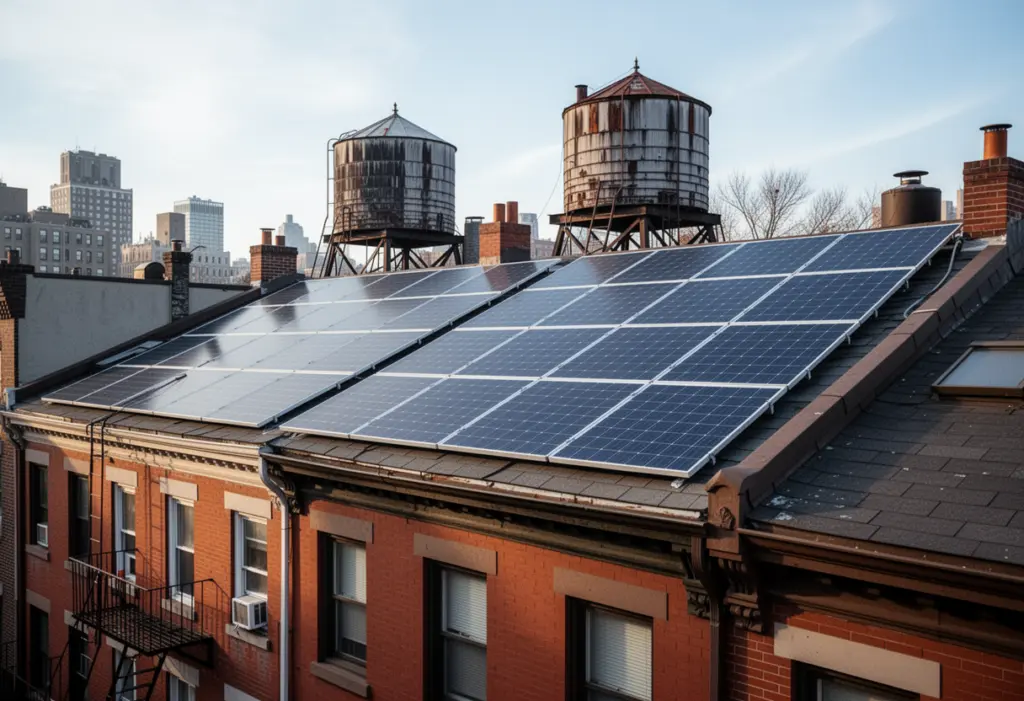
The most disorienting phase of a solar project is the one after it looks finished. The panels are mounted, the inverter is on the wall, the crew has gone — and the system is switched off, sometimes for weeks. This is the permission-to-operate gap.
What permission to operate is
Permission to operate, universally shortened to PTO, is Con Edison’s formal authorisation to energise your system and export onto its network. Until it is granted, the system stays off.
Two earlier approvals get mistaken for it constantly. Approval to install is the utility’s green light to build — it comes before installation and says nothing about running. The electrical inspection certificate is the municipality’s confirmation that the work is safe and to code. PTO is the third and final one, and only Con Edison can issue it.
The sequence, and where the time goes
- Installation completed. Days.
- Electrical inspection. In New York City this is filed through the Department of Buildings; in Westchester it is your city, town or village. Scheduling depends on the authority, and a correction means a re-inspection.
- Certificate filed with Con Edison. The step most often quietly delayed — it depends on your installer’s paperwork discipline rather than on anyone’s queue.
- Meter exchange or reprogramming. Con Edison needs a meter that measures both directions. Sometimes a field visit; sometimes done remotely.
- PTO issued. The system may be switched on.
Ask your installer for a current range for the whole chain in your area rather than a single confident number. Anyone who has done several installs in your borough or town this quarter knows what it is actually running at, and the honest answer varies through the year.
Why you must not simply switch it on
The inverter is capable of running. The answer is still no. Exporting without authorisation puts the interconnection agreement and the net-metering arrangement at risk, and it means power flowing onto a network whose operator has not recorded that your system exists — a genuine safety issue for anyone working on the line.
Production during this period is simply lost. Worth knowing before you agree to an installation date in October rather than March.
What actually causes long waits
- Paperwork that was never filed. By a distance the most common cause. The inspection passed, the certificate exists, and nobody sent it.
- A failed inspection. Corrections and re-inspection add a cycle.
- Access to the meter. In a multi-family building, a meter room that needs a super or a board to open is a real scheduling problem.
- An address or account mismatch. If the name or service address on the application does not match Con Edison’s records exactly, the file can sit unresolved with nobody flagging it. In a building with multiple accounts this is more common than it sounds.
- Seasonal volume. Autumn is the peak.
What you can reasonably do
- Ask the installer for the inspection certificate and the date it was submitted. That single request resolves a surprising share of stalled projects, because it surfaces the ones where nothing was sent.
- Confirm your Con Edison account number and service address exactly as the utility holds them.
- Keep a written record of each milestone date. If the contract ties a payment to completion, you want the dates.
The question to ask before signing
What is the current, typical time from installation to PTO for your recent projects in this borough or town — and is any part of my payment schedule tied to PTO rather than to mechanical completion?
The second half is the useful half. A contract that treats the job as finished when the panels are bolted down gives the installer no reason to chase the paperwork. One with a milestone at PTO gives them one.
Frequently Asked Questions
How long does Con Edison take to grant permission to operate?
It varies by area and season, with autumn the busiest period. Ask your installer for a current range based on their recent projects in your borough or town rather than accepting a single confident figure.
Can I use my solar system before permission to operate?
No. Exporting without authorisation risks your interconnection agreement and net-metering arrangement, and puts power onto a network whose operator has no record of your system. Production during the wait is lost.
What is the most common cause of a long PTO delay?
An inspection certificate that passed and was never submitted to the utility. Asking your installer for a copy and the date it was filed resolves a surprising proportion of stalled projects.
Does living in an apartment building complicate permission to operate?
It can. Meter access frequently needs a super or a board to arrange, and where a building has multiple accounts an address or account mismatch on the application can leave the file sitting unresolved with nobody flagging it.
This article is general information, not tax, legal or financial advice. Incentive amounts, eligibility rules and deadlines change and depend on your utility, your tax situation and your property. Confirm current terms with NYSERDA, your utility and a qualified tax professional before making a decision.
NY Solar Incentives
Independent New York solar research. We summarise NYSERDA, NY-Sun and federal programme rules from published sources and state plainly when a figure is an estimate. We are not a government agency and do not sell equipment.
Run the arithmetic on your own system
Check the dated program table and your arrangement before counting an incentive. Standard residential NY-Sun blocks are closed; Long Island Affordable Solar has a conditional income-verification route. The NY credit depends on qualified costs and tax liability, while the NYC abatement reduces future property-tax bills. The estimator keeps those timings separate.