How Long Do Solar Panels Last in New York?
The panels are rarely the first thing to go. Here is what actually has a lifespan on a New York solar system, and which component decides when you spend again.
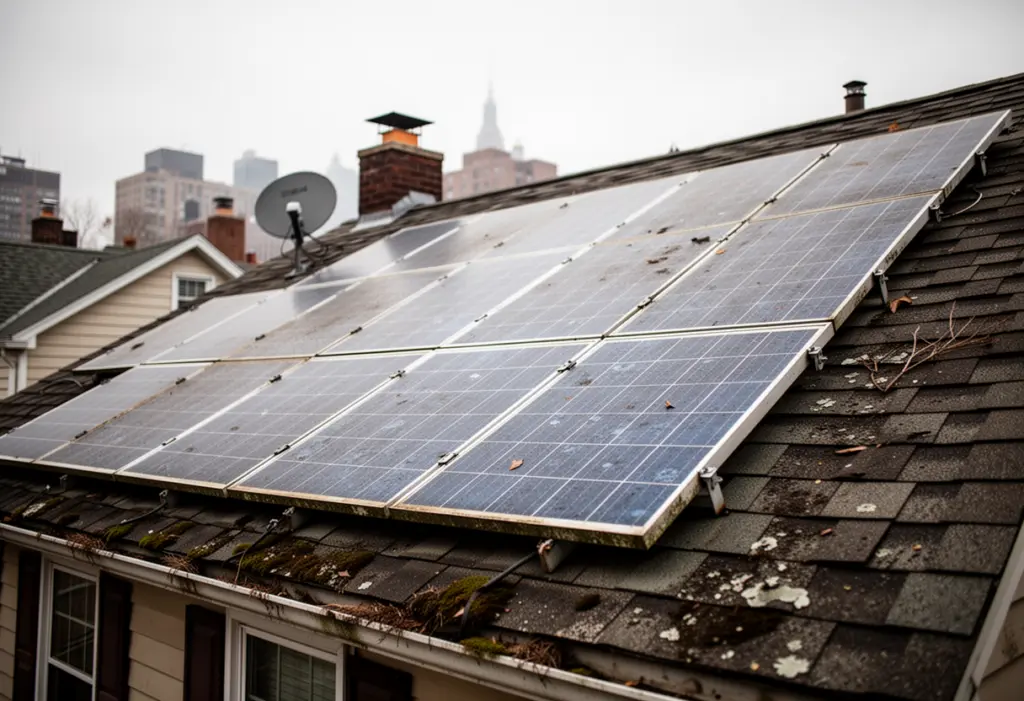
The question people ask is how long the panels last. The more useful question is which part of the system reaches the end of its life first — because it is almost never the panels, and the answer changes what you should be asking at the quoting stage.
The panels themselves
Crystalline silicon modules do not fail so much as fade. They lose a small percentage of output in the first year and then a smaller percentage annually thereafter, which is why manufacturers express the warranty as a production guarantee: a promise that the module will still produce at least some stated percentage of its rated output after a given number of years.
Read that guarantee rather than the headline number. It tells you what the manufacturer expects, and it is the only figure in the whole conversation that anyone has committed to in writing.
New York weather does not shorten this materially. Modules sold here are tested to substantial hail impact and snow load ratings. Cold is, if anything, mildly helpful — panels are more efficient at lower temperatures, which is one of the quiet reasons New York solar performs better than people expect on a bright winter day.
The inverter is the component with a real lifespan
This is the answer to the question most people did not ask. A central string inverter has a service life meaningfully shorter than the panels, and replacement at least once during the system’s life is a normal expectation rather than a failure. Microinverter warranties are typically longer, which is part of what the higher price buys.
Two things to establish before signing:
- The inverter warranty term, in writing.
- Whether it covers labour as well as the unit. This is where warranties differ most, and labour is a large share of the cost of a replacement.
The roof decides everything
An asphalt shingle roof in New York has a life measured in a couple of decades. The panels on it last longer. That mismatch is the single most consequential planning fact in residential solar.
If you install on a roof with under roughly ten years of shingle life left, you are scheduling a future job: remove the array, re-roof, reinstall the array. That costs considerably more than doing the roof while it is bare, and it is entirely avoidable by sequencing correctly.
Get an independent opinion on roof condition from someone who is not selling you panels. It is the highest-value second opinion in the process.
What actually goes wrong in New York, in order
- Inverter failure or fault. The most common service call by a wide margin.
- Wiring and connector problems. Rooftop connectors live through twenty years of freeze-thaw. Workmanship at installation is what determines whether this becomes an issue.
- Wildlife. Squirrels and birds nest in the gap between panels and roof, and they chew wiring. Critter guard mesh at installation is cheap; the repair afterwards is not.
- Damage from snow clearing. Overwhelmingly homeowner-caused, generally excluded from both warranty and insurance, and entirely preventable by leaving the snow to slide off on its own.
- Roof penetration leaks. Rare with good workmanship, expensive when they happen, and squarely a workmanship warranty question.
- Module failure. Genuinely uncommon.
Notice how much of that list is workmanship rather than product. That is the argument for weighing an installer’s workmanship warranty at least as heavily as the brand of panel — and for asking how long that installer has been trading, because a twenty-five year workmanship warranty is worth exactly as much as the company behind it.
What maintenance a New York system actually needs
Very little, and less than most people expect.
- Cleaning: ordinarily unnecessary. New York gets enough rain to keep panels adequately clean, and the pitch helps. Heavy pollen, a nearby dirt road or a dusty agricultural setting are the exceptions.
- Snow: ordinarily leave it. Panels shed faster than the roof around them.
- Monitoring: ordinarily the only real task. Watch the annual total against the estimate. A gradual decline or one panel behaving differently is a signal worth acting on.
- Vegetation: ordinarily the one thing that changes over time. A sapling that was irrelevant when the system was designed is a shading problem in twelve years.
The planning summary
Assume the panels outlast the roof. Assume the inverter needs replacing at least once. Assume the workmanship warranty matters more than the panel brand. Plan the roof first. Do those four things and the system’s lifespan stops being a source of unpleasant surprises.
Frequently Asked Questions
How long do solar panels last in New York?
Modules degrade slowly rather than failing, and manufacturers back them with production guarantees stating a minimum percentage of rated output after a given number of years. New York weather does not shorten this materially — cold weather slightly improves efficiency.
What fails first on a solar system?
The inverter, by a wide margin. A central string inverter is generally expected to need replacing at least once during the system's life. Ask for the warranty term in writing and check whether it covers labour as well as the unit.
Do solar panels need cleaning in New York?
Usually not. Rainfall and roof pitch keep them adequately clean. The exceptions are heavy pollen, a nearby dirt road, or a dusty agricultural setting.
Will solar panels outlast my roof?
Almost certainly. An asphalt shingle roof has a shorter life than the panels on it, which is why a roof with under roughly ten years left should be replaced before installation rather than after.
This article is general information, not tax, legal or financial advice. Incentive amounts, eligibility rules and deadlines change and depend on your utility, your tax situation and your property. Confirm current terms with NYSERDA, your utility and a qualified tax professional before making a decision.
NY Solar Incentives
Independent New York solar research. We summarise NYSERDA, NY-Sun and federal programme rules from published sources and state plainly when a figure is an estimate. We are not a government agency and do not sell equipment.
Run the arithmetic on your own system
Check the dated program table and your arrangement before counting an incentive. Standard residential NY-Sun blocks are closed; Long Island Affordable Solar has a conditional income-verification route. The NY credit depends on qualified costs and tax liability, while the NYC abatement reduces future property-tax bills. The estimator keeps those timings separate.