Homeowners Insurance With Solar Panels in New York
Solar insurance coverage depends on your policy, equipment ownership, exclusions and endorsements. Get written confirmation from the insurer; coverage is different from a manufacturer warranty.
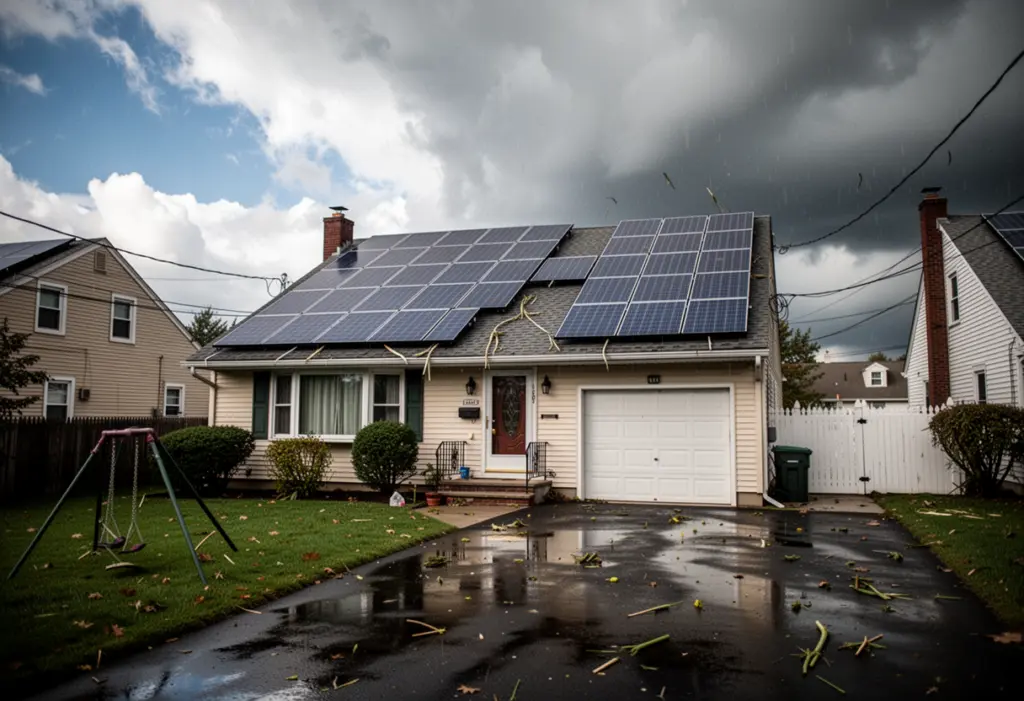
Solar panels sit on the most weather-exposed part of your house, in a state with real hail, real ice and real wind. The insurance question is worth ten minutes before installation and is almost never asked until after.
The first question: who owns them
Everything follows from this.
If you own the system — bought outright or financed with a loan — it is normally treated as part of the dwelling structure, in the same way a permanently attached deck or a new roof is. It is covered under the dwelling portion of a standard homeowners policy, subject to that policy’s perils and limits.
If you lease the system or take power under a PPA, the panels are somebody else’s property on your roof. The lease or PPA agreement will say who insures them, and in most such agreements the provider carries insurance on the equipment. Your policy is then concerned with your building — the roof they are attached to — rather than with the panels themselves.
That difference matters when something goes wrong, because it determines who you call.
Tell your insurer. Actually tell them.
Two reasons, and the second one is the one people regret.
Your dwelling coverage limit may be too low. A homeowners policy insures the cost to rebuild. Adding a substantial permanently attached system increases that cost. If the limit was set before the panels existed, it may now be short by the value of the array — and in a total loss, that shortfall is yours.
Non-disclosure creates an argument you do not want to have. A material change to the property that the insurer was never told about is exactly the sort of thing that gets raised at claim time. Keep the insurer’s written response and any required endorsement; a phone call alone does not guarantee coverage.
What to ask your insurer
- Is the system covered under the dwelling limit, and does that limit need increasing?
- Which perils apply? Hail and wind matter in New York, and some policies carry a separate, higher deductible for wind or hail damage.
- Is ice and snow load damage covered, and are there conditions attached?
- Does the policy cover damage caused by the system — for example a roof leak traced to a mounting penetration?
- Is there any coverage for lost production while the system is out of service? Usually there is not, and it is better to know that in advance.
- For a ground-mounted array, is it covered as a structure, and is the limit adequate?
The gap most people miss
Insurance and warranties answer different questions. Check whether a loss falls within the homeowners policy’s covered causes, conditions, limits and exclusions. Separately check whether a component defect, performance shortfall or installation problem meets the written product or workmanship warranty. A warranty is not a blanket substitute for insurance, and the label “workmanship problem” alone does not decide an insurance claim.
So a New York solar owner is relying on three separate documents:
- The module and inverter warranties from the manufacturers: check the stated defect and performance terms, duration, exclusions and claim process.
- The installer’s workmanship warranty, defining the covered installation work and term: ask specifically about roof penetrations, leak investigation, removal/reinstallation and exclusions.
- The homeowners policy, defining insured property, covered causes of loss, exclusions, limits and deductibles; ask how these apply to the array and roof.
Assuming one document resolves every problem can leave a coverage gap. Ask, at the quoting stage, exactly what the workmanship warranty covers and for how long, particularly for roof leaks.
Winter damage, specifically
Do not assume that damage from snow, ice, water intrusion or snow removal has the same coverage in every policy. Ask your insurer which causes of loss, exclusions, deductibles and endorsements apply to your array and roof, and get the answer in writing. Product and workmanship warranties are separate contracts; check their actual maintenance instructions and exclusions. This guide has no dataset establishing the most common cause of New York winter solar damage.
Avoid scraping panels with rakes or shovels or climbing onto the roof around electrical equipment. If snow or ice creates a safety concern, follow the equipment manufacturer’s instructions and ask a qualified roofer or solar service provider to assess it. Do not assume natural shedding resolves every hazard.
If you are buying a house with solar
Establish, before closing, whether the system is owned, leased or under a PPA, and get the paperwork. A leased system means the insurance question is answered by an agreement you have not read yet, and it may also mean a UCC filing against the property. Both belong in the conversation with your attorney rather than after the fact.
Frequently Asked Questions
Do solar panels increase homeowners insurance in New York?
Not necessarily the premium, but they can increase the amount of dwelling coverage you need, because the cost to rebuild the house now includes the system. Tell your insurer so the limit can be reviewed.
Who insures leased solar panels?
In most lease and PPA agreements the provider carries insurance on the equipment, because it remains their property. Your own policy is concerned with the building the panels are attached to. Read the agreement to confirm.
Does homeowners insurance cover a roof leak caused by solar panels?
It depends on the cause of the leak and the actual policy and warranty terms. Ask the insurer about resulting water/roof damage, exclusions and deductibles, and ask the installer whether the workmanship warranty covers the penetration, investigation and repair. An installation defect and resulting damage can raise different questions; neither label guarantees payment.
Is snow damage to solar panels covered?
Coverage depends on the cause of damage and your policy’s conditions, exclusions, limits and deductibles. Ask specifically about snow/ice loading, water intrusion and damage during snow removal. Check the separate manufacturer and installer warranty terms too. There is no universal insurance-and-warranty exclusion established here. Follow equipment instructions and use qualified help for a safety concern.
Insurance sources checked October 7, 2026: New York DFS explains policy differences, limits and deductibles; NAIC explains homeowners coverage and exclusions. These general references do not establish coverage under a particular solar policy or warranty.
This article is general information, not tax, legal or financial advice. Incentive amounts, eligibility rules and deadlines change and depend on your utility, your tax situation and your property. Confirm current terms with NYSERDA, your utility and a qualified tax professional before making a decision.
NY Solar Incentives
Independent New York solar research. We summarise NYSERDA, NY-Sun and federal programme rules from published sources and state plainly when a figure is an estimate. We are not a government agency and do not sell equipment.
Run the arithmetic on your own system
Check the dated program table and your arrangement before counting an incentive. Standard residential NY-Sun blocks are closed; Long Island Affordable Solar has a conditional income-verification route. The NY credit depends on qualified costs and tax liability, while the NYC abatement reduces future property-tax bills. The estimator keeps those timings separate.