Can an HOA Stop You Installing Solar in New York?
New York restricts HOAs from unreasonably blocking solar. The protection has a significant gap: it generally does not help condominium owners, and here is why.
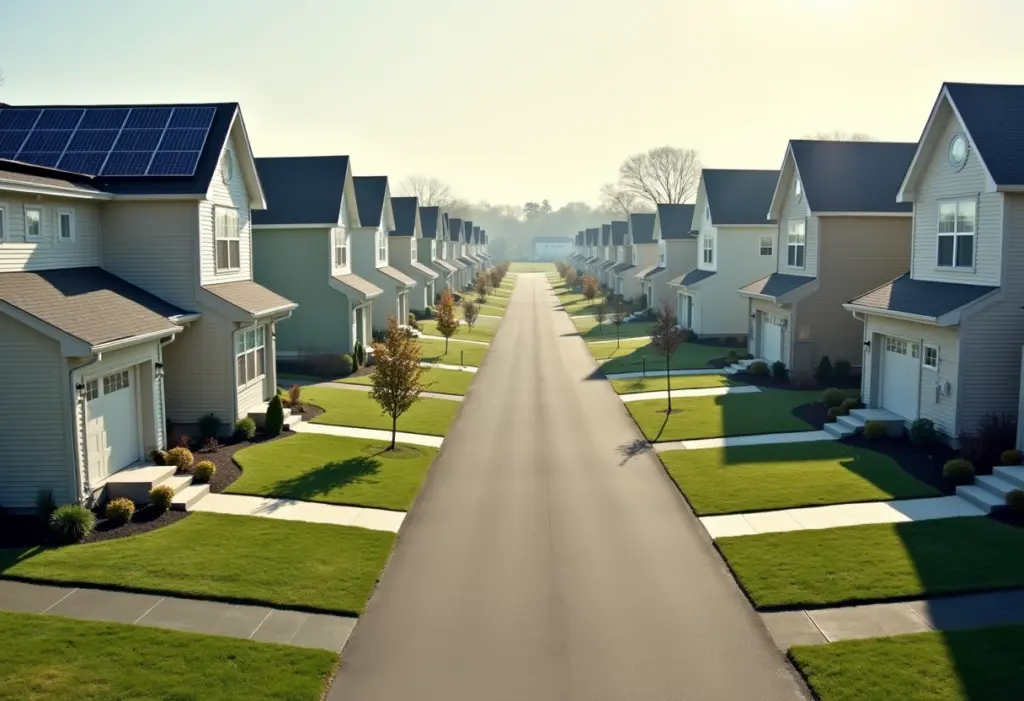
A homeowners association telling you that solar panels are not permitted is one of the more common obstacles in New York’s suburban market. Frequently the association is wrong about what it can enforce — and occasionally it is entirely right, depending on something most homeowners have never thought about: who owns the roof.
What the law says
New York law provides that a homeowners association may not adopt or enforce rules or regulations that would effectively prohibit, or impose unreasonable limitations on, the installation or use of a solar power system on property owned by the homeowner.
Two words in that sentence carry the weight.
“Unreasonable” means an association is not stripped of all authority. It can still have an architectural review process, and it can still impose conditions — on placement, on colour of conduit, on screening of equipment — provided those conditions do not amount to a prohibition or a de facto one. A rule that permits solar only where it is invisible from the street, on a house whose only unshaded plane faces the street, is the kind of condition that gets argued about.
“On property owned by the homeowner” is the limit, and it is a real one. An association may prohibit installation on property owned by the association itself, or on property owned in common by the members. If the roof is not yours, the protection does not reach it.
The condominium gap
This is the part that catches people, and it is worth being precise about.
New York regulates condominiums under the Condominium Act and homeowners associations under a different framework. The solar protection is written for homeowners associations. In a typical condominium the roof is a common element owned collectively rather than by the individual unit owner — so the protection that stops an HOA from blocking solar on your roof generally does not apply, because it is not your roof.
In practice that means a condominium owner who wants solar is negotiating with the board rather than asserting a right. That is a very different conversation, and it usually needs a board resolution, sometimes a licence agreement for the roof space, and often a decision about who owns the equipment and who receives the credits.
The distinction is not always obvious from the name of your community. “Homeowners association” and “condominium association” describe legal structures, not architecture. Read your own declaration and by-laws, or ask your attorney, before assuming which one you are in.
What to do when an association says no
- Establish which structure you are in. HOA or condominium, and who owns the roof surface. Your declaration says so.
- Get the refusal in writing, with the specific rule it relies on. A verbal “the board doesn’t allow that” is not a decision you can respond to.
- Read the rule against the standard. Is it a condition, or is it a prohibition wearing the clothes of a condition?
- Submit a complete application. Many refusals are really deferrals caused by an incomplete submission — no drawings, no equipment specification, no placement plan.
- Get advice before litigating. This is a legal question about your specific documents, and this page is not legal advice.
Practical points that avoid the fight entirely
- Apply early, with a good package. Boards refuse vague requests and approve specific ones. Drawings, module and inverter specifications, a placement plan and a roof plan go a long way.
- Address the aesthetic objection directly. All-black modules, black frames, concealed conduit and flush mounting remove most of what an architectural committee actually objects to.
- Ask what has been approved before. A precedent inside the community is more persuasive than a statute.
- Know your timeline. Association review happens before the municipal permit and long before the utility is involved. Build it into the schedule rather than discovering it.
If the roof is genuinely not available
For condominium owners, and for anyone whose association objection turns out to be well-founded, community solar is the alternative that needs no roof at all. You subscribe to a share of an off-site array and receive credits on your utility bill. There is no installation, no board approval, and community solar subscribers are exempt from the Customer Benefit Contribution that rooftop owners pay.
One thing that has changed
If your association process has delayed a project from 2025 into 2026, the arithmetic has changed underneath you. The 30% federal residential credit under section 25D was terminated for expenditures made after 31 December 2025, and the statute treats an expenditure as made when the original installation is completed. A project that a board held up past the end of 2025 is a project that lost that credit. New York’s own 25% credit, capped at $5,000 on Form IT-255, remains available.
Frequently Asked Questions
Can a homeowners association ban solar panels in New York?
Not on property the homeowner owns. New York law prevents an HOA from adopting or enforcing rules that effectively prohibit, or unreasonably limit, the installation or use of a solar power system on a homeowner's own property. It may still restrict installation on association-owned or commonly owned property.
Does the New York solar HOA law protect condominium owners?
Generally not. In a typical condominium the roof is a common element owned collectively rather than by the unit owner, so the protection — which applies to property owned by the homeowner — does not reach it. A condominium owner is negotiating with the board rather than asserting a right.
Can an HOA control where solar panels go on my roof?
It can impose conditions, including through architectural review, as long as they do not amount to an effective prohibition or an unreasonable limitation. A condition that permits solar only where the roof cannot generate is the kind that gets disputed.
What are my options if the board will not approve solar?
Get the refusal in writing with the rule it relies on, check whether you are in an HOA or a condominium, and take legal advice on your own declaration. Community solar is an alternative that needs no roof and no board approval at all.
This article is general information, not tax, legal or financial advice. Incentive amounts, eligibility rules and deadlines change and depend on your utility, your tax situation and your property. Confirm current terms with NYSERDA, your utility and a qualified tax professional before making a decision.
NY Solar Incentives
Independent New York solar research. We summarise NYSERDA, NY-Sun and federal programme rules from published sources and state plainly when a figure is an estimate. We are not a government agency and do not sell equipment.
Run the arithmetic on your own system
Check the dated program table and your arrangement before counting an incentive. Standard residential NY-Sun blocks are closed; Long Island Affordable Solar has a conditional income-verification route. The NY credit depends on qualified costs and tax liability, while the NYC abatement reduces future property-tax bills. The estimator keeps those timings separate.