The New York State Unified Solar Permit, Explained
New York standardised solar permitting to cut cost and delay. Here is what the Unified Solar Permit covers, its 25 kW limit, and why New York City sits outside it.
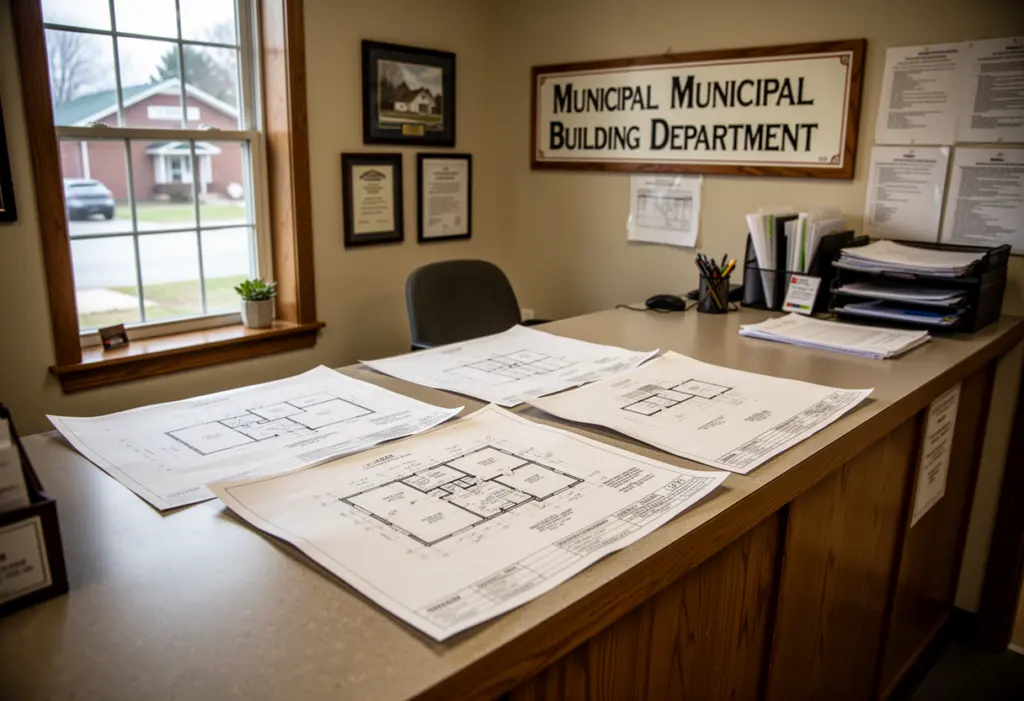
Before the Unified Solar Permit existed, every municipality in New York had its own solar application, its own drawing requirements and its own fee schedule. An installer working across four towns filed four different packages for the same system. That cost time, and the time was billed to homeowners.
What it is
NYSERDA and the New York State Department of State developed the New York State Unified Solar Permit as a single standardised application for residential and small commercial solar, adopted voluntarily by municipalities. A town that adopts it uses the same form, the same required documents and the same review structure as every other adopting town.
Two facts define its scope:
- It applies to small systems — 25 kW DC and under. Anything larger falls outside it.
- It applies outside New York City. The five boroughs use the Department of Buildings’ own process instead.
How widely it is used
More than 300 authorities having jurisdiction across New York have adopted it. That is a substantial share of the municipalities where rooftop solar actually happens, though it is emphatically not all of them — adoption is a local decision and there are towns that have never taken it up.
NYSERDA maintains the official list of communities that have adopted it. That list, rather than an installer’s assurance, is the thing to check for your own address.
Why towns adopt it
The Unified Solar Permit was promoted through NYSERDA’s Clean Energy Communities programme, which is why adoption spread across the state so quickly.
That programme has since closed to new submissions, and its list of qualifying actions has been restructured — the Unified Solar Permit is no longer one of them. The permit itself is unaffected: the towns that adopted it still use it, and more may adopt it. If yours has not, that is still worth raising at a town board meeting — just do not expect a grant to be attached to it.
What it does and does not change
It standardises the application. One form, one document list, a predictable review.
It does not remove the inspection. Your system is still inspected by the municipality’s electrical inspector, and a correction still means a re-inspection.
It does not touch the utility. The interconnection application, the meter exchange and permission to operate are the utility’s process and are entirely separate. A town on the Unified Solar Permit and a town without it face the same utility timeline.
It does not override other local review. Historic district review, architectural review boards and homeowners association approval sit outside it and still apply where they apply.
New York City is a different world
The Unified Solar Permit does not apply in the five boroughs. New York City solar filings go through the Department of Buildings, with its own requirements, its own professional certification rules and its own queue. It is a more involved process, and it is one reason NYC installations carry higher soft costs than the same system upstate.
What this means for you
- Ask which authority is issuing your permit and whether it uses the Unified Solar Permit. It is a fair question and any installer working in your area knows.
- Do not assume it means fast. A standardised form still sits in a queue, and queues vary by season — autumn is the busiest period across most of the state.
- Check the 25 kW limit if you are sizing a large system, a farm installation or a small commercial array. Above that, you are on a different track.
- Budget for the steps it does not cover — historic review, HOA approval, and the utility’s own timeline.
Where the delay actually is
In most New York projects the permit is not the longest step. The sequence is application, permit, installation, electrical inspection, certificate to the utility, meter exchange, permission to operate — and the two places projects reliably stall are the inspection-to-certificate handoff, which depends on your installer’s paperwork discipline, and the final utility step.
A standardised permit removes one source of friction. It does not remove the others, and an installer who presents it as though it does is overselling it.
Frequently Asked Questions
What is the New York State Unified Solar Permit?
A standardised solar permit application developed by NYSERDA and the Department of State, adopted voluntarily by municipalities so that residential and small commercial solar uses the same form and document list across participating towns.
How many New York municipalities accept the Unified Solar Permit?
Over 300 authorities having jurisdiction have adopted it. Adoption is a local decision, so check NYSERDA's official list for your own address rather than assuming.
What size systems does the Unified Solar Permit cover?
Systems of 25 kW DC and under. Larger residential, farm or commercial arrays fall outside it and follow the municipality's ordinary process.
Does the Unified Solar Permit apply in New York City?
No. The five boroughs use the Department of Buildings' own filing process, which has its own requirements and queue and is a significant part of why NYC soft costs are higher.
Why do towns adopt the Unified Solar Permit?
It was promoted through NYSERDA’s Clean Energy Communities programme, which is why adoption spread quickly across the state. That programme has since closed to new submissions and its list of qualifying actions has been restructured, so the permit is no longer tied to a grant.
This article is general information, not tax, legal or financial advice. Incentive amounts, eligibility rules and deadlines change and depend on your utility, your tax situation and your property. Confirm current terms with NYSERDA, your utility and a qualified tax professional before making a decision.
NY Solar Incentives
Independent New York solar research. We summarise NYSERDA, NY-Sun and federal programme rules from published sources and state plainly when a figure is an estimate. We are not a government agency and do not sell equipment.
Run the arithmetic on your own system
Check the dated program table and your arrangement before counting an incentive. Standard residential NY-Sun blocks are closed; Long Island Affordable Solar has a conditional income-verification route. The NY credit depends on qualified costs and tax liability, while the NYC abatement reduces future property-tax bills. The estimator keeps those timings separate.