Base Pan Heater: Keeping the Meltwater Moving in a Cold Winter
The tray under a heat pump's outdoor cabinet is dry all summer and the busiest part of the machine in January. A base pan heater keeps the drain openings in it clear — and it is only half the answer.
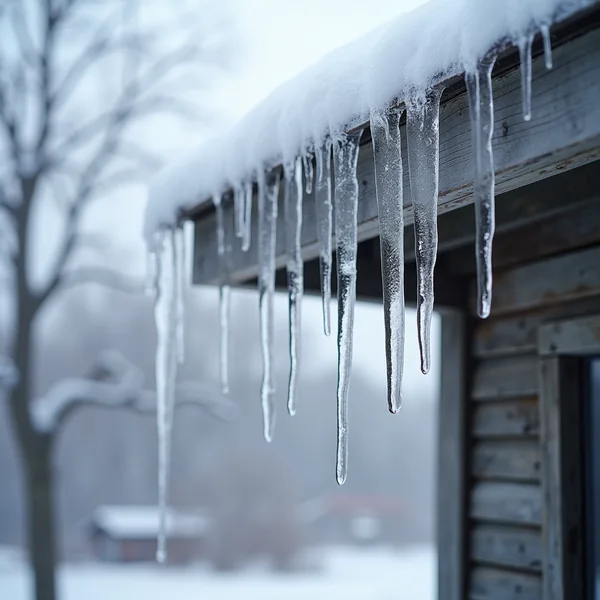
Every defrost cycle drops meltwater into the tray under a heat pump’s outdoor unit, and in a New York January what happens to that water decides whether the machine keeps running.
What a Base Pan Heater Is For
The bottom of a heat pump’s outdoor cabinet is a shallow moulded tray with
a few drain openings in it. In summer that tray is almost always dry. In
January it is the busiest part of the machine, and whether the water in it
leaves or stays is the difference between a unit that runs all winter and one
that is quietly destroying itself.
A base pan heater is a low-wattage electric resistance element that sits in
that tray and keeps the drain path from icing shut. It is not there to warm the
machine, to help it make heat, or to improve its efficiency. It has exactly one
job: keep water liquid long enough to fall out of the bottom of the cabinet.
Where the water comes from in the first place
In heating mode the outdoor coil is the cold side. It is colder than the air
around it, so moisture in that air condenses on the fins, and once the coil
surface drops below freezing that moisture becomes frost. Frost thickens,
airflow through the coil falls, and capacity goes with it. The machine deals
with this by periodically reversing itself and running as an air conditioner
for a few minutes, sending hot gas out to the coil to melt the ice off. That is
the defrost cycle, and every air source heat pump in
New York runs a great many of them between November and March.
All the ice the coil sheds during a defrost becomes water, and that water
runs straight down into the base pan. In an air conditioner this situation
simply never arises, because condensate only forms in cooling weather and
drains away as fast as it appears. A heat pump produces its meltwater at the
one time of year when the air around it is below freezing.
What happens when the drain openings ice over
The failure is cumulative rather than sudden, which is why it is often
missed for a whole season. A defrost ends, the fan restarts, and cold air is
pulled across a pan that still has a film of water in it. That film freezes.
The next defrost adds more water on top of the first layer, and because the
drain holes are now partly obstructed, more of it stays than left last time.
Over a few weeks in a cold spell the pan fills and the ice grows upward as a
solid block. The visible stages, in the order they usually appear:
- A collar of ice around the drain openings and along the pan floor, which
still allows most of the meltwater out. - A filled pan with the bottom row of coil fins frozen into it. Airflow at
the base of the coil stops, and the unit begins defrosting more often because
it is icing faster. - Ice contacting the bottom of the fan blade or the compressor mounts. This
is where the noise changes and where physical damage starts. - In a bad case, the ice mass lifts the cabinet off its stand, which puts the
refrigerant line set and the electrical whip in tension.
Long before any of that, the running cost has already gone up, because a
machine defrosting on a short interval spends a meaningful share of the coldest
hours making no heat at all.
The three ways the heater is built
Self-regulating cable
A flexible cable laid into the channels of the pan, made from a polymer core
whose resistance rises as it warms. It draws more power where the pan is cold
and less where it is already above freezing, so it self-limits without any
external control. It is the usual field-installed retrofit because it can be
routed around the shape of a pan it was not designed for.
Rigid element
A sheathed rod or loop clipped into moulded retainers in the pan, sized and
shaped for one cabinet. It is fixed-output, so it depends entirely on how it is
switched, and that makes the control strategy more important than it is with
cable.
Factory integrated
Many cold-climate units built for northern markets arrive with the element
already fitted and wired to the control board, energised by the same logic that
runs the defrost. This is the version to prefer, because the board knows when a
defrost is happening and a field-added accessory usually does not.
When it should actually be drawing power
An element that runs continuously all winter costs real electricity for very
little of the year, and one that never runs when it is needed is decoration.
The control method is the whole argument.
| Control method | When it draws power | Trade-off |
|---|---|---|
| Hard-wired, always on | Every hour the outdoor unit has power |
Simple and certain, and the least defensible on a bill. Runs through mild autumn weeks when no meltwater exists. |
| Ambient thermostat | Below a fixed outdoor temperature |
Cuts most of the waste. Still runs through long dry cold snaps when the air holds little moisture and the coil barely frosts. |
| Tied to defrost, with a run-on period | During each defrost and for a set time afterwards |
Closest to the actual need, because it heats the pan exactly when there is water in it. Normally only available where the element is factory fitted. |
| Self-regulating cable on an ambient thermostat | Below a set temperature, at an output that falls as the pan warms |
The realistic best case for a retrofit. Two independent limits on the same load. |
If you are comparing equipment, ask the contractor which of these four the
unit uses rather than whether it has a pan heater at all. The answer tells you
more about how the machine was designed for cold weather than the brochure
does.
What the heater cannot fix
A pan heater keeps the drain openings clear. It does nothing about where the
water goes next, and a great many iced-up outdoor units in New York have a
working heater and a siting problem.
- Mounting height. The cabinet has to stand clear of the
local snow depth, not the average one, and clear of the drift that forms on the
lee side of the house. A unit on a slab at grade will be sitting in its own
meltwater the first time a thaw refreezes. - What is above it. A roof valley, a gutter joint or an
unguttered eave dripping onto the coil delivers far more water than any defrost
does, and it arrives from above where the heater has no reach. - Where the meltwater lands. Water leaving the pan onto a
flat pad refreezes into a plinth that eventually reaches the drain openings
from underneath. Gravel, a sloped pad or a drain course under the stand is the
part of this that costs nothing at install time and is awkward to add later. - Excessive defrosting from another cause. Low airflow, a
charge error or a fouled coil makes the machine defrost far more often than the
weather warrants, and the extra water swamps the pan. Weighing the
refrigerant charge in against the line set length is
the ordinary first check when a unit ices in weather that should not ice it.
It is a load on the circuit
A factory-fitted element is fed from the outdoor unit’s own control board
and is inside the equipment’s nameplate figures, so it is already accounted for
in the branch circuit that was sized for the machine. A field-added accessory
may not be. Some are fed from an accessory terminal on the board; others expect
their own supply, which turns a small parts purchase into a wiring job.
Read the accessory’s own nameplate for its rating rather than assuming it is
trivial, and treat it the way you would any other addition to
the load calculation for the whole house. On a panel that is
close to full, a handful of small additions is how a service upgrade arrives
unannounced.
On the approvals question, be careful with anything you read that describes
a particular arrangement as acceptable. New York State’s Uniform Code and New
York City’s own Electrical Code are two separate paths with their own adoption
cycles, so which edition governs your work depends on where the house is, and
the edition in force is a question to put to the authority having jurisdiction
before the work starts rather than after. The
way the fire code is applied to home battery installs is the place
that conversation normally happens.
What to look at in January
Once a winter, in a cold spell rather than on a mild day, go and look at the
bottom of the outdoor unit. You want to see the pan floor, meltwater running
out of the drain openings, and clear air under the lowest row of fins. A thin
skin of ice at the edges is normal after a defrost. A pan you cannot see the
bottom of is not.
Listen as well. A rhythmic tick or scrape as the fan turns is the blade
finding ice, and it is worth shutting the unit down at the disconnect rather
than letting it run to the next service call. Never chip at the ice with
anything metal — the coil is thin aluminium and a puncture turns a
pan-drainage problem into a refrigerant leak. Warm water and patience, or a
controlled shutdown until it clears.
If it happens every year in the same place, the answer is usually height,
drainage or the water coming off the roof, and none of those are solved by a
larger heater. Get the siting right and the element goes back to being what it
is meant to be, which is insurance rather than a running repair. How the
machine behaves in that weather generally, including what to change on the
thermostat and what to leave alone, is covered in the notes on
running a heat pump through extreme cold, and the
reason a modern unit rides through it differently than an older one is in the
piece on variable-speed compressors.
Frequently Asked Questions
What does a base pan heater do?
It is a low-wattage electric element in the tray at the bottom of a heat pump’s outdoor cabinet, and it keeps the drain openings in that tray from icing shut. Every defrost cycle sends meltwater down into the pan, and in freezing weather that water will refreeze where it lands unless something keeps it liquid long enough to drain out. The heater does not warm the machine or help it produce heat.
Does every heat pump need one?
Any air source heat pump that runs in heating mode through a New York winter produces meltwater in freezing conditions, so the need is general rather than unusual. Units built for cold climates commonly arrive with the element already fitted and wired into the defrost logic. What varies is whether it is there from the factory, whether it has to be added as an accessory, and how it is switched.
How do I know if mine is working?
Look at the bottom of the outdoor unit during a cold spell, not on a mild day. You should be able to see the floor of the pan, water leaving the drain openings, and clear air beneath the lowest row of coil fins. A pan filled with ice, or fins frozen into a solid block at the base of the coil, means meltwater is not getting out, whatever the element is doing.
Can I add one to a heat pump that did not come with it?
Self-regulating heating cable is made for exactly that retrofit, because it can be routed around the shape of a pan it was not designed for. The question to settle first is how it will be powered and switched. Some accessories connect to a terminal on the unit’s control board and some expect their own supply, and the second case turns a small parts purchase into electrical work with its own approvals.
Will it run up my electricity bill?
That depends almost entirely on how it is controlled. An element hard-wired to run whenever the outdoor unit has power is drawing through mild autumn weeks when there is no meltwater to protect. One switched by an ambient thermostat, or energised with the defrost cycle and for a period afterwards, runs close to when it is actually needed. Ask which of those a unit uses rather than whether it has a heater.
My outdoor unit is a block of ice. Should I pour hot water on it?
Warm water is the safe option and boiling water is not, because a sharp temperature change on a cold coil is hard on it. What matters far more is that nothing metal goes anywhere near the fins. The coil is thin aluminium wrapped around refrigerant tubing, and a puncture turns a drainage nuisance into a leak and a repair. Shut the unit off at the disconnect first so the fan cannot turn into the ice.
If the pan keeps freezing, is the heater too small?
Usually not. Repeat icing in the same spot every winter points at where the unit sits rather than at the element. The common causes are a cabinet mounted too low for the local snow depth, a roof valley or gutter dripping onto the coil from above, meltwater refreezing into a plinth on a flat pad, or a machine defrosting far more often than the weather warrants because of low airflow or a charge error.
Does a ground source heat pump have one?
No, because the situation that creates the water does not exist. A ground source system takes its heat from a buried loop rather than from outdoor air, so there is no outdoor coil collecting frost and no defrost cycle to melt it off. Base pan heating is specific to air source equipment operating below freezing.
NY Solar Incentives
Independent New York solar research. We summarise NYSERDA, NY-Sun and federal programme rules from published sources and state plainly when a figure is an estimate. We are not a government agency and do not sell equipment.
Run the arithmetic on your own system
Check the dated program table and your arrangement before counting an incentive. Standard residential NY-Sun blocks are closed; Long Island Affordable Solar has a conditional income-verification route. The NY credit depends on qualified costs and tax liability, while the NYC abatement reduces future property-tax bills. The estimator keeps those timings separate.