Bathroom Fan Humidity Sensor: What It Does, When It Helps
Humidity-sensing bath fans turn themselves on so nobody has to remember. What separates a fixed setpoint from an adaptive control, and why the duct matters more than either.
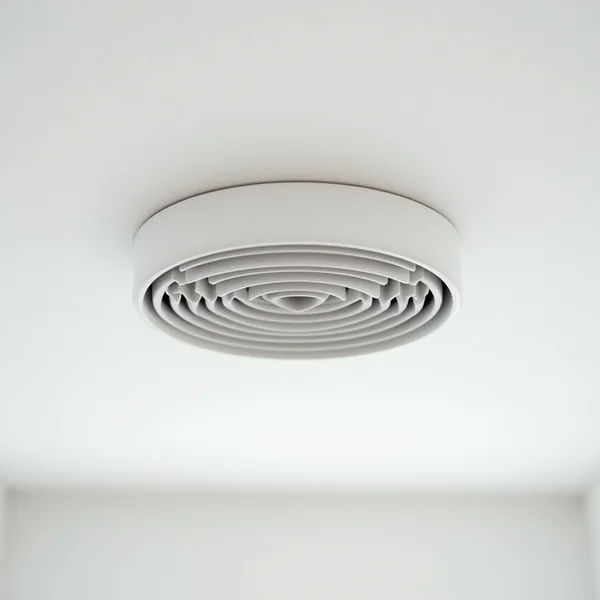
How humidity-sensing bath fans decide to run, why fixed setpoints misbehave in a New York summer, and the duct problems no sensor can fix.
A bathroom fan that runs when somebody remembers to flip the switch is a ventilation system with a human failure mode built into it. Humidity-sensing fans exist to remove that step: the fan decides for itself when the room is wet and turns itself on. It is useful automation in a New York house, and it is also the part people fix first when the real problem sits somewhere else.
Bathroom Fan Humidity Sensor: What It Does and When It Helps
Inside the housing sits a small relative-humidity sensor. The simpler control compares the reading to a fixed setpoint and switches the motor on above it. That works in a laboratory and misbehaves in a house. On a humid August afternoon in the Hudson Valley the ambient indoor humidity may sit above the setpoint with nobody in the room, and the fan runs for hours exhausting conditioned air. In a dry January the same bathroom can go from a long shower straight back to a reading below the setpoint, and the fan never triggers at all.
Better controls do not use a fixed number. They track a rolling baseline of the room’s normal humidity over hours or days and trigger on a rate of rise — a rapid climb above whatever that room considers normal. A shower produces exactly that signature; a muggy afternoon does not. If a fan is being chosen for a New York bathroom, the adaptive behaviour is the specification worth reading for, not the sensor’s presence.
How the control options compare
| Control | When the fan runs | Where it falls down |
|---|---|---|
| Plain wall switch | Whenever somebody remembers | Turned off with the light on the way out, usually before the room has cleared |
| Countdown timer switch | For a set number of minutes after a press | Still needs the press; the interval is a guess unrelated to how wet the room is |
| Fixed-setpoint humidity sensor | Above a set relative humidity | Runs continuously in humid weather; may never trigger on a dry winter day |
| Adaptive sensor tracking rate of rise | On a rapid climb above the room’s own baseline | Depends on the room having a stable baseline; a permanently damp bathroom confuses it |
| Sensor plus delay-off run time | On the rise, and continues after the room clears | Nothing much, provided the duct actually moves air |
The duct decides whether any of this matters
A fan’s airflow rating is measured on a test bench against a stated static pressure. What the fan delivers in your ceiling depends on what it is pushing against, and in a lot of houses that is a long run of ribbed flexible duct with sags in it, two or three sharp turns, and a section crushed where somebody stood on it in the attic. Airflow falls sharply with each of those. A humidity sensor bolted onto a fan in that situation does not fix the bathroom. It makes an ineffective fan run more often.
What helps is boring: a short run, smooth-wall rigid duct where it can be used, gentle sweeps instead of tight elbows, full diameter maintained throughout, and no sags where water can pool. What a fan actually delivers, rather than what the box states, is a measurement a home performance contractor can take in minutes with a flow hood.
Where the duct ends is a New York-specific question
Exhaust has to leave the building. Terminating a bathroom duct inside an attic, into a soffit, or into a vented crawl space simply relocates the moisture, and in a cold-winter climate the consequence is specific and predictable: warm wet air meets roof sheathing that is well below freezing, and the water leaves the air as frost on the underside of the roof. It stays there through the cold months, then melts during a thaw, and the household discovers it as staining, a musty attic, and sometimes a wet ceiling below. The problem shows up months after the installation that caused it, which is why the connection is so often missed.
A correct termination goes through the roof or through a wall with a cap that has a damper which opens under airflow and closes when the fan stops. The run through unconditioned space should be insulated, because an uninsulated duct in a cold attic condenses the moist air passing through it and the water runs back down to the fan housing. Homeowners who report the fan “dripping” or “leaking” are usually describing that, and not a plumbing leak. It is the same physics that produces the sequencing logic behind envelope work before equipment: a surface below the dew point collects water, wherever it happens to be.
The fan cannot exhaust air it cannot replace
An exhaust fan pulls air out of a room and something has to flow in behind it. In an older leaky house that happens without anyone noticing. In a tightened house with a solid-core door and no undercut, the fan spins, the room stays wet, and the measured airflow is a fraction of the rating. Roughly a half-inch to three-quarters of an inch of gap under the door, or a transfer path above it, is what makes the fan able to do its work. This becomes more important as houses get tighter, not less.
It also marks the boundary of what a bathroom fan is for. Spot ventilation removes moisture at the point it is produced. It is not whole-house ventilation, and a tight, well-insulated New York home running heat pumps needs a deliberate answer for fresh air across the whole building — a balanced heat- or energy-recovery ventilator, sized and commissioned. Treating the bathroom fan as the house’s ventilation strategy is a common and expensive misreading.
Sizing, briefly and without mystique
Residential ventilation standards give bathrooms two paths: an intermittent rate used when the fan runs during and after use, or a lower continuous rate for a fan that runs all the time. A rule of thumb many installers use for a modest bathroom is roughly one unit of airflow per square foot of floor area, with larger rooms and rooms with a separate enclosed shower or a jetted tub sized upward and sometimes given more than one inlet. Larger is not automatically better: an oversized fan in a tight house cannot draw its rated airflow, and it can pull air backwards down a vent it has no business touching.
Which figures your municipality enforces depends on the code cycle it has adopted, and combustion-safety considerations apply if any atmospherically vented appliance shares the space. A licensed contractor and your building department are the ones who settle that, not a page on the internet.
Sorting the symptom before buying the fix
If the mirror clears in a couple of minutes and the room is dry within the hour, the ventilation is doing its job and a sensor is a convenience upgrade. If paint is peeling, the ceiling shows spotting, or the room stays damp for hours, work through the chain in order before shopping: is the duct clear, does it run to the outdoors, is the damper stuck, is there a path for replacement air, does the fan actually move air. A sensor at the end of a broken chain automates the wrong outcome.
A bathroom is also not the whole moisture picture. Cooking, drying laundry indoors, an unconditioned basement and an oversized humidifier all raise the house-wide baseline, and a bath fan is a narrow instrument against that. If windows across the house fog in January, the load is house-wide.
Where it fits in an electrification project
Air sealing and insulation lower a home’s heating load, which is what makes properly sized heat pump equipment work well, as set out in the walkthrough of sizing a heat pump alongside solar. The same work reduces the accidental leakage that used to remove moisture by accident, so mechanical ventilation stops being optional. Doing the envelope without the ventilation is how a comfortable house becomes a damp one. Households looking at the cost of that work can check what falls inside NYSERDA’s EmPower+ eligibility, since air sealing and insulation sit within its scope.
A humidity sensor is a small, sensible piece of that. It removes a human step from a system that does nothing while switched off. It does not enlarge a duct, open a damper, or move a termination out of an attic, and it is worth installing after those are right rather than instead of them.
Frequently Asked Questions
How does a bathroom fan humidity sensor decide when to turn on?
It reads relative humidity in the room. Simpler controls compare that reading to a fixed setpoint and switch on above it. More capable ones track a rolling baseline of the room’s normal humidity and trigger on a rapid rise above it, which is the signature a shower produces and a humid afternoon does not. The adaptive behaviour is the specification worth checking for in a New York bathroom.
Why does my humidity-sensing fan run constantly in summer?
That is the classic behaviour of a fixed-setpoint control. During a humid stretch the ambient indoor humidity can sit above the setpoint with nobody in the room, so the fan keeps running and exhausts conditioned air. A control that triggers on the rate of rise relative to the room’s own baseline does not have that problem.
Can a bathroom fan vent into the attic?
No. That relocates the moisture rather than removing it, and in a cold winter the wet air condenses and freezes on the underside of the roof sheathing. It melts during a thaw and shows up as staining, a musty attic, or a wet ceiling. Exhaust ducts should terminate outdoors through the roof or a wall cap fitted with a damper.
Why does my bathroom fan drip water?
Usually because the duct runs uninsulated through a cold attic. Warm moist air condenses on the inside of the cold duct and the water runs back down to the housing. Insulating the run through unconditioned space, keeping it short, and removing sags where water can pool addresses it. A stuck-open damper letting cold air sit in the duct has the same effect.
Does a bigger fan always ventilate better?
Not on its own. A fan’s rating is measured against a stated static pressure on a test bench, and what it delivers in a ceiling depends on the duct it is pushing against and on whether replacement air can enter the room. An oversized fan in a tight house cannot draw its rated airflow, and it can pull air backwards down a vent it should not be touching.
Do I need a gap under the bathroom door?
Yes, or another transfer path. An exhaust fan removes no more air than flows in behind it. With a solid-core door and no undercut, the fan spins while the room stays wet. Roughly half an inch to three-quarters of an inch of clearance under the door is the usual provision, and it matters more as houses are tightened.
Is a bathroom fan enough ventilation for a tight, electrified house?
No. A bathroom fan is spot ventilation that removes moisture where it is produced. A tight, well-insulated home needs a deliberate whole-house answer, typically a balanced heat- or energy-recovery ventilator that is sized and commissioned for the building. Air sealing without that plan is how a comfortable house becomes a damp one.
How do I know whether my current fan is actually working?
A rough check is whether the mirror clears within a few minutes and the room is dry within the hour. For a real number, a home performance contractor can measure delivered airflow at the grille with a flow hood in a few minutes. That measurement, rather than the rating printed on the unit, is what tells you whether the duct is the problem.
NY Solar Incentives
Independent New York solar research. We summarise NYSERDA, NY-Sun and federal programme rules from published sources and state plainly when a figure is an estimate. We are not a government agency and do not sell equipment.
Run the arithmetic on your own system
Check the dated program table and your arrangement before counting an incentive. Standard residential NY-Sun blocks are closed; Long Island Affordable Solar has a conditional income-verification route. The NY credit depends on qualified costs and tax liability, while the NYC abatement reduces future property-tax bills. The estimator keeps those timings separate.