Getting an EV Charger Into a New York Apartment Building
Installing an EV charger in a New York apartment building is a governance problem first: board approval, panel capacity, and who pays for the kilowatt-hours all come before the wiring.
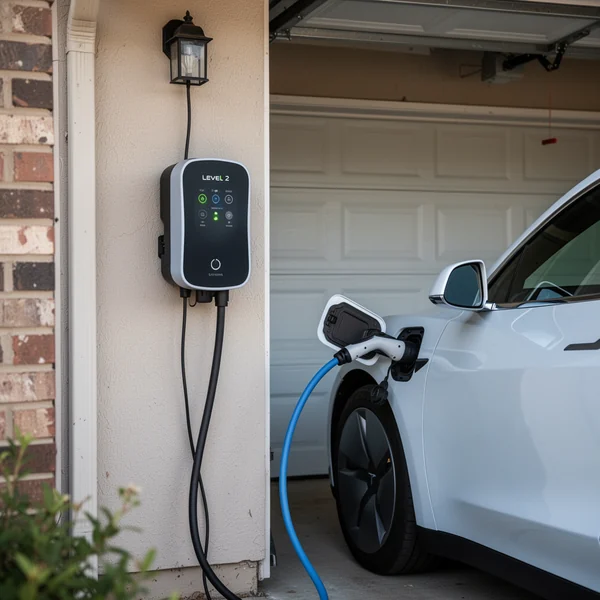
Installing an EV charger in a New York apartment building is a governance problem before it is an electrical one. The wiring is routine work for any licensed electrician; the hard parts are getting your co-op board, condo board or landlord to say yes in writing, finding capacity in a building panel that was designed decades before anyone plugged in a car, and agreeing who pays for the kilowatt-hours.
New York does not give residents of multifamily buildings a California-style statutory right to charge. In practice your permission comes from your proprietary lease, your condo bylaws or your rental lease — which means the sequence is: read the governing document, then approach the board, then design the install. Doing it the other way round is how people end up with a quote in hand and no way to use it.
Co-op, condo or rental: three different conversations
Co-op
You own shares and a proprietary lease, not the garage. The board controls the common elements, and an EV charger almost always requires an alteration agreement — the same instrument used for a kitchen renovation. Expect the board’s counsel to want language on who owns the equipment, who insures it, who maintains it, what happens when you sell your shares, and who restores the wall if the charger is removed. Boards say no far more often to a vague request than to a complete package, so arrive with a licensed electrician’s scope, a load letter, a certificate of insurance and a draft agreement.
Condo
The parking space is usually a limited common element rather than something you own outright. That means a licence agreement from the board rather than a straightforward alteration approval, and the board has a legitimate interest in whether granting you a space-specific charger prejudices the twenty owners who will ask next year. Boards that handle this well adopt a written EV policy first and then approve individual installs under it. If you are the first, offering to help draft that policy is often faster than fighting for an exception.
Rental
Your landlord owns the building and the electrical service. Nothing obliges them to let you install, and the improvement stays with the building when you leave. A landlord is more likely to agree if the ask is small — a dedicated 120V outlet at your space rather than a hardwired Level 2 unit — and if you offer to pay for it and leave it behind.
The panel is the real constraint
Most New York apartment buildings have a house panel serving lighting, elevators, pumps and the garage, with very little spare capacity. The instinct is to conclude that a service upgrade is required. Often it is not.
- Load management (EVEMS). Energy management systems let multiple chargers share one circuit by throttling and staggering them. Cars sit in a garage all night; nobody needs full power for eight hours. This is the single most useful thing to raise with a board, because it converts “we would need a new service” into “we can add chargers on what we have.”
- Level 1 is genuinely underrated in a building. If you park in the same spot every night, a standard outlet adds meaningful range overnight for most commuting patterns, costs a fraction of a Level 2 install, and rarely triggers the same governance fight.
- An existing electrical survey costs less than an argument. Have an electrician read the house panel and produce a load calculation before anyone debates capacity in a board meeting.
Utility make-ready programmes: the money that exists
New York’s Public Service Commission established a statewide EV make-ready framework that the investor-owned utilities implement in their own territories — Con Edison, National Grid, NYSEG, RG&E, Central Hudson and Orange & Rockland — with multifamily and disadvantaged-community properties treated as a priority category. “Make-ready” means the utility funds the infrastructure up to the charger: the service, the conduit, the panel work. The charger itself is typically the property’s cost.
PSEG Long Island runs its own separate EV programmes for Nassau and Suffolk. It is not part of the NYS Clean Heat family of utilities and it is administered independently, so if your building is on Long Island, go to PSEG Long Island directly rather than to a statewide page.
Amounts, caps and eligibility rules change by programme year and by territory, and they are not published as one statewide table. Do not let a vendor quote you a make-ready figure from memory — apply through your own utility’s EV programme page and get the number in writing. NYSERDA also runs charging programmes aimed at multifamily, workplace and public sites; 1-866-NYSERDA will route you to the current one.
Nothing federal is available for a 2026 install. The federal residential clean energy credit (Section 25D) and the energy efficient home improvement credit (Section 25C) both ended for property placed in service after 31 December 2025. Any proposal that still budgets a federal credit against your charger is out of date.
Who pays for the electricity
This is where boards get stuck, and it is solvable.
| Approach | How it works | Watch for |
|---|---|---|
| Networked charger billing | The charger authenticates the driver and bills them directly through the vendor’s platform. | Ongoing network subscription; the building depends on a vendor staying in business. |
| Flat monthly fee | The resident pays the building a fixed amount added to maintenance or common charges. | Simple, but unfair at the extremes; revisit the amount annually. |
| Dedicated meter | A separate utility meter for the charger, billed to the resident. | Space in the meter room and utility coordination; the cleanest but the most construction. |
| Submetering | The building meters and rebills usage. | Rebilling residents for electricity in New York carries regulatory conditions — get counsel before adopting this. |
New York City adds two more parties
In the five boroughs, electrical work is filed with the Department of Buildings and performed under a licensed electrician, and an enclosed parking garage brings fire code and FDNY considerations into scope — clearances, bollard protection, ventilation, and where the equipment sits relative to egress. Garages in NYC also frequently operate under their own permits and occupancy conditions, which is why a managing agent’s first reaction is caution rather than obstruction.
None of this is exotic; it is the same permitting reality that governs any equipment added to a New York City building. Our walkthrough of the NYC permit and inspection process for solar covers the same DOB filing rhythm and is worth reading for the pacing, even though the equipment is different.
If the building has, or wants, solar
Buildings that have already been through a solar interconnection have done most of the hard institutional work: they have an electrical survey, a relationship with the utility’s interconnection group, and a board that has approved roof and electrical modifications once. Charging and on-site generation also pair unusually well, because cars sitting in a garage all day are a flexible load. See EV charging and solar panels in New York for how the two loads interact, and Con Edison net metering for how a building’s exports are credited if it generates.
What to do next
- Get your proprietary lease, bylaws or lease and find the alteration clause. Read it before you email anyone.
- Ask the managing agent whether the building already has an EV policy. If it does not, propose that the board adopt one — it is easier to pass than a personal exception.
- Have a licensed electrician survey the house panel and produce a written load calculation, and ask specifically whether load management removes the need for a service upgrade.
- Open the make-ready application with your own utility by name — Con Edison, National Grid, NYSEG, RG&E, Central Hudson, Orange & Rockland, or PSEG Long Island on Long Island — and get the current terms in writing.
- Bring the board a package, not a request: scope, load letter, insurance certificate, billing method, and who restores the space on removal.
- Price the Level 1 option alongside Level 2. If it covers your daily mileage, it may get approved this month rather than next year.
- Budget with no federal credit. Both 25C and 25D ended for property placed in service after 31 December 2025.
NY Solar Incentives
Independent New York solar research. We summarise NYSERDA, NY-Sun and federal programme rules from published sources and state plainly when a figure is an estimate. We are not a government agency and do not sell equipment.
Run the arithmetic on your own system
Check the dated program table and your arrangement before counting an incentive. Standard residential NY-Sun blocks are closed; Long Island Affordable Solar has a conditional income-verification route. The NY credit depends on qualified costs and tax liability, while the NYC abatement reduces future property-tax bills. The estimator keeps those timings separate.