The Orange & Rockland CBC Charge: What It Costs
The Customer Benefit Contribution is billed on the size of your array, not on what it produces. On Orange and Rockland the 2026 residential rate is one dollar per kW-month.
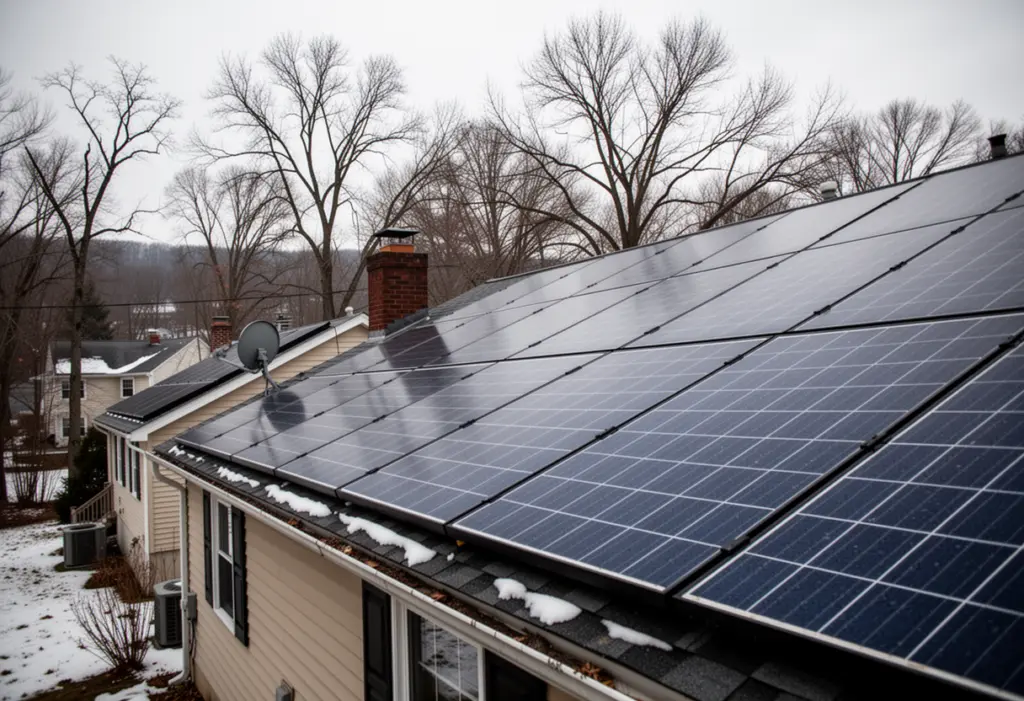
The Customer Benefit Contribution is a monthly charge on the DC size of your solar array. Not on your consumption, not on your export, not on what the sun did. For 2026 the Orange & Rockland residential rate is $1.00 per kW-month, which makes the arithmetic unusually easy: the monthly charge in dollars is the size of your array in kilowatts.
The numbers
- A 6.4 kW array: $6.40 a month, $76.80 a year.
- An 8 kW array: $8.00 a month, $96.00 a year.
- An 11.5 kW array: $11.50 a month, $138.00 a year.
Every month, including February with snow on the modules and including any month the system is offline for a repair. It funds public benefit programmes — low income assistance, energy efficiency and clean energy work — which is why it exists and why it is charged on capacity rather than on output.
Two facts that change who owes it
It applies to systems interconnected on or after 1 January 2022. A neighbour with a 2019 array pays nothing, and telling them otherwise is a common error in solar writing. The wording matters: it is the interconnection date, not the year you happen to be reading a bill. The current NYSERDA fact sheet also states that later expansions of a pre-2022 system do not pull it into the charge — an earlier version of the same fact sheet said the opposite, and that superseded text is still mirrored widely, so treat that clause as version-dependent and confirm it for your own case.
The rates are not locked in at interconnection. They are recalculated annually. Whatever a proposal shows you today is this year’s figure, not a twenty-year commitment from the utility.
Where O&R sits against its neighbours
The 2026 residential rates run from National Grid at $0.97 to Central Hudson at $1.67. O&R at $1.00 is near the bottom of that range, and that is worth knowing in Orange and Sullivan counties specifically, because both O&R and Central Hudson serve parts of both counties. The same 10 kW array pays $120 a year under O&R and $200.40 a year under Central Hudson. Nothing about the roof, the equipment or the household changes — only the name printed on the bill. Read that name before you assume which side of the line you are on.
The small commercial oddity
The O&R small commercial rate for 2026 is $0.88 — lower than the residential $1.00. That is unusual: for most New York utilities the commercial figure is the higher one. O&R is one of only three where it goes the other way, alongside RG&E and NYSEG. It is not a lever a homeowner can pull, but it is a useful sanity check when someone quotes you a commercial figure as though it were yours.
There is a separate Value Stack rate — $0.50 residential on O&R — but the Value Stack is the compensation mechanism for community distributed generation and larger or commercial projects, not for mass-market residential rooftop. If a residential proposal shows you the lower number, ask which tariff it assumes and why.
What it should change about your sizing
This is the practical consequence. A capacity charge punishes oversizing in a way an annual production estimate does not show.
An array built two kilowatts larger than the household needs generates credits that bank up and are never consumed, and pays $24 a year on O&R for the privilege. Over twenty years, and against a charge that is recalculated annually rather than fixed, that is a real number attached to a decision made casually in a sales meeting. Size to consumption you can evidence, not to the roof area that happens to be available. Ask for the modelled annual production against your last twelve months of usage, in kilowatt-hours, side by side.
And if the name on your bill is a village or city electric department rather than O&R, none of this applies: municipal electric utilities are outside Public Service Commission jurisdiction, so there is no Customer Benefit Contribution and no state interconnection process. Ask the municipal utility directly what it charges and how it credits exports.
2026 incentives against a running cost
The capacity charge is the item that survives every incentive, which is why it belongs in the arithmetic rather than in a footnote. The incentives themselves are one-off or time-limited: the 25 percent New York credit capped at $5,000 on Form IT-255 is claimed once against your state liability for a principal residence, carrying forward up to five years; the sales tax exemption applies at purchase; RPTL 487 runs fifteen years on the added value, and takes three separate checks — the municipality, the county and the school district must each not have opted out — on a system constructed before 1 January 2030. NY-Sun is not in that list: as of September 2026 NYSERDA has no open NY-Sun block for homes in any utility territory; check NYSERDA’s NY-Sun dashboard for a new one. The federal 30 percent residential credit is gone for expenditures made after 31 December 2025. Rates and programmes both move, so check NYSERDA’s published figures for the current year rather than a proposal from last season.
Frequently Asked Questions
What is the Orange & Rockland CBC rate for 2026?
One dollar per kW-month of DC system size for residential net metered PV. An 8 kW array pays $8.00 a month, or $96.00 a year, regardless of production.
Does the CBC apply to my older solar system?
Only if it was interconnected on or after 1 January 2022. Systems interconnected before that date are not subject to the charge.
Is the CBC rate fixed for the life of my system?
No. The rates are recalculated annually and are not locked in at interconnection, so this year's figure is not a twenty-year commitment.
Why is the Orange & Rockland small commercial rate lower than residential?
It is one of only three New York utilities where that happens, along with RG&E and NYSEG. For 2026 the O&R small commercial figure is $0.88 against $1.00 residential.
This article is general information, not tax, legal or financial advice. Incentive amounts, eligibility rules and deadlines change and depend on your utility, your tax situation and your property. Confirm current terms with NYSERDA, your utility and a qualified tax professional before making a decision.
NY Solar Incentives
Independent New York solar research. We summarise NYSERDA, NY-Sun and federal programme rules from published sources and state plainly when a figure is an estimate. We are not a government agency and do not sell equipment.
Run the arithmetic on your own system
Check the dated program table and your arrangement before counting an incentive. Standard residential NY-Sun blocks are closed; Long Island Affordable Solar has a conditional income-verification route. The NY credit depends on qualified costs and tax liability, while the NYC abatement reduces future property-tax bills. The estimator keeps those timings separate.