RG&E Permission to Operate: Turning Solar On
An array can be installed, inspected and fully paid for and still sit dark. Permission to operate is the letter that ends that, and the date it carries matters.
On this page 8 sections
- 01What the letter actually does
- 02The sequence, and who owns each step
- 03What usually causes the wait
- 04The date matters more than people think
- 05The federal test that is not permission to operate
- 06Before you sign off and pay the balance
- 07The incentives waiting on the other side
- 08Frequently Asked Questions
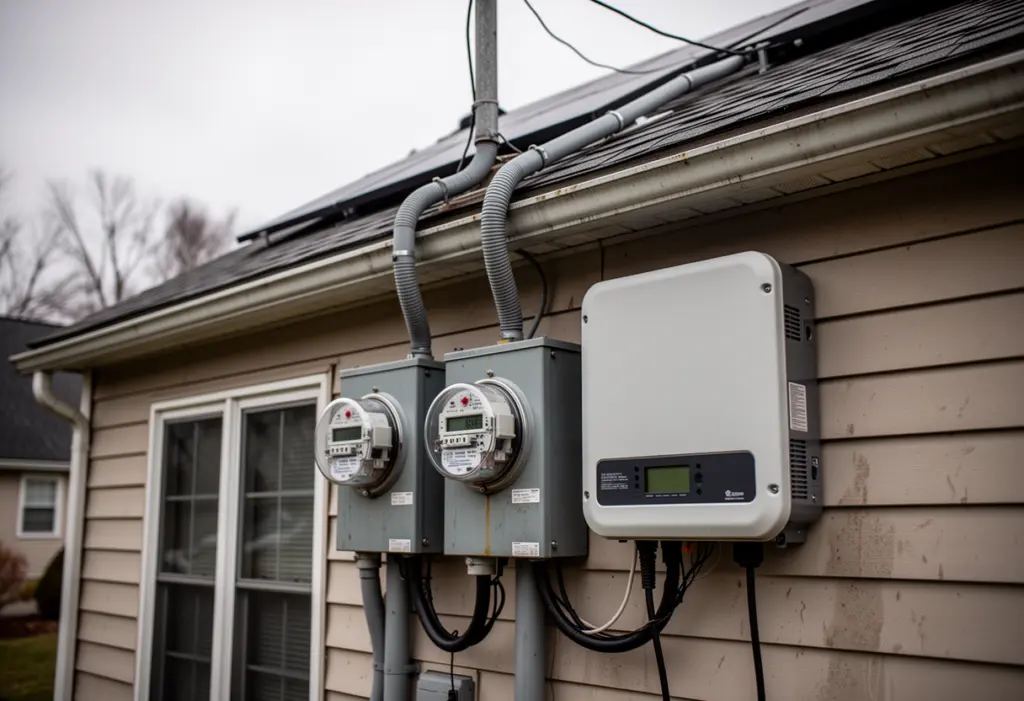
Permission to operate is the point at which RG&E authorises you to energise a finished solar array and connect it to the grid. Until that authorisation arrives the system stays switched off, however complete it looks and however much of it you have already paid for. Homeowners are routinely surprised by this stage because nobody sells it: the panels are on the roof, the inverter is on the wall, and the house is still buying every kilowatt-hour it uses.
What the letter actually does
Two things. It confirms the utility accepts the installed system onto its distribution network under the interconnection terms already agreed, and it confirms the metering arrangement is in place to measure what you export as well as what you import. Running an interconnected array before that point is not a paperwork sin, it is an electrical safety and tariff problem, and an installer who suggests energising early to demonstrate the system has told you what their compliance is like.
The sequence, and who owns each step
- The interconnection application goes to the utility, normally before installation, and comes back approved with the design as submitted.
- The system is installed to that approved design.
- An electrical inspection is carried out for the authority having jurisdiction, and a certificate is issued.
- The completion paperwork and that certificate go back to the utility.
- A meter exchange happens if the existing meter cannot measure export.
- Permission to operate is issued, and only then does the system come on.
Ask which of those six your installer performs and which they merely submit, and ask for the date the interconnection application was filed together with the utility’s acknowledgement. A contract that promises an installation date and says nothing about interconnection is describing step two of six.
What usually causes the wait
The common causes are dull and preventable. A design that changed after approval is the biggest: swapping an inverter model or adding two modules because the roof measured differently means the approved drawing no longer matches the installed system, and the utility is entitled to want the difference resolved. Missing or late electrical inspection certificates are next. After those come metering questions, where the existing socket or service arrangement will not take the meter required, which turns a paperwork step into an electrician visit.
None of this is unique to one utility, but it is worth insisting on a named point of contact and a written status rather than reassurance. The gap between installation and permission is the phase in which follow-up quietly stops, because the crew has moved to the next job and the file sits with an office.
The date matters more than people think
Several clocks are attached to it and they do not all start at the same moment.
- Net metering. Phase One credits exports at the full retail rate and the structure holds for 20 years from interconnection, so interconnection is the date that anchors two decades of crediting.
- The Customer Benefit Contribution. It applies to systems interconnected on or after 1 January 2022 and is billed on DC system size regardless of production. RG&E’s 2026 residential rate is $1.31 per kW-month, so a 7.5 kW array pays $9.83 a month, about $117.90 a year, from the moment it is live. The rate is recalculated annually rather than fixed at interconnection.
- New York’s own credit. For the state solar equipment credit the operative language is when the system is placed in service, so the year in which permission arrives can decide the tax year you claim in. That is a question for your preparer with the actual dates in front of them.
One oddity of this utility worth knowing if you also run a small business: RG&E is one of only three New York utilities whose small commercial capacity rate sits below its residential one, at $0.96 against $1.31 for 2026. It is not a lever a homeowner can pull, but it explains why two quotes for similar systems on different account types are not comparable.
The federal test that is not permission to operate
This trips up more people than any other point in the sequence. Section 25D, the 30 percent residential credit, was terminated for expenditures made after 31 December 2025, and its operative test is when the original installation is completed. It is not placed in service, and it is not the date permission to operate arrived. A system finished in December 2025 that only received permission in January 2026 was still an expenditure made in 2025 on that test. There is one exception: where the expenditure is in connection with the construction or reconstruction of a structure, it counts as made when the taxpayer’s original use of the structure begins, so panels fitted in December 2025 on a house first occupied in 2026 do not qualify. Anyone in that position should take the dates and the paperwork to a tax preparer rather than to an installer. For a system bought and installed in 2026, nothing federal applies at all.
Before you sign off and pay the balance
Hold the final payment against permission to operate rather than against the last panel being fitted, and say so in the contract. Photograph the meter and its reading on the day of the exchange. Keep the certificate of electrical inspection, the approved interconnection drawing and the permission letter together, because a future buyer’s attorney will ask for exactly those three documents, and so will an assessor.
RG&E serves Rochester and Monroe County, but not every address inside the county. If the name on your bill is not RG&E, you may be served by a village-run electric system, which sits outside Public Service Commission jurisdiction: no state net metering, no capacity charge and no state interconnection process, with terms set by that utility and available only by asking it directly.
The incentives waiting on the other side
Nothing on the incentive side is triggered by the letter itself. A NY-Sun incentive applies only to a project your contractor applied for while a block was open: in Upstate territory, which includes RG&E, the last standard residential block (Block 14, $0.15/W) closed on 17 December 2025 and the Affordable Solar block on 9 March 2026. As of September 2026 NYSERDA has no open NY-Sun block for homes in any utility territory; check NYSERDA’s NY-Sun dashboard for a new one. The sales tax exemption meant no state sales tax was added to the invoice; the local share is exempt only where the county or city has opted in, and the state’s Publication 718-S lists Monroe County among the places that still charge it. New York’s 25 percent credit capped at $5,000 on Form IT-255 is claimed at tax time for a principal residence and is limited by the state tax you actually owe, carrying forward up to five years. RPTL 487’s fifteen-year exemption on the added value needs the municipality, the county and the school district to have each not opted out, and the system to be constructed before 1 January 2030; it belongs with your assessor rather than your utility. Confirm each of them at source before signing, because all of them change.
Frequently Asked Questions
What is permission to operate?
The utility authorisation that lets you energise a completed solar array and connect it to the grid. Until it arrives the system stays off, even though it is installed, inspected and paid for.
Why is my system finished but still switched off?
Usually a design change made after the interconnection approval, a missing electrical inspection certificate, or a meter exchange that has not happened yet. Ask for a written status and the date the application was filed.
Does permission to operate decide my federal tax credit?
No. Section 25D used the date the original installation was completed, not the date of permission or placed in service, and it was terminated for expenditures made after 31 December 2025. Take the dates to a tax preparer.
When does the monthly capacity charge start?
It applies to systems interconnected on or after 1 January 2022. At RG&E's 2026 residential rate of $1.31 per kW-month, a 7.5 kW array pays about $9.83 a month, billed on system size rather than output.
This article is general information, not tax, legal or financial advice. Incentive amounts, eligibility rules and deadlines change and depend on your utility, your tax situation and your property. Confirm current terms with NYSERDA, your utility and a qualified tax professional before making a decision.
NY Solar Incentives
Independent New York solar research. We summarise NYSERDA, NY-Sun and federal programme rules from published sources and state plainly when a figure is an estimate. We are not a government agency and do not sell equipment.
Run the arithmetic on your own system
Check the dated program table and your arrangement before counting an incentive. Standard residential NY-Sun blocks are closed; Long Island Affordable Solar has a conditional income-verification route. The NY credit depends on qualified costs and tax liability, while the NYC abatement reduces future property-tax bills. The estimator keeps those timings separate.