Solar Panels and Title Insurance in New York
Title issues involving solar are almost never about the hardware. They are about what somebody recorded in the county land records, and how long the other party takes to clear it.
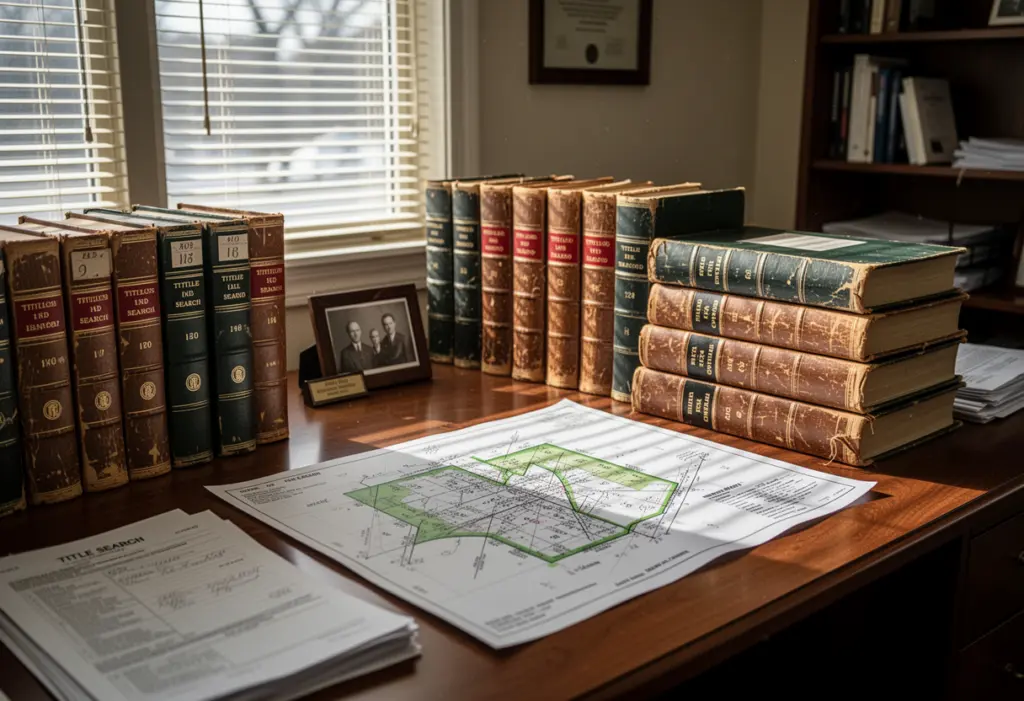
When solar complicates a New York closing, the panels are almost never the reason. A title search reads the county land records, and what it finds are documents. If nobody recorded anything about your system, a search turns up nothing about it. If somebody did, that document becomes an exception on the title commitment and has to be resolved before the policy issues.
What actually gets recorded
- A UCC-1 fixture filing from an equipment lender, indexed against your parcel in the same records as your mortgage.
- A memorandum of lease or memorandum of power purchase agreement, recorded by the provider to give notice of its interest.
- An easement — for a ground mount that crosses a boundary, for cable runs, or for access and maintenance.
- A roof or party wall agreement where an attached home or a shared structure is involved.
Note what is not on that list: the array itself, the permit, the interconnection agreement. Those matter enormously to a buyer and to an appraiser, and a title search is not looking for them.
How the exception gets cleared
A title company will not simply ignore a recorded interest. It clears in one of three ways, and each depends on a third party:
- A release or termination, once the underlying obligation is paid off.
- A subordination, where the provider agrees its interest ranks behind the new mortgage.
- An estoppel or consent letter confirming the status of a lease or PPA, its remaining term, the payments and what a buyer would assume.
The awkward truth is that the title company is not the slow party and neither is your attorney. The provider’s transfer department is. Its queue determines your calendar, so open that file the day you list or the day you decide to refinance, not the day the commitment lands with an exception on it.
Sunlight is not insured by any of this
Nothing in the state incentive programmes protects your array from a neighbour planting trees or building higher. Access to light is protected only by a recorded easement negotiated with that neighbour, and whether one can be obtained is a question for a real property attorney. If your production model depends on a tree line staying where it is, that assumption is worth naming out loud before you sign a contract, not after the fourth summer.
Two New York specifics worth raising early
Condominiums, cooperatives and homeowner associations. The roof may be common property, and the right to place equipment on it can be granted by a licence or agreement that is itself a document a buyer and their lender will want to read. Ask what governs the roof before you ask what governs the panels.
Municipal electric customers. Roughly fifty New York communities are served by a municipal electric utility run by the village, town or city rather than by one of the regulated companies, and the boundary does not follow anything you can guess from an address. A municipal utility is outside Public Service Commission jurisdiction, so there is no PSC net metering, no Customer Benefit Contribution and no state interconnection process; the terms come from the utility itself. A buyer who assumes the state framework applies will be wrong. Always confirm the utility from the electric bill rather than from an address.
The charge that transfers with the account
For customers of the regulated utilities, the Customer Benefit Contribution is charged monthly on the DC size of the system for anything interconnected on or after 1 January 2022. A 6.5 kW array on LIPA and PSEG Long Island pays 6.5 x $1.13, about $7.35 a month or roughly $88 a year. It travels with the electric account and the system, not with the deed, so a buyer inherits it whatever the title work concludes. Community solar subscribers pay no Customer Benefit Contribution at all, which is a real difference between subscribing and owning.
What the incentives do and do not settle
No incentive clears a title exception, and no title policy creates an incentive. Keep the two ledgers apart. On the incentive side in 2026: the 30% federal residential credit is gone, terminated for expenditures made after 31 December 2025 with an expenditure treated as made when the original installation is completed. New York still offers 25% capped at $5,000 on Form IT-255 for a principal residence, and it reaches leases and power purchase agreements only where the agreement runs ten years or more, a minimum that applies to the lease as well as the PPA. The state sales tax exemption and the RPTL 487 fifteen-year property tax exemption also remain, the latter subject to three separate opt-out checks and to the system being constructed before 1 January 2030. Verify all of it at the time of the transaction, because these rules move.
Frequently Asked Questions
Do solar panels cause title problems in New York?
Only through recorded documents. A UCC-1 fixture filing, a memorandum of lease or PPA, or an easement will appear on a title search and become an exception that has to be released, subordinated or explained by an estoppel letter.
Who clears a solar exception on a title commitment?
The solar finance, lease or PPA provider does, by issuing a release, a subordination or an estoppel letter. That department sets the timeline, so contact it when you list or apply rather than when the commitment arrives.
Does title insurance protect my access to sunlight?
No. Access to light is protected only by a recorded easement negotiated with the neighbouring owner. If your production estimate depends on a tree line staying put, raise that with a real property attorney before you sign.
What if my community runs its own electric utility?
Roughly fifty New York communities are served by a municipal electric utility, and those are outside Public Service Commission jurisdiction, so PSC net metering, the Customer Benefit Contribution and the state interconnection process do not apply. Confirm the utility from your own bill, not from the address.
This article is general information, not tax, legal or financial advice. Incentive amounts, eligibility rules and deadlines change and depend on your utility, your tax situation and your property. Confirm current terms with NYSERDA, your utility and a qualified tax professional before making a decision.
NY Solar Incentives
Independent New York solar research. We summarise NYSERDA, NY-Sun and federal programme rules from published sources and state plainly when a figure is an estimate. We are not a government agency and do not sell equipment.
Run the arithmetic on your own system
Check the dated program table and your arrangement before counting an incentive. Standard residential NY-Sun blocks are closed; Long Island Affordable Solar has a conditional income-verification route. The NY credit depends on qualified costs and tax liability, while the NYC abatement reduces future property-tax bills. The estimator keeps those timings separate.