Solar and a Temporary Certificate of Occupancy in New York
A temporary certificate of occupancy is permission to occupy while items are still open. Solar can be one of those items, and it can also be held up by them.
On this page 7 sections
- 01Establish what your authority actually issues
- 02Where solar collides with it
- 03New construction, and one federal rule worth understanding
- 04The New York items that are date-sensitive
- 05The charge that starts when you connect, not when you move in
- 06A short list to keep the file closable
- 07Frequently Asked Questions
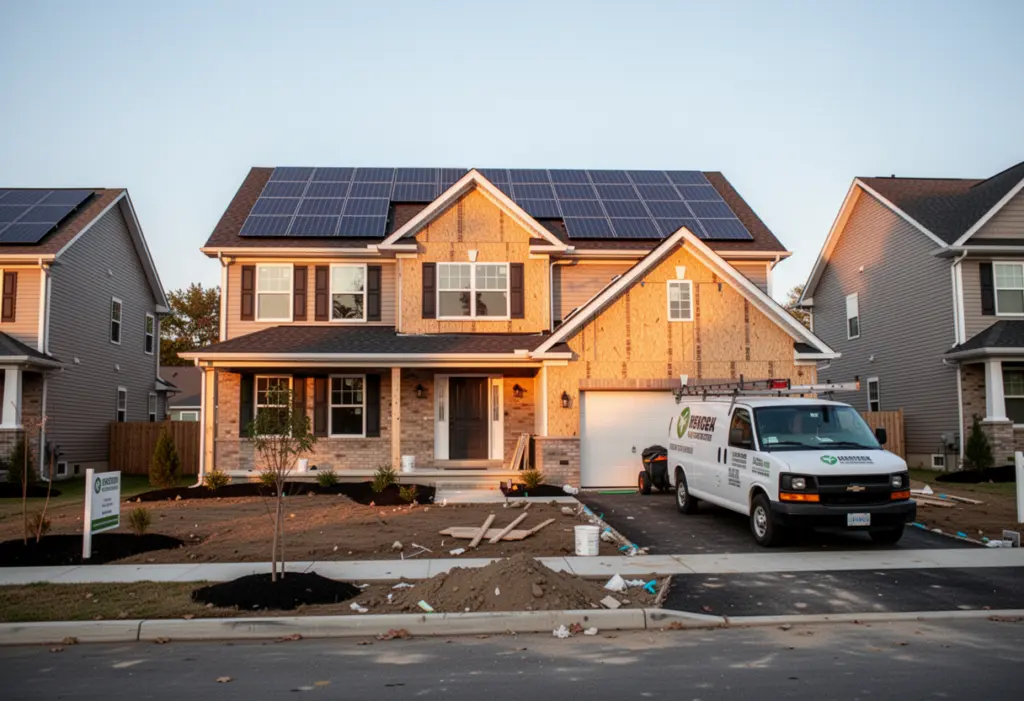
A temporary certificate of occupancy is permission to occupy a building while some items remain open, and it expires. Solar sits on both sides of that: an array waiting for its electrical sign-off can be one of the open items, and an open certificate can be the reason the solar paperwork cannot close out. Either way you are living in a house whose file is unfinished, and the practical risk is that someone demobilises before it is.
Establish what your authority actually issues
Terminology and practice vary across New York. Ask your building department, in these words: which document do you issue at the end of this job, what is still open, what closes each item, and what is the expiry date. In the five boroughs the Department of Buildings runs its own process and temporary certificates are a familiar part of it; in a small town the practice may be different. Write the answer down with the date, because renewal is on you, not on the contractor who left.
Where solar collides with it
- Sign-off sequencing. The utility wants the electrical certificate before permission to operate. If the electrical inspection is entangled with other open items on the building, the array can sit finished and switched off for weeks.
- Lenders and insurers. A mortgage closing or a policy can turn on a final certificate rather than a temporary one, and a solar item left open can be what stands between the two.
- Retainage. If the solar contract has been paid in full at installation, nobody has a financial reason to chase the last inspection. Hold a meaningful final payment against permission to operate rather than against panels on the roof.
- Expiry. A temporary certificate that lapses can mean fees, a fresh inspection, or a house that is technically not permitted to be occupied.
New construction, and one federal rule worth understanding
The 30 percent residential credit at section 25D is terminated for expenditures made after 31 December 2025. The general test is that an expenditure is treated as made when the original installation is completed. There is an exception that reverses the answer for new builds: where the expenditure is in connection with the construction or reconstruction of a structure, it is treated as made when the taxpayer’s original use of that structure begins.
That distinction only matters now for reconciling a 2025 position, and it is exactly the situation a temporary certificate describes — panels installed on a house that nobody had yet moved into. If that is your circumstance, it is a question for your accountant with the dates in front of them. For any installation completed in 2026 there is no federal residential credit either way, and a proposal that still shows one is materially wrong.
The New York items that are date-sensitive
The state credit on Form IT-255 is 25 percent of qualified expenditure capped at $5,000, for equipment at your principal residence in New York. On a new build, when the house becomes your principal residence is part of the answer, and so is when the equipment is placed in service — which is the correct operative language for this credit even though it is the wrong test for the terminated federal one. The credit is limited by the New York tax you actually owe, with unused amounts carried forward up to five years.
For property tax, RPTL 487 gives a 15-year exemption on the value the system adds where the municipality, the county and the school district have each not opted out, and requires construction before 1 January 2030. Filing is with your assessor, and it is worth asking them specifically how the filing interacts with the taxable status date for your assessment roll, because that timing decides which year the exemption first appears.
The charge that starts when you connect, not when you move in
The Customer Benefit Contribution is billed monthly on DC capacity, regardless of production, for systems interconnected on or after 1 January 2022 — which is every new build now. On PSEG Long Island at $1.13 per kW-month for 2026, a 12 kW array on a new house is about $13.56 a month, near $163 a year. Rates are recalculated annually and are not locked at interconnection, so treat any figure in a builder’s package as this year’s number rather than a permanent one. Community solar subscribers pay none of it, and a customer of a municipal electric department is outside the charge and the state interconnection process entirely.
A short list to keep the file closable
- Written list of open items and the expiry date of the temporary certificate.
- Final payment withheld until permission to operate, not until installation.
- Electrical inspection certificate, closed permit, and the permission to operate letter with its date.
- RP-487 filed with the assessor, and the itemised invoice kept with your tax records.
Frequently Asked Questions
Can solar be installed while a house is under a temporary certificate of occupancy?
Commonly yes, but the sign-off sequence is what to watch. The utility wants the electrical certificate before permission to operate, so an array can sit finished and switched off while other items on the building remain open.
How do I stop the contractor leaving before sign-off?
Hold a meaningful final payment against permission to operate rather than against panels on the roof. Once a solar contract is paid in full at installation, nobody has a financial reason to chase the last inspection.
Does the federal credit apply to solar on a new build?
Not for 2026. Section 25D ended for expenditures made after 31 December 2025, and for work in connection with constructing a structure the expenditure is treated as made when the taxpayer's original use of the structure begins.
When does the New York State credit apply on a new house?
It requires equipment at your principal residence in New York, so when the house becomes your principal residence is part of the answer, along with when the equipment is placed in service. Take the dates to your accountant.
This article is general information, not tax, legal or financial advice. Incentive amounts, eligibility rules and deadlines change and depend on your utility, your tax situation and your property. Confirm current terms with NYSERDA, your utility and a qualified tax professional before making a decision.
NY Solar Incentives
Independent New York solar research. We summarise NYSERDA, NY-Sun and federal programme rules from published sources and state plainly when a figure is an estimate. We are not a government agency and do not sell equipment.
Run the arithmetic on your own system
Check the dated program table and your arrangement before counting an incentive. Standard residential NY-Sun blocks are closed; Long Island Affordable Solar has a conditional income-verification route. The NY credit depends on qualified costs and tax liability, while the NYC abatement reduces future property-tax bills. The estimator keeps those timings separate.