New York State Renewable Energy Incentives Beyond Solar
Solar is one row in a longer table. Geothermal, heat pumps, storage and electric vehicles each have their own administrator, their own form and their own timing.
On this page 9 sections
- 01Four administrators, not one
- 02Two separate state tax credits, and one of them doubled
- 03Heat pumps run through the utility, not the tax return
- 04Storage, and the vehicle at the kerb
- 05The same programmes, side by side
- 06Income-qualified support
- 07What the federal change removed, across all of these
- 08Sequencing more than one project
- 09Frequently asked questions
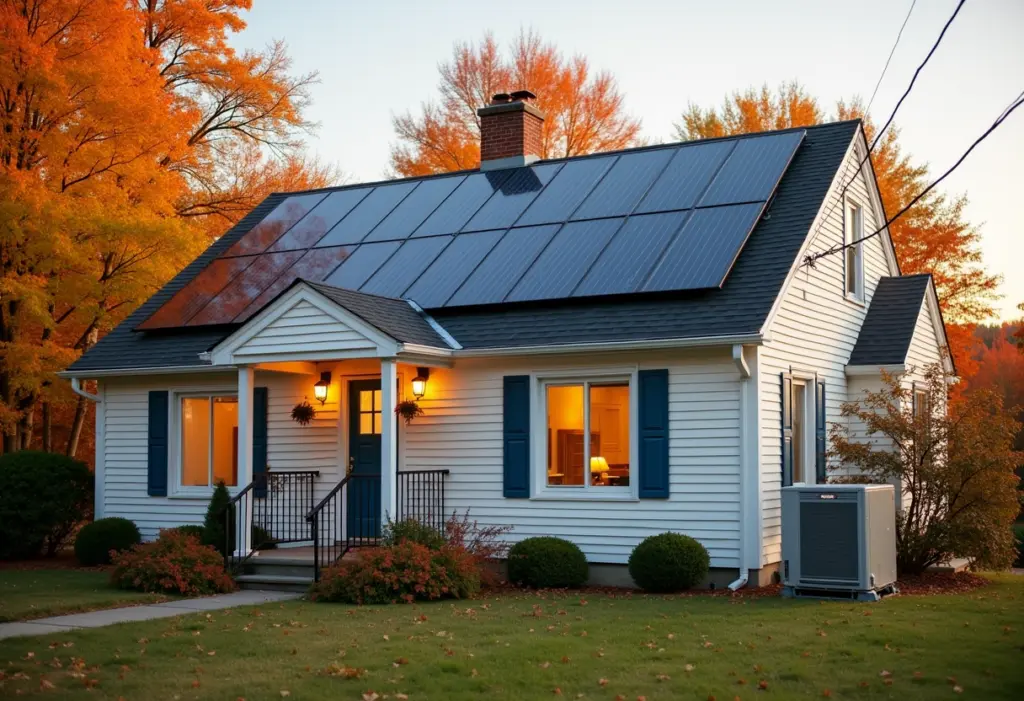
New York’s clean energy support is usually described as though it were one programme. It is not. Solar, geothermal, heat pumps, home battery storage and electric vehicles each run through a different body, arrive at a different moment, and are claimed on a different document.
That matters for a household doing more than one thing, because the sequence and the paperwork do not line up. What follows is the map, with the numbers limited to those the state publishes itself.
Four administrators, not one
The Department of Taxation and Finance runs the tax credits, which reach you when you file. NYSERDA runs NY-Sun, which pays through a participating contractor when a block for homes is open (none is as of September 2026), and the electric vehicle rebate, which reaches you through a dealer. Your utility delivers the heat pump incentives under the statewide Clean Heat programme. In New York City, the Department of Buildings approves the solar property tax abatement and the Department of Finance applies it to the tax bill.
None of them tells the others what you have done. Every one of them is claimed separately, and a household that installs solar and a heat pump in the same year is dealing with three organisations rather than one.
Two separate state tax credits, and one of them doubled
The solar energy system equipment credit is 25% of qualified expenditure, capped at $5,000, for a system at your principal residence in New York State, claimed on Form IT-255. Its full rules are in the guide to the solar energy system equipment credit.
The geothermal energy system credit is a separate credit for ground source heat pump systems, claimed on Form IT-267. It is also 25% of qualified expenditure, but its ceiling changed: $5,000 for systems installed by 30 June 2025, and $10,000 for systems installed from 1 July 2025 onward. Only one system may be claimed in a tax year, and the credit is for a primary residence that is not rented.
Both are non-refundable and both carry forward for up to five years, which means each is worth what your New York tax liability lets you use rather than its headline figure.
Ground source and air source are not the same claim
The geothermal credit applies to systems using energy stored in the ground or in water, which means ground source heat pumps. An air source heat pump is supported through the Clean Heat programme instead, not through Form IT-267. Confirm which technology is on your quote before assuming which route applies.
Heat pumps run through the utility, not the tax return
The statewide Clean Heat programme covers air source heat pumps, air-to-water systems, heat pump water heaters and ground source heat pumps. The incentive is delivered through participating contractors and your utility rather than claimed on a return, and the Public Service Commission set the programme’s continuation through 2026 to 2030.
Practically, that means the money appears as a reduction on the contractor’s price, in the same way NY-Sun did for solar while its home blocks were open, and the contractor has to be participating for it to exist at all. Financing with repayment through your utility bill is also available, which is a loan rather than an incentive and should be evaluated as one.
Storage, and the vehicle at the kerb
Home battery storage has its own support in New York and its own rules about when a battery is worth adding, covered separately in the piece on battery rebates in New York.
Electric vehicles are handled by NYSERDA’s Drive Clean Rebate, which offers up to $2,000 depending on the model and is applied by a participating dealer at the point of sale rather than claimed later. The amount varies by vehicle, so the eligible models list is the thing to check rather than the headline number.
The same programmes, side by side
| What you are installing | Main state support | Who delivers it | When it reaches you |
|---|---|---|---|
| Rooftop solar | State credit (no NY-Sun block is open for homes as of September 2026) | Taxation and Finance | At filing |
| Ground source heat pump | Geothermal credit, plus Clean Heat | Taxation and Finance; your utility | At filing, and on the contractor’s price |
| Air source heat pump | Clean Heat incentive | Your utility, via the contractor | On the contractor’s price |
| Home battery storage | Storage incentive | Participating installer | On the contractor’s price |
| Electric vehicle | Drive Clean Rebate | Participating dealer | At the point of sale |
Income-qualified support
NYSERDA’s income-qualified Affordable Solar blocks for homes have closed too: the Con Edison block ran from 30 May to 15 October 2025 and the Upstate block from 18 December 2025 to 9 March 2026. On Long Island, NYSERDA’s April 2026 NY-Sun Program Manual still lists a $0.40-per-watt Affordable Solar incentive for income-qualified homes, outside the block system; ask a participating NY-Sun contractor to confirm funding is still available. NYSERDA runs separate income-qualified home energy and weatherisation routes. These require an income eligibility application and documentation rather than a declaration.
This layer is worth checking before anything else, because it changes which route is sensible rather than just how much it costs. The full set of NYSERDA-administered programmes is listed in the guide to NYSERDA solar programs.
What the federal change removed, across all of these
The 30% federal residential clean energy credit under section 25D was terminated for expenditures made after 31 December 2025. The operative test is when the original installation was completed, not when the system was placed in service, so a project finished in December 2025 and switched on in January 2026 still falls under the old rules.
That credit was not solar-only. It covered the residential clean energy technologies together, geothermal heat pumps and battery storage among them, so its removal reaches further than most coverage suggests. A New York household completing any of those installations now claims nothing under it, and the companion federal credit for energy efficient home improvements was ended on the same law’s timetable. Confirm the current federal position with the IRS rather than with a contractor’s spreadsheet.
The state programmes did not change with it
New York’s own credits, Clean Heat and the New York City abatement are separate from the federal credit and were not affected by its termination. NY-Sun is a separate matter: as of September 2026 NYSERDA has no open NY-Sun block for homes in any utility territory; check NYSERDA’s NY-Sun dashboard for a new one. Any quote that reduces the state support because of the federal change, or that still adds 30% back on a purchase, is misstating both halves.
Sequencing more than one project
Two constraints decide the order. The tax credits are non-refundable and compete for the same New York liability, so claiming a solar credit and a geothermal credit against one modest tax bill is slower than the headline figures suggest, and the five-year carry-forward is what absorbs the difference. Spreading installations across tax years is sometimes worth discussing with a tax professional for that reason alone.
The contractor-delivered incentives, such as Clean Heat, have the opposite property: they reduce the price at signing regardless of your tax position, which makes them the reliable part of the plan. Where the two overlap, get each written as a separate line on the quote rather than as a single savings figure. The wider picture of what is currently available is set out in New York solar incentives in 2026.
Frequently asked questions
Can I claim the New York solar credit and the geothermal credit in the same year?
They are separate credits on separate forms, IT-255 for solar and IT-267 for geothermal, so both can be claimed. Both are non-refundable and both apply against the same New York State liability, which is the practical limit. Unused amounts carry forward for up to five years, and only one geothermal system may be claimed in a tax year.
Do air source heat pumps get a New York State tax credit?
Not under the geothermal credit, which applies to systems using energy stored in the ground or water. Air source heat pumps are supported through the statewide Clean Heat programme, delivered by your utility through a participating contractor as a reduction to the installed price rather than as a credit on your return.
Did the federal change affect New York’s own incentives?
No. The state tax credits, Clean Heat and the New York City property tax abatement are administered by New York bodies and were not altered by the termination of the federal residential credit. NY-Sun, run by NYSERDA, has no open block for homes as of September 2026. What changed is the total support available on a purchase, because one large federal component of it has gone.
Which incentive should I check first?
Start with income eligibility, because qualifying changes which route makes sense rather than only what it costs. After that, check the contractor-delivered incentives, since they reduce the price at signing regardless of your tax position, and treat the tax credits last because their value depends on what you owe.
Confirm amounts and eligibility before you rely on them
Credit ceilings, incentive levels, eligible equipment lists and programme years all change, and several of these figures have been amended recently. Confirm the tax credits with the New York State Department of Taxation and Finance, NY-Sun and the vehicle rebate with NYSERDA, and the heat pump incentives with your own utility, then take the filing to a qualified tax professional.
This article is general information, not tax, legal or financial advice. Incentive amounts, eligibility rules and deadlines change and depend on your utility, your tax situation and your property. Confirm current terms with NYSERDA, your utility and a qualified tax professional before making a decision.
NY Solar Incentives
Independent New York solar research. We summarise NYSERDA, NY-Sun and federal programme rules from published sources and state plainly when a figure is an estimate. We are not a government agency and do not sell equipment.
Run the arithmetic on your own system
Check the dated program table and your arrangement before counting an incentive. Standard residential NY-Sun blocks are closed; Long Island Affordable Solar has a conditional income-verification route. The NY credit depends on qualified costs and tax liability, while the NYC abatement reduces future property-tax bills. The estimator keeps those timings separate.