The Structural Engineer Letter for Solar in New York
The structural letter is a stamped statement that your roof can carry an array plus a New York winter. In most jurisdictions the permit does not move without it.
On this page 8 sections
- 01What the letter is actually saying
- 02Why New York makes this a real calculation rather than a formality
- 03What the engineer needs from you
- 04What happens when the answer is no
- 05Who pays, and who keeps it
- 06Which costs count for the state credit
- 07The rest of the paperwork chain
- 08Frequently Asked Questions
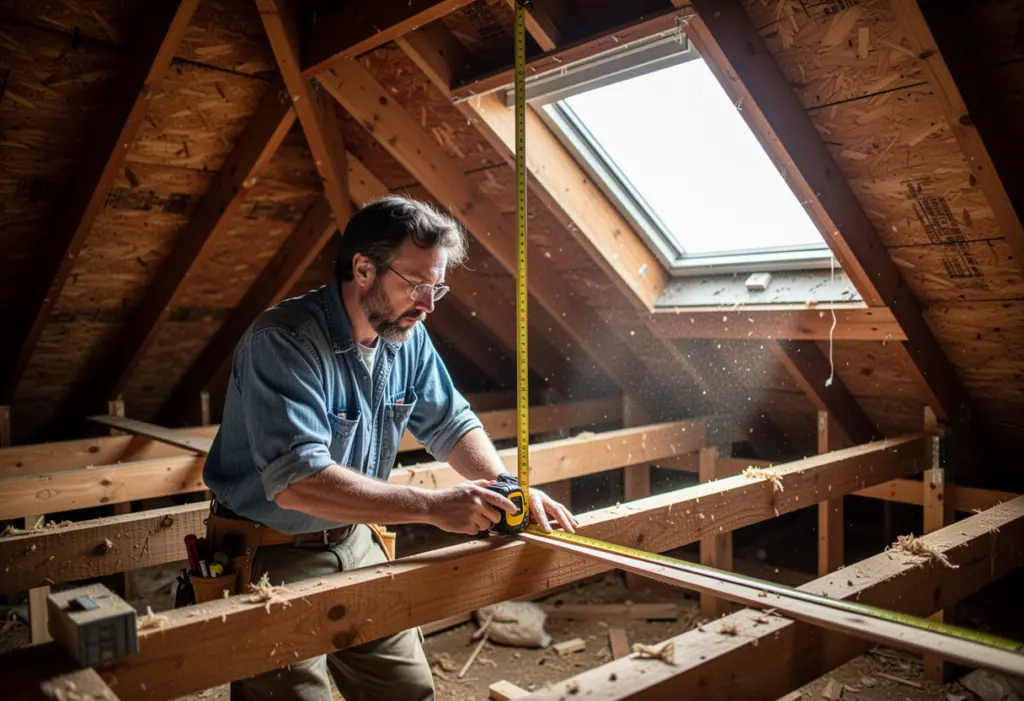
The structural letter is a stamped statement from a licensed professional that your roof can carry a solar array on top of everything else it already carries, including snow. In most New York jurisdictions the permit does not move without it, and it is one of the most common reasons a permit application sits.
What the letter is actually saying
- The dead load of the array and its racking, added to the existing roof covering — and layered shingles matter here.
- The snow load for your specific location, which in New York is the number that dominates the calculation.
- Wind and uplift on the modules and the attachments.
- The framing: rafter or truss size, spacing, span and condition, and whether the members can take the added load without reinforcement.
- The attachment method, including how often the racking is fastened and into what.
Why New York makes this a real calculation rather than a formality
Ground snow load varies enormously across this state. A roof in the Southern Tier or the Tug Hill region is designed against a very different number from one on Long Island, and the same array on the same framing can pass in one place and fail in another. That is why a letter written for a house type rather than for your house is not worth much, and why a reviewer will look at whether the analysis used the correct load for your address.
What the engineer needs from you
Attic access, or good photographs where access is limited. Rafter dimensions, spacing and span, measured rather than assumed. The roof construction and how many layers of covering are on it. Then, from the installer, the racking system, its attachment spacing and the module weight. Where an engineer has to assume rather than measure, the analysis becomes conservative, and conservative here means fewer panels or reinforcement you might not have needed.
What happens when the answer is no
Not usually a dead end, but always a cost. The options are reinforcement from below — sistering rafters, adding blocking or purlins — a lighter or smaller array, a different layout that concentrates load where the framing is strongest, or moving the project to a ground mount or an accessory structure. Ask for the cost of each before choosing, and be aware that reinforcement work in a finished attic is a different job from reinforcement in an open one.
Who pays, and who keeps it
The letter is usually procured by the installer and priced inside the system cost. Ask for it as a line item so you can see what it costs, and ask when it will be ordered — obtaining it early rather than after a rejection is the difference between a scheduled project and a stalled one. Keep your own copy. It matters again when you re-roof, when you sell, and whenever an insurer asks a question about the array. Documents that live only in a contractor’s file have a way of disappearing when the contractor does.
Which costs count for the state credit
New York’s solar energy system equipment credit is 25 percent of qualified expenditure, capped at $5,000, claimed on Form IT-255 for equipment at your principal residence in the state. The cap bites at $20,000 of qualified expenditure — beyond that point every additional dollar you spend earns nothing further from this credit, so on a larger system the marginal cost is entirely yours.
Whether an engineering letter or structural reinforcement counts as qualified expenditure is a question for your accountant on your own facts, and it is worth asking precisely because the cap makes the answer matter only in some cases. The credit is limited by the New York tax you actually owe, and unused amounts carry forward up to five years. It also reaches leases and power purchase agreements of ten years or more, where the $5,000 is a lifetime ceiling for that agreement rather than an annual figure. And a flat 25 percent is the purchase and power-purchase-agreement mechanic, not the lease one: on a lease the credit for a year is that year’s payments, limited to 25 percent of the payments contracted across the whole agreement or $5,000, whichever is smaller.
The rest of the paperwork chain
The structural letter feeds the permit; the permit feeds the installation; the electrical inspection feeds permission to operate. Record the interconnection date when it arrives, because Phase One net metering holds for 20 years from it and the Customer Benefit Contribution applies to systems interconnected on or after 1 January 2022. File RP-487 with your assessor for the 15-year exemption under RPTL 487, which requires construction before 1 January 2030 and survives only where the municipality, the county and the school district have each not opted out. And do not accept any 2026 proposal showing a 30 percent federal residential credit: section 25D was terminated for expenditures made after 31 December 2025, with an expenditure treated as made when the original installation is completed.
Frequently Asked Questions
Do I need a structural engineer letter for solar in New York?
Most jurisdictions require a stamped structural analysis before issuing the permit. It confirms the framing can carry the array plus the existing roof covering, the snow load for your location, and wind uplift on the modules.
Why does snow load matter so much here?
Ground snow load varies enormously across New York, so the same array on the same framing can pass in one part of the state and fail in another. A reviewer will check that the analysis used the correct load for your address.
What happens if my roof does not pass?
Usually reinforcement from below, a smaller or lighter array, a layout that concentrates load over the strongest framing, or moving to a ground mount. Ask for the cost of each option before choosing between them.
Does the engineering cost qualify for the New York credit?
Ask your accountant on your own facts. The credit is 25% of qualified expenditure capped at $5,000, so the cap is reached at $20,000 of qualified spending and beyond that the question stops mattering.
This article is general information, not tax, legal or financial advice. Incentive amounts, eligibility rules and deadlines change and depend on your utility, your tax situation and your property. Confirm current terms with NYSERDA, your utility and a qualified tax professional before making a decision.
NY Solar Incentives
Independent New York solar research. We summarise NYSERDA, NY-Sun and federal programme rules from published sources and state plainly when a figure is an estimate. We are not a government agency and do not sell equipment.
Run the arithmetic on your own system
Check the dated program table and your arrangement before counting an incentive. Standard residential NY-Sun blocks are closed; Long Island Affordable Solar has a conditional income-verification route. The NY credit depends on qualified costs and tax liability, while the NYC abatement reduces future property-tax bills. The estimator keeps those timings separate.