What a New York Solar Quote Should Itemise
A solar quote you cannot break into lines is a quote you cannot compare. Here is the list to demand, the lines where money hides, and the two entries that should not appear at all in 2026.
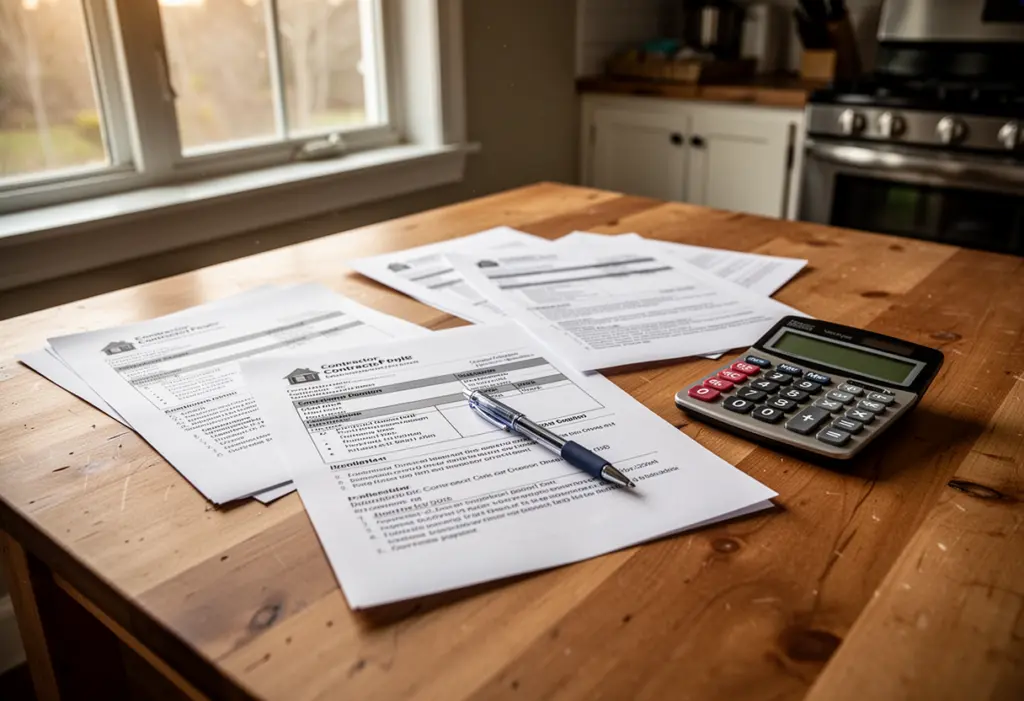
A single number on the last page is not a quote, it is a request. Before you can compare two offers you need each of them broken into lines, and the lines below are the ones that decide whether the comparison means anything. Ask for all of it in writing, signed and dated.
The system itself
- DC system size in watts, shown as module rated wattage multiplied by module count. Everything else you compare — price per watt, production, the monthly capacity charge — depends on this one figure.
- Module make, model and count, plus the product warranty and the performance warranty as two separate terms, because they are two different promises.
- Inverter type, make and model, and whether the design uses a string inverter, microinverters or optimisers. The choice changes both shading behaviour and what a future repair costs.
- Mounting system and attachment method, including flashing, and how roof penetrations are warranted and by whom.
- Year one production estimate in kilowatt hours, with the modelling tool named, the annual degradation assumption stated, and the shading assessment identified as on-site or satellite derived.
The work around the system
- Electrical scope — the existing service rating, the main breaker size, whether a service upgrade or a main panel replacement is needed, and what it costs. An upgrade written as required if necessary is not a price.
- Roof scope — repairs included or excluded, and what removal and reinstallation would cost if you reroof later.
- Permit and inspection fees, named by authority, and who files them.
- Interconnection application, who submits it and what the utility charges.
- Monitoring, including whether any subscription becomes chargeable later.
- Workmanship warranty term, separately from the equipment warranties above.
The four lines where money hides
- The dealer fee. A very low advertised interest rate is generally paid for by a fee folded into the system price. Ask what the same system costs in cash. The difference is the fee, and it is frequently a large one.
- The escalator in the savings model. Ask what annual utility rate increase the projection assumes. A generous assumption manufactures a short payback without changing anything about your roof.
- The capacity charge that is left out. The Customer Benefit Contribution is billed monthly on DC size regardless of production, for systems interconnected on or after 1 January 2022. A 6.5 kW array on Orange & Rockland pays 6.5 x $1.00 = $6.50 a month, $78 a year. Most savings models do not carry it. Ask for it to be added as a cost line.
- The production promise with no remedy. If the quote commits to an output figure, ask what happens in writing when the system misses it, over what measurement period, and who pays.
The two lines that should not be there
A 30% federal credit. Section 25D was terminated for expenditures made after 31 December 2025, and an expenditure is treated as made when the original installation is completed. A 2026 buyer claims nothing federally. If that line is in the quote, the net cost figure is wrong, and so is every payback number derived from it.
A full $5,000 state credit assumed without a question about your tax position. New York gives 25% of qualified expenditure capped at $5,000 on Form IT-255, for equipment installed and used at your principal residence, and it is limited by the state tax you actually owe. It carries forward five years but it is not refundable. A proposal that fills in $5,000 without asking anything about your liability has guessed.
If the offer is a lease or a PPA
Different lines matter. Ask for the term in years, the payment schedule, any annual escalator as a percentage, the buyout terms and timing, what happens at the end of the agreement, and who is responsible for roof penetrations and removal. For the New York credit the agreement has to run ten years or more — that minimum applies to a lease as well as to a PPA — the $5,000 is a lifetime ceiling for that agreement rather than an annual amount, and no credit is allowed after the fifteenth year on a longer arrangement.
Before you sign
Ask which incentives are applied by the contractor and which you claim yourself. NY-Sun is contractor-applied, but no 2026 quote for a home should carry it. As of September 2026 NYSERDA has no open NY-Sun block for homes in any utility territory; check NYSERDA’s NY-Sun dashboard for a new one. If a quote shows a NY-Sun price reduction, ask it to name the block. The income-qualified Affordable Solar incentive has closed as well: in Con Edison territory it ran from May 30 to October 15, 2025, and Upstate from December 18, 2025 to March 9, 2026. The state sales tax exemption should be reflected in the tax line. The RPTL 487 property tax exemption is not on the quote at all: it runs 15 years on the added value, it reaches only a system constructed before 1 January 2030, and it depends on whether your municipality, county and school district have each opted out, which is three separate calls you make yourself. Programmes change, so verify the current position with NYSERDA and the Department of Taxation and Finance rather than with the proposal in front of you.
Frequently Asked Questions
What has to be on a solar quote before I can compare offers?
DC system size as module wattage times count, module and inverter make and model, mounting and flashing detail, a year one production estimate with its assumptions, electrical and roof scope, permit and interconnection fees, and each warranty separately.
What is a dealer fee and where does it appear?
It is a finance cost folded into the system price to fund a low advertised interest rate. It rarely appears as its own line. Ask what the same system costs in cash, and the difference is the fee.
Should the Customer Benefit Contribution be in the savings model?
Yes, as a cost. It is billed monthly on DC size regardless of production. A 6.5 kW array on Orange & Rockland pays 6.5 x $1.00 = $6.50 a month, or $78 a year, and most models leave it out.
What should not appear in a 2026 New York quote?
A 30% federal credit line, because section 25D was terminated for expenditures made after 31 December 2025, and a full $5,000 state credit filled in without any question about the state tax you actually owe.
This article is general information, not tax, legal or financial advice. Incentive amounts, eligibility rules and deadlines change and depend on your utility, your tax situation and your property. Confirm current terms with NYSERDA, your utility and a qualified tax professional before making a decision.
NY Solar Incentives
Independent New York solar research. We summarise NYSERDA, NY-Sun and federal programme rules from published sources and state plainly when a figure is an estimate. We are not a government agency and do not sell equipment.
Run the arithmetic on your own system
Check the dated program table and your arrangement before counting an incentive. Standard residential NY-Sun blocks are closed; Long Island Affordable Solar has a conditional income-verification route. The NY credit depends on qualified costs and tax liability, while the NYC abatement reduces future property-tax bills. The estimator keeps those timings separate.