Solar Panel Installation in Glen Cove, NY
Glen Cove is a city, not a village inside a town, so there is one building department and one municipal opt-out to check. The harbour decides where the equipment goes.
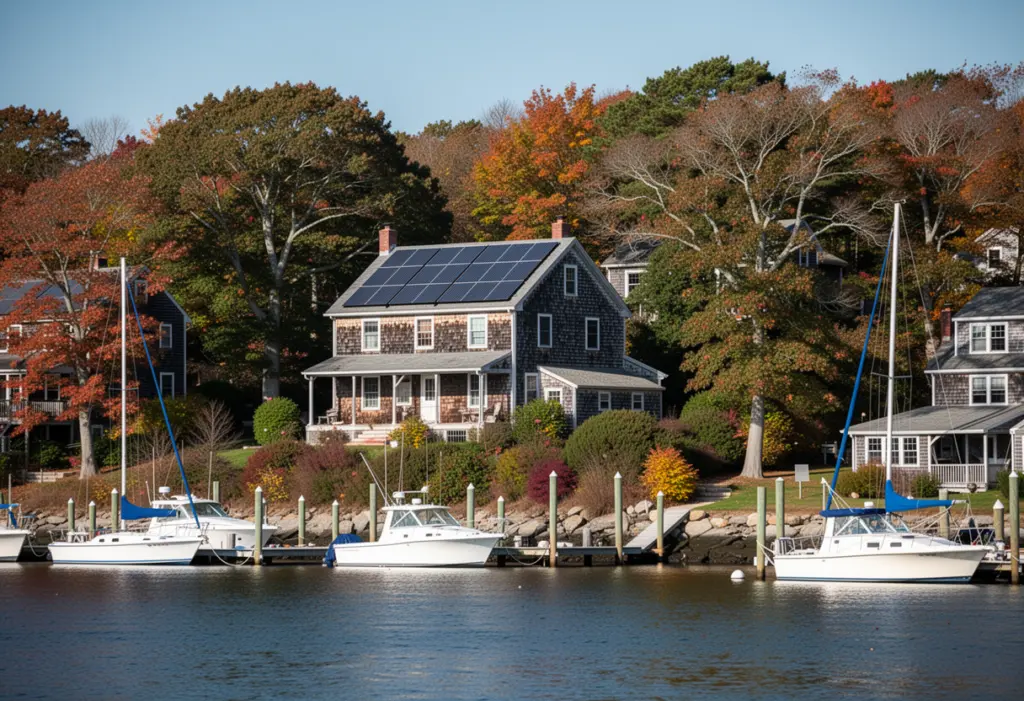
Glen Cove is a city on the North Shore of Nassau County, ZIP code 11542. It is one of only two cities in the county, and that single fact removes a layer of confusion that runs through the rest of Nassau: there is no village-inside-a-town question here.
One building department, one municipal opt-out
Because Glen Cove is a city rather than a village within a town, the City of Glen Cove is the authority that issues the building permit and the electrical inspection, and there is no town layer above it.
That simplifies the property tax question too. Under RPTL 487 the value a system adds is exempt for 15 years unless the taxing body has opted out, and a county, city, town or village opts out by local law while a school district does so by resolution. Here that is three answers to collect rather than four:
- The City of Glen Cove.
- Nassau County.
- The city school district — start here, because school taxes carry the largest single line on a Nassau tax bill.
The exemption is not indefinite either: section 487 reaches only systems constructed before 1 January 2030.
The harbour decides where the equipment goes
Glen Cove has waterfront on Hempstead Harbour and a creek corridor running inland, and low-lying property near either sits in mapped flood plain. Where that applies it changes where the electrical equipment may be mounted — the inverter, the AC and DC disconnects, the production meter and any battery.
- Equipment normally has to clear a specified elevation, which can push it onto another wall, higher up the same one, or inside the building rather than into the default spot next to the meter.
- A basement is usually the wrong place for a battery on these parcels, however convenient and however cheap.
- Get the positions right at design stage: an inspector who rejects the mounting height turns a finished job into a return visit.
Ask directly whether your parcel is in a mapped zone and what the city requires, before a design is drawn. Waterfront exposure also argues for asking what wind load the racking and attachments are specified for, and for salt-rated hardware and outdoor enclosures.
Hills, trees and the southern horizon
This is North Shore moraine country: wooded, hilly, and cut by slopes that a flat South Shore specification never has to think about. A ridge or a stand of mature trees on the southern side of a property removes production at the low December sun angle, which is exactly when the net metering credit bank is being drawn down.
Insist on a shading assessment carried out at the property rather than a satellite estimate, and ask what the model says about December and January rather than only the annual total. A large gap between two installers’ production figures usually means one of them never visited the site.
Older housing
Glen Cove’s housing runs older than the Nassau average in places, which raises three checks. Roof age: under roughly ten years of shingle life left means re-roof first, since removing and reinstalling an array later costs considerably more than mounting on a bare roof. Roof type: slate needs a mounting approach not every installer is equipped for, while standing-seam metal is the best case, because racking clamps to the seams with no penetrations at all. Service capacity: 100 amp panels are common in older and post-war housing, and fitting a solar breaker can require an upgrade or a line-side tap, which belongs in the quote rather than a change order.
PSEG Long Island
Systems interconnected on or after 1 January 2022 carry the Customer Benefit Contribution, a monthly charge against DC capacity that is levied whether or not the array produces and re-set each year rather than locked at interconnection. On the 2026 PSEG Long Island residential rate of $1.13 per kW-month, a 5 kW system comes to $5.65 a month, about $68 a year, and a 14 kW system to $15.82, about $190. Phase One net metering credits exports at the full retail rate and holds for 20 years from interconnection.
Confirm the utility on your own bill. PSEG Long Island operates the LIPA system across most of Nassau, but Freeport and Rockville Centre run their own municipal electric utilities, which sit outside Public Service Commission jurisdiction — no state net metering, no Customer Benefit Contribution, no standardised interconnection process, and terms that have to be asked for directly.
2026 incentives
A 2026 buyer claims nothing federally. Section 25D was terminated for expenditures made after 31 December 2025, and the expenditure is dated to completion of the original installation. Strike that line off any proposal that still carries it, and treat every total underneath it as unreliable.
NY-Sun is no longer on the table for a Glen Cove home. It was paid through your contractor as a reduction on the price and structured in megawatt blocks: each region had capacity blocks, and the per-watt incentive stepped down as each block filled. On Long Island the last residential block closed on 17 April 2016, and NYSERDA’s income-qualified Affordable Solar incentive has no open block for homes either. As of September 2026 NYSERDA has no open NY-Sun block for homes in any utility territory; check NYSERDA’s NY-Sun dashboard for a new one, and if a proposal still shows a NY-Sun reduction, ask which open block it relies on. What remains:
- New York’s 25% credit capped at $5,000 on Form IT-255, for a principal residence, reaching leases and power purchase agreements of ten years or more.
- The state sales tax exemption on residential solar equipment.
- RPTL 487, subject to the three checks above.
Check the live position of each with NYSERDA and the NY Department of Taxation and Finance before you sign.
Frequently Asked Questions
Who issues a solar permit in Glen Cove?
The City of Glen Cove. Because it is a city rather than a village inside a town, there is one building department and no town layer above it — which also means three RPTL 487 opt-outs to check rather than four.
Does the flood plain affect a Glen Cove installation?
On low-lying property near the harbour or the creek, yes. The inverter, disconnects, meter and any battery usually have to sit above a specified elevation, so a basement battery is often the wrong answer even where it is the cheapest place to put it.
Can I still get NY-Sun in Glen Cove?
Not as of September 2026. NY-Sun is a megawatt-block incentive, and NYSERDA has no open block for homes in any utility territory; on Long Island the last residential block closed on 17 April 2016. If a proposal still shows a NY-Sun reduction, ask which open block it relies on, and check NYSERDA’s NY-Sun dashboard for a new one.
What does PSEG Long Island charge a Glen Cove solar customer?
The Customer Benefit Contribution at $1.13 per kW-month of DC system size for 2026 — about $68 a year on a 5 kW system and $190 on 14 kW, billed on capacity regardless of production.
This article is general information, not tax, legal or financial advice. Incentive amounts, eligibility rules and deadlines change and depend on your utility, your tax situation and your property. Confirm current terms with NYSERDA, your utility and a qualified tax professional before making a decision.
NY Solar Incentives
Independent New York solar research. We summarise NYSERDA, NY-Sun and federal programme rules from published sources and state plainly when a figure is an estimate. We are not a government agency and do not sell equipment.
Run the arithmetic on your own system
Check the dated program table and your arrangement before counting an incentive. Standard residential NY-Sun blocks are closed; Long Island Affordable Solar has a conditional income-verification route. The NY credit depends on qualified costs and tax liability, while the NYC abatement reduces future property-tax bills. The estimator keeps those timings separate.